3 hrs ago
NHAI Seeks Supreme Court Clarification on Stray Animal Responsibilities
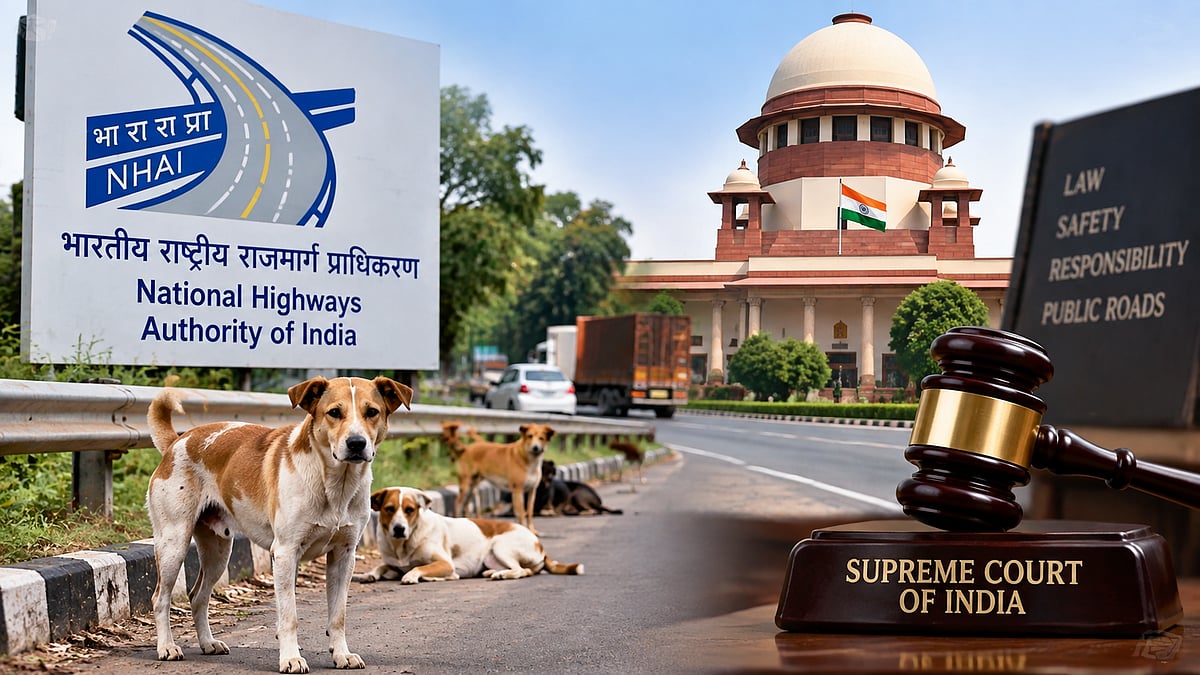
The National Highways Authority of India manages many national highways.
The Supreme Court ordered authorities to address stray animals on those roads.
The directions included removing animals and arranging transport and shelters.
NHAI says state governments, local bodies and Highway Administrations should take primary responsibility for caring for the animals.
It says its main job is building and managing highways.
NHAI also says a nationwide shelter system would need land, workers, food, veterinary care and money.
The authority is still willing to help coordinate removals and improve road safety.
It has asked the court to explain exactly which authorities must take custody of the animals.

NHAI asked the Supreme Court to clarify responsibilities under its May 19, 2026, stray-animal judgment.
The authority says state governments, local bodies and Highway Administrations should primarily remove, impound and shelter animals.
NHAI argues its statutory mandate focuses on highway development, maintenance and traffic management.
It says creating shelters across approximately 1.46 lakh kilometres of highways would require major infrastructure, staffing and funding.
NHAI says it will coordinate removals and support road-safety measures but should not independently operate nationwide shelters or transport fleets.
- Who
- The National Highways Authority of India, represented by Solicitor General Tushar Mehta, approached the Supreme Court.
- What
- NHAI sought clarification of the court’s directions on removing, transporting, impounding and sheltering stray animals on national highways.
- Where
- The matter is before the Supreme Court in suo motu proceedings concerning stray animals and national highways.
- When
- The application concerns the Supreme Court’s May 19, 2026, judgment; its filing date is not stated.
- Why
- NHAI says laws and government notifications place primary responsibility on Highway Administrations, state authorities and local bodies, while its mandate focuses on highways.
NHAI’s Interpretation
Supreme Court’s Directions
Primary responsibility
NHAI’s Interpretation
NHAI says state governments, local bodies and Highway Administrations should primarily remove, impound and shelter animals found on national highways.
Supreme Court’s Directions
The May 19 judgment directs NHAI to formulate and implement a comprehensive mechanism with states and Union Territories for stray animals on national highways and expressways.
Shelters and transport fleets
NHAI’s Interpretation
NHAI says it should not independently establish, own or operate nationwide shelters, gaushalas, holding facilities or specialised transport fleets.
Supreme Court’s Directions
The judgment directs NHAI to deploy specialised transport vehicles, create or earmark holding and shelter facilities, and coordinate with animal welfare organisations and gaushalas.
Scope of NHAI’s role
NHAI’s Interpretation
NHAI says it will coordinate and facilitate removals, identify vulnerable stretches and provide support where feasible without assuming long-term animal custody.
Supreme Court’s Directions
The court’s directions require a coordinated mechanism addressing the removal and relocation of stray animals, with implementation details now subject to NHAI’s requested clarification.
Key facts
- Judgment at issue
- Supreme Court judgment dated May 19, 2026
- Proceedings
- In Re: City Hounded by Strays, Kids Pay Price
- Requested clarification
- Direction G concerning stray cattle and other animals on national highways and expressways
- Highway network cited
- Approximately 1.46 lakh kilometres administered by NHAI, NHIDCL and state public works departments
- Relevant legislation
- National Highways Authority of India Act, 1988, and Control of National Highways (Land and Traffic) Act, 2002
- NHAI’s proposed role
- Coordinate, facilitate and assist removals, transportation and shelter arrangements
- Responsibility disputed
- Whether NHAI must independently establish and operate shelters, holding facilities and transport fleets
Sources
Related news

Supreme Court to Form Special Bench on Stray Cattle Shelters
New SOP Targets Stray Cattle on India’s National Highways
Supreme Court Presses NHAI on Highway CCTV and Encroachments

Palghar Administration Launches 15-Day Drive Against Highway Encroachments
Goa Orders Stray Dogs Shifted From Public Places
BJP Blames Kerala Government for Thrissur Highway Accident Response

SIT to File Ram Temple Donations Chargesheet by September 25

Supreme Court Seeks SIT Chargesheet in Ram Temple Theft Case
Justice Nagarathna Calls Environmental Protection A Matter Of Global Regulation