

1 hr ago
Supreme Court Cancels Meeting With Simultaneous Elections Panel

A parliamentary committee is studying a plan for simultaneous elections.
It wanted to speak informally with Supreme Court judges about the plan.
The judges’ office first scheduled a meeting for October 6.
The court later cancelled it because the proposed changes might eventually be brought before the court for a legal decision.
Committee chairman P.P. Chaudhary said committees have spoken with judges before.
DMK MP P. Wilson, who suggested the meeting, said it would have been a discussion, not a request for a court ruling.
He also said the conversation would not stop judges from hearing a future legal challenge.
The disagreement is about how the branches of government can consult while keeping their roles separate.

The Supreme Court cancelled an October 6 informal interaction with the parliamentary panel on simultaneous elections.
Court officials said the proposed constitutional amendments could later face judicial review, making discussion on the administrative side undesirable.
The meeting had been requested as a study visit and was initially scheduled for 4:30 p.m. after communications between the court and Parliament.
JPC chairman P.P. Chaudhary defended the proposed consultation, citing precedents for parliamentary committees interacting with judges.
DMK MP P. Wilson said informal exchanges would not breach separation of powers or prevent future judicial challenges.
- Who
- The Supreme Court, the Joint Parliamentary Committee on simultaneous elections, JPC chairman P.P. Chaudhary, and DMK MP P. Wilson.
- What
- The Supreme Court cancelled a planned informal interaction with the committee about proposed simultaneous-election legislation.
- Where
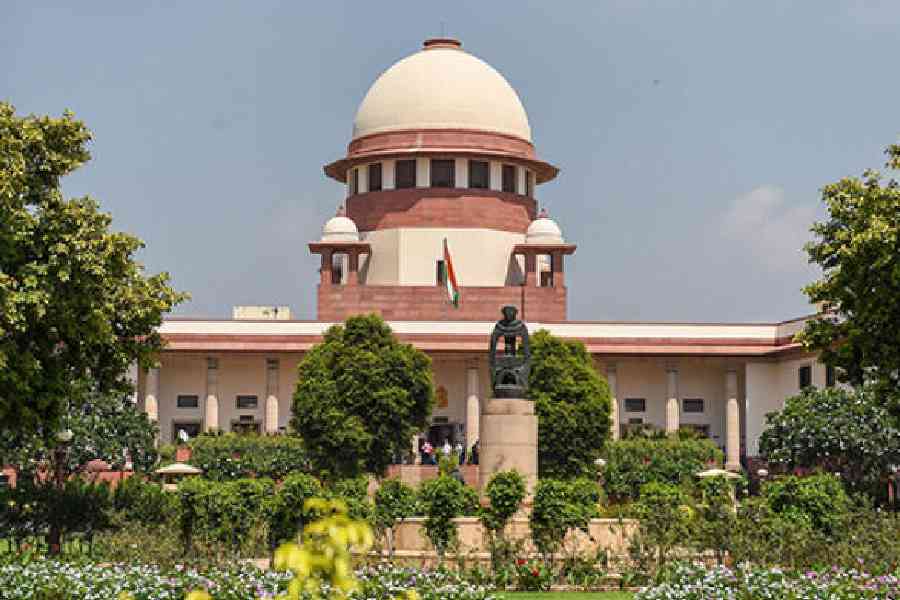
- The Supreme Court of India, in New Delhi.
- When
- The meeting was scheduled for October 6; the court communicated its decision to cancel it on October 1.
- Why
- The proposed constitutional amendment could later be subject to judicial review, so the court considered discussion on the administrative side undesirable.
In favor of the interaction
Reasons for cancellation
Whether judges should consult with the panel
In favor of the interaction
P.P. Chaudhary cited precedents for parliamentary committees consulting judges on constitutional matters. P. Wilson said the proposed exchange would be informal and would not amount to seeking adjudication.
Reasons for cancellation
The Supreme Court considered discussion on the administrative side undesirable because the proposed amendment could later come before it for judicial review.
Separation of powers and future cases
In favor of the interaction
Wilson argued that separation of powers does not prohibit institutional dialogue and that informal input would not prevent courts from hearing future challenges.
Reasons for cancellation
The court's stated concern was that discussing a proposal that might later be reviewed by the judiciary was not appropriate.
Key facts
- Proposed meeting
- Informal discussion with the CJI and other Supreme Court judges
- Scheduled time
- October 6 at 4:30 p.m.
- Cancellation communicated
- October 1
- Committee
- Joint Committee on the Constitution (One Hundred and Twenty-Ninth Amendment) Bill, 2024 and the Union Territories Laws (Amendment) Bill, 2024
- Proposed delegation
- About 35 committee members and six officers
- Proposal initiated by
- DMK MP P. Wilson
- Court's stated concern
- The proposed constitutional amendment might become a subject of judicial review
Quotes
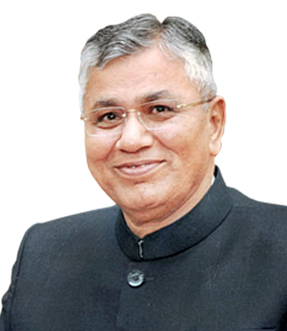
P.P. Chaudhary
Chairman of the Joint Parliamentary Committee and senior BJP MP
“There have been precedents of (Parliamentary) committees interacting with Supreme Court judges because of their expertise and knowledge of constitutional matters.”
 deccanchronicle.com
“If the Supreme Court felt it was not appropriate, there was no need to pursue the matter. There was no need to create or give further publicity to the issue.”
 rediff.com

P. Wilson
DMK MP and committee member who proposed the informal discussions
“Separation of powers is a fundamental Constitutional principle. But separation of powers does not mean the three organs of the State must operate in watertight compartments, never communicate with one another or never exchange institutional perspectives.”
rediff.com
deccanchronicle.com
Sources
Related news

Supreme Court Cancels Parliament Panel Meeting on Simultaneous Elections
Parliament Panel Delays Supreme Court Visit Over Election Bills
Supreme Court Declines One Nation, One Election JPC Meeting
Supreme Court Split Over CEC Appointment Larger Bench
Supreme Court Splits Over Larger Bench For CEC Law
Supreme Court to Hear Challenge to CEC’s ECI Functioning

SBI Seeks Banking Rules as Parliament Examines FCRA Amendments
SC Defers Tamil Nadu's Cauvery Water Plea to August 17
Amid Pushback, Government Ready to Refer FCRA Bill to JPC
Congress to Oppose FCRA Amendment Bill, Says Kharge
