2 days ago
India’s New IST Rules Put Critical Systems On One Clock

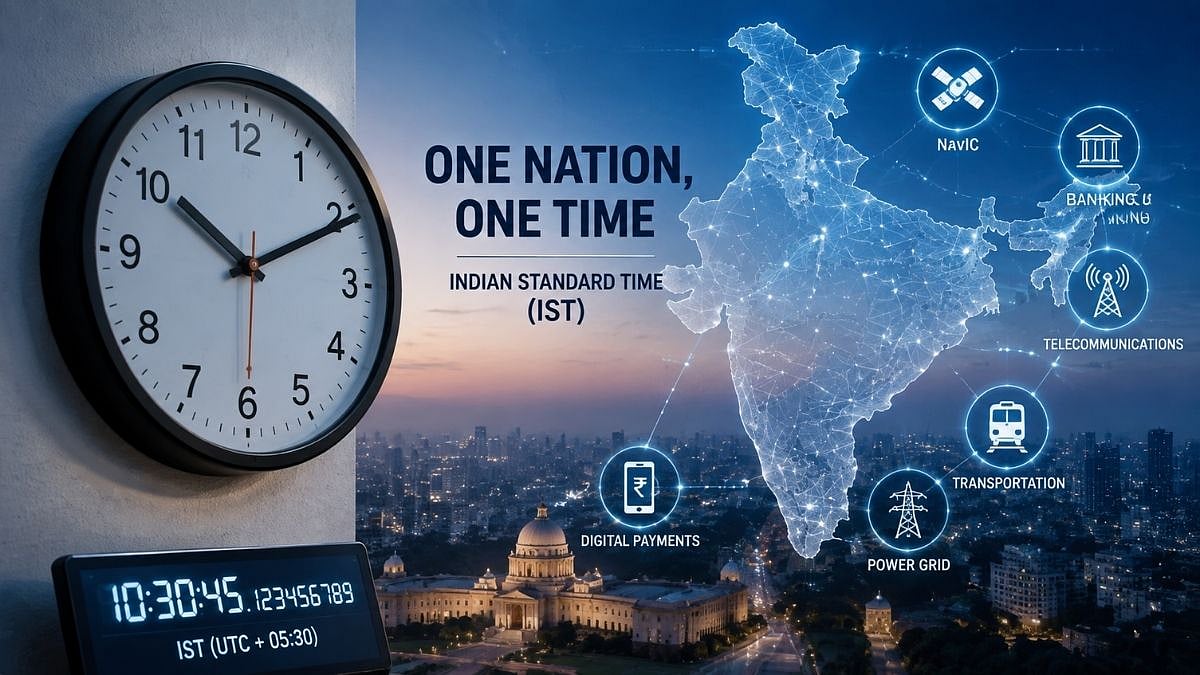
India already uses Indian Standard Time, or IST, on its clocks.
The new rules tell important computer systems to use the same official source for measuring time.
These systems include banks, payment services, trains, phone networks and power stations.
This can help them agree on exactly when a payment or other event happened.
It can also make it easier to coordinate services and investigate failures or cyber incidents.
The changes will happen after a 180-day transition period, expected to end around March 2027.
India is building systems that can send accurate time using Indian technology such as NavIC.
Most people will not notice any change on their phones or watches.
Some scientific, astronomical and navigation activities may use approved specialised time arrangements.

The government notified the Legal Metrology (Indian Standard Time) Rules/Regulations, 2026, making IST the common reference for official, legal and commercial purposes.
The rules cover time-sensitive systems including banks, digital payments, telecom networks, railways, airports, power grids, government records and emergency services.
They take effect 180 days after publication in the Official Gazette, with implementation expected around March 2027.
India is not changing its time zone, so phones, watches and wall clocks will continue displaying the same IST.
The government is developing domestic IST distribution using authorised Indian sources, including NavIC, and White Rabbit technology to reduce reliance on foreign timing systems.
- Who
- The Indian government, including the Department of Consumer Affairs, issued the regulations.
- What
- The government established Indian Standard Time as the common legal and official reference for time-dependent systems across India.
- Where
- The framework applies across India, including government, banking, telecommunications, transport, power and other critical systems.
- When
- The regulations were notified on August 27, 2026, and will take effect 180 days after publication in the Official Gazette, with implementation expected around March 2027.
- Why
- The government says a precise, unified and traceable time source will improve timestamp accuracy, coordination and domestic control over critical infrastructure.
Key facts
- Initiative
- One Nation, One Time
- Official reference
- Indian Standard Time (IST), derived from UTC(NPLI) plus five hours and 30 minutes
- Legal instrument
- The articles refer to the measure as the Legal Metrology (Indian Standard Time) Rules or Regulations, 2026
- Notification date
- August 27, 2026
- Transition period
- 180 days after publication in the Official Gazette
- Covered systems
- Banking, digital payments, telecommunications, railways, airports, transportation, power grids, government records and emergency services
- Timing infrastructure
- Authorised Indian sources including NavIC and White Rabbit-based IST distribution networks
Sources

Related news

India Notifies IST Rules As Common Official Time Reference

UPSC Current Affairs: India’s Diplomacy, Economy, Law and Policy

India's Data Centre Policy Push Aims to Protect Sovereign Data

UPSC Weekly Current Affairs: Environment, Diplomacy, Defence and Economy

India's R&D Ecosystem Faces Hurdles On Path To Knowledge Economy

New model maps Delhi’s traffic noise across urban landscape

Allahabad University Opens PhD Admissions For 2026-27 Session
India's Geoscience Agencies Sign MoU To Advance Exploration