

1 hr ago
Why Indian Stocks Fell 1,800 Points in Two Sessions

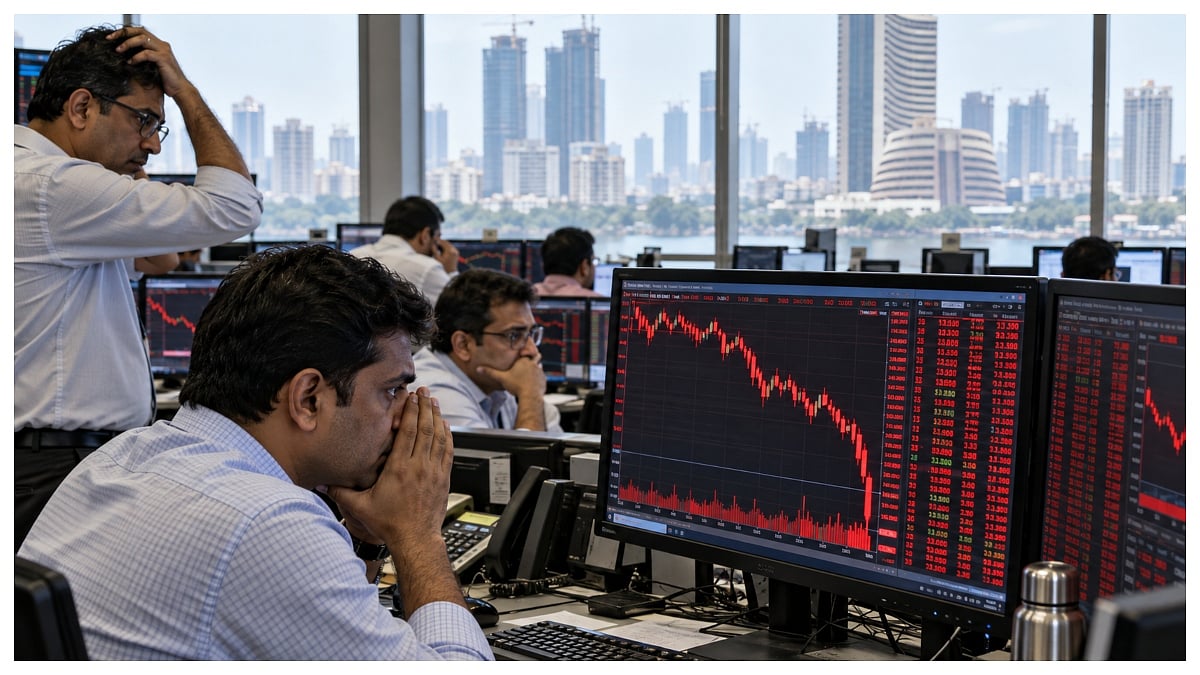
Indian share prices fell sharply for two days.
The Nifty and Sensex are important measures of how Indian stocks are performing.
Investors became worried because bonds in several countries were offering better returns.
Oil prices were also high, which can make many things more expensive in India.
Companies may then earn less because their costs rise.
The Indian rupee weakened against the US dollar, encouraging some foreign investors to withdraw money.
Investors also feared that interest rates could rise and make borrowing more expensive.
Because of these concerns, many people sold shares, pushing the market lower.

The Nifty 50 fell about 571 points and the Sensex more than 1,800 points over two sessions.
The Nifty 50 touched an intraday low of 22,569, while the Sensex reached 72,064 on Tuesday.
Experts cited rising global bond yields, elevated crude oil prices, weak earnings expectations, a falling rupee, and possible higher interest rates.
Higher oil prices could increase inflation, fiscal pressure, raw-material costs, and logistics expenses for Indian companies.
Analysts identified 22,500–22,300 as immediate Nifty support and 21,000 as a possible next level if that range breaks.
- Who
- Indian stock-market investors, foreign portfolio investors, and the experts quoted in the report.
- What
- The Nifty 50, Sensex, and Bank Nifty extended their declines for a second consecutive session.
- Where
- India’s stock market, including the BSE Sensex, Nifty 50, and Bank Nifty.
- When
- Tuesday, during the market’s opening and early intraday trading, after two straight losing sessions.
- Why
- Experts attributed the fall to rising global bond yields, elevated crude oil prices, expected weak earnings, rupee weakness, and fears of a higher-interest-rate environment.
Key facts
- Nifty 50 low
- 22,569 on Tuesday
- Sensex low
- 72,064 on Tuesday
- Two-session Nifty decline
- About 571 points
- Two-session Sensex decline
- More than 1,800 points
- Immediate Nifty support
- 22,500–22,300
- Possible next Nifty support
- 21,000 if the immediate support breaks on a closing basis
- Global bond yield cited
- US 10-year yield above 5%, described as its highest since 2007
Quotes
Avinash Gorakshkar
Founder of Avinash Mentor Research
“Crude oil prices sustaining at the elevated levels have renewed the fear of inflation, which is expected to put pressure on the Indian government, as they import around 85% of the domestic demand for crude oil. So, crude oil price sustaining at the higher levels is negative for the growth of the national economy, as higher inflation enhances fiscal deficit.”
 livemint.com
“It's not that only the US bond yield is soaring. It is soaring globally. The US 10-year bond yield has crossed 5%, the highest since 2007. Likewise, the Japanese 10-year bond yield is at a 1996 high, and the French 10-year bond yield is at its highest since 2008.”
livemint.com
Sandeep Pandey
Representative of Basav Capital
“After the 25 bps US Fed rate hike, pressure is on the RBI to raise interest rates in India as well. Now the market is estimating an additional 25 BPS US Fed rate hike, which hints at the global economy moving towards a high-interest-rate regime, as we saw during the COVID-19. This is expected to squeeze the liquidity from the markets, a scenario where a market becomes an ideal sell-on-rise market.”
livemint.com
Sources
Related news

Indian Stocks Plunge as Oil, Yields and War Weigh
Indian Markets Slide as US Yields, Oil and Rupee Weaken

Indian Markets Extend Sell-Off as Oil and Yields Rise

Indian Markets Lose Nearly Rs 5 Lakh Crore After Sell-Off

Sensex, Nifty Plunge as West Asia Tensions Lift Oil Prices

Indian Stocks Slide as Oil, Conflict and Yields Rise

Kapil Dev Backs Indian Golfers Ahead of Japan Asian Games

Gujarat Themis Uses Private Credit for Japanese Acquisition

Shreyas Iyer, Abhishek Sharma Bow to Fans After Abandoned Quarterfinal

Asian Games Day 11: Indian Archers Win, Medals Await
