1 hr ago
India Calls for Dismantling Shelters for Terror Networks
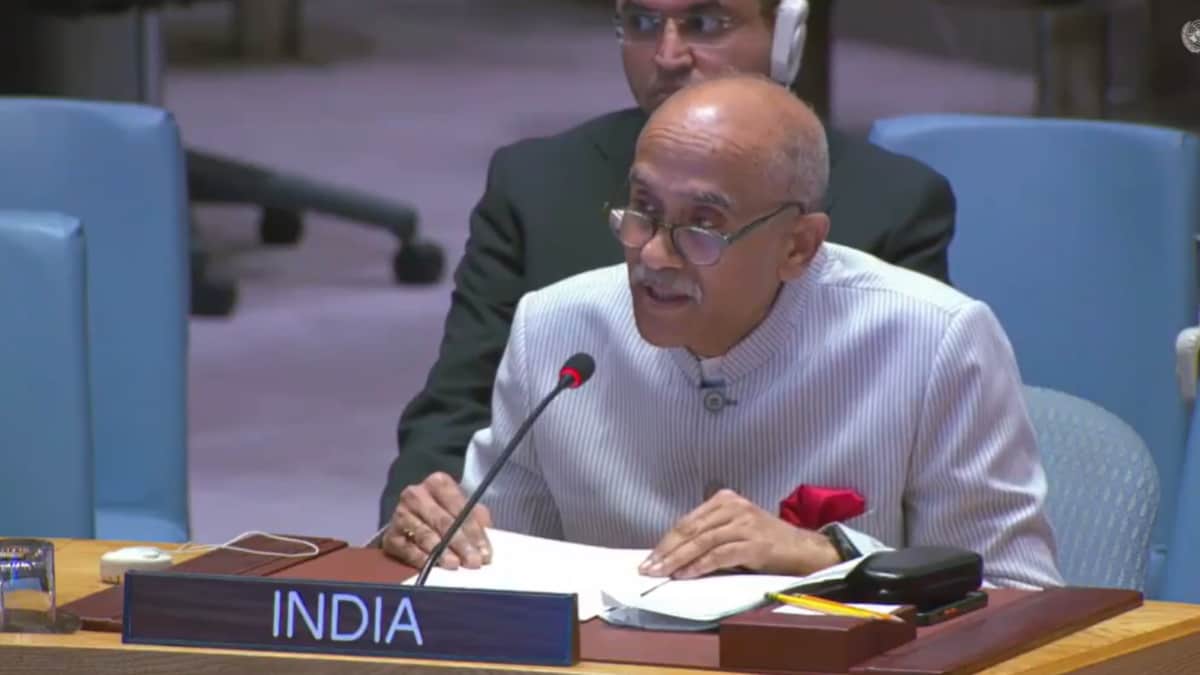
India spoke at a United Nations meeting about places where terrorist groups can find shelter and support.
Its ambassador said terrorism networks are not always hidden in remote caves.
He noted that Osama bin Laden was found in a guarded compound in Abbottabad, Pakistan.
Other people connected to the September 11 attacks were also found in homes or cities.
India said groups such as al-Qaeda, Lashkar-e-Taiba, and Jaish-e-Mohammed have continued to use supportive environments.
India wants countries to remove these safe and permissive conditions.
India also criticized the forced return of many Afghans from nearby countries.
It said more than three million Afghans were returned in 2025 and 2026, mostly against their will.

India urged the international community to dismantle environments that shelter transnational terrorist networks.
UN Ambassador Parvathaneni Harish said al-Qaeda’s network extends beyond Afghanistan through affiliated organizations.
Harish cited Osama bin Laden’s discovery in Abbottabad and said other 9/11 figures were found in residential or urban settings.
India accused Lashkar-e-Taiba and Jaish-e-Mohammed of operating with support and impunity in similar environments.
India protested the involuntary return of Afghan nationals, citing 2.9 million returns in 2025 and 1.15 million by August 22, 2026.
- Who
- India, represented by its United Nations ambassador Parvathaneni Harish, addressed the United Nations Security Council.
- What
- India called for dismantling environments that shelter terrorist networks and protested the involuntary repatriation of Afghan nationals.
- Where
- At the United Nations Security Council; the remarks also referred to Abbottabad, Pakistan, and Afghan returns from neighboring countries.
- When
- At a Wednesday United Nations Security Council meeting reported on September 17, 2026; the cited Afghan-return figures cover 2025 through August 22, 2026.
- Why
- India said permissive environments provide terrorist groups with shelter, support, and impunity, and that forced returns create serious humanitarian consequences.
Key facts
- Speaker
- Parvathaneni Harish, India’s Permanent Representative to the United Nations
- Main appeal
- Dismantle environments that shelter and support transnational terrorist networks
- Organizations cited
- al-Qaeda, Lashkar-e-Taiba, and Jaish-e-Mohammed
- Osama bin Laden
- Tracked down and killed in a fortified compound in Abbottabad, Pakistan
- Afghan returns in 2025
- 2.9 million, according to the statement citing the Secretary-General’s report
- Afghan returns by August 22, 2026
- 1.15 million, most described as involuntary
- Humanitarian concern
- India said more than three million returns were unsafe, undignified, and largely involuntary
Quotes

Parvathaneni Harish
India’s Permanent Representative to the United Nations
“The same permissive environment that sheltered the architects of 9/11 has, in the years since, continued to provide space, support, and impunity to affiliates of Al Qaeda such as Lashkar-e-Taiba and Jaish-e-Mohammed and their like, acquiring different identities to escape this Council’s sanctions framework and whose leadership and terror training infrastructure have been shielded from consequence.”
 news18.com
“The international community supported the global campaign to counter terrorism in the wake of 9/11. Let us, not forget, however, that Al Qaeda’s terror eco-system established its strategic depth beyond Afghanistan through its affiliates.”
news18.com
Sources
Related news

US and UN Security Council Mark 25 Years Since 9/11
25 Years After 9/11, Al-Qaeda Rebuilds Bases in Taliban Afghanistan

Declassified CIA Briefs Put India on Bin Laden’s Attack List

Twenty-Five Years After 9/11, Terrorism Threat Remains Unfinished
Poland Backs India’s Right to Pursue Terrorists Across Borders

PM Modi Marks 9/11 Anniversary, Renews Anti-Terror Commitment