

1 hr ago
Doctors Explain How Lungs Recover After Smoking And Pollution

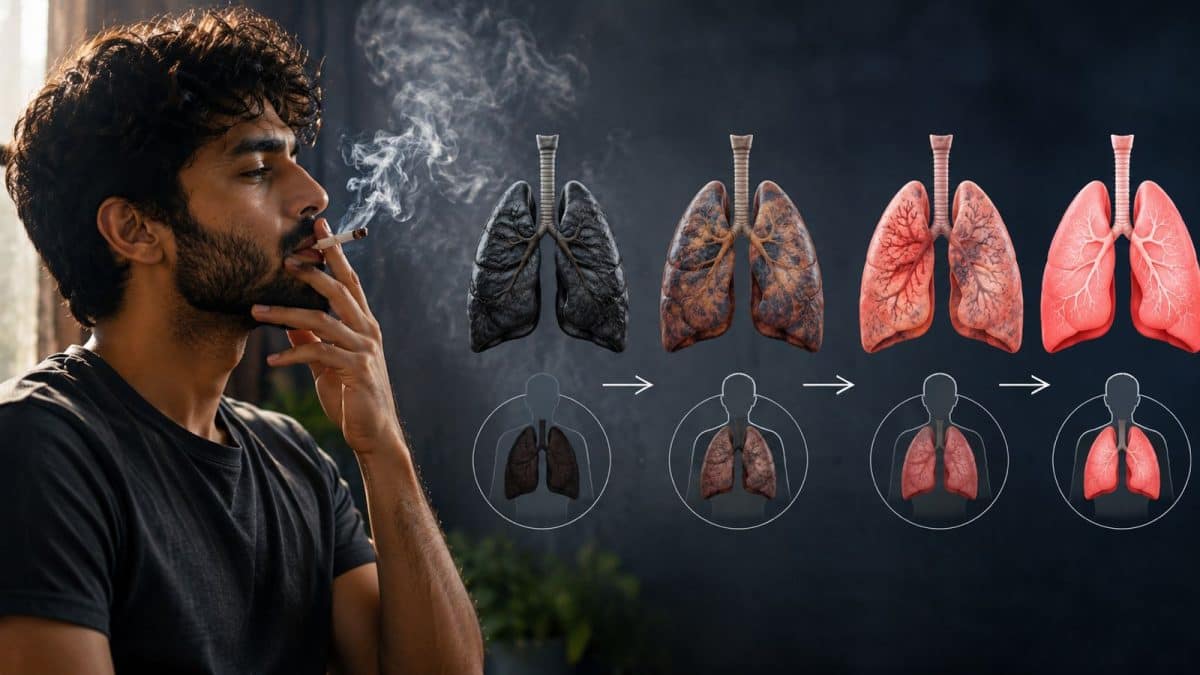
Lungs can repair some of the harm caused by smoking or polluted air.
The best first step is to stop smoking and avoid polluted air when possible.
Tiny hairs called cilia may begin working better and help clear mucus and particles.
Coughing and breathing problems may improve after quitting.
Lung function can also improve within a few weeks to a few months.
However, serious damage such as emphysema can permanently destroy parts of the lungs.
Exercise can help the body use oxygen more efficiently, even when some damage remains.
Healthy food and water support the body but cannot detox the lungs.
People with ongoing cough, wheezing, infections or breathlessness should see a doctor.

Stopping smoking or reducing pollution exposure is the most important step toward lung recovery.
Airways and cilia can gradually regain function after smoking stops, improving mucus and particle clearance.
Lung function may improve within two weeks to three months after quitting, while coughing and breathlessness can decline over subsequent months.
Permanent structural damage, including emphysema-related destruction of air-sac walls, cannot be reversed.
Exercise, pollution precautions, a balanced diet and medical evaluation can support lung health, but detox products cannot remove accumulated damage.
- Who
- People who have smoked for years or experienced long-term pollution exposure, with guidance from pulmonologists Dr. Vikas Mittal and Dr. Shivaraj A L.
- What
- The article explains which effects of smoking and pollution exposure can improve, which damage may be permanent, and how to protect lung health.
- Where
- The guidance concerns the lungs and respiratory system, including exposure at home, outdoors and in workplaces.
- When
- Recovery can begin after exposure stops; lung-function improvement may begin within two weeks to three months after quitting, with symptom improvement over subsequent months.
- Why
- Stopping exposure reduces ongoing irritation and can slow further lung-function loss, while protecting against additional damage.
Key facts
- Most important action
- Stop smoking and avoid or reduce further exposure to pollutants.
- Early lung recovery
- Airways can gradually recover and cilia may regain their ability to clear mucus and pollutants.
- Potential timing
- The American Lung Association says lung function can begin improving within two weeks to three months after quitting.
- Permanent damage
- Emphysema can destroy air-sac walls, creating structural damage that cannot be reversed.
- Pollution precautions
- Use ventilation, reduce dust and smoke exposure, wear suitable workplace protection and consider a well-fitted N95 during unavoidable exposure.
- Helpful activity
- Walking, cycling, swimming and supervised pulmonary rehabilitation may improve fitness and respiratory efficiency.
- Medical warning signs
- Persistent cough, wheezing, recurrent chest infections, breathlessness or reduced exercise capacity warrant medical assessment.
Quotes
Dr. Vikas Mittal
Director and pulmonologist at CK Birla Hospital, Delhi
“After they have stopped smoking, the airways start to recover gradually, and the small hair-like structures known as cilia are able to regain their function so as to help clear mucus and pollutants from the lungs”
 firstpost.com
“There are mechanisms within the lungs for mucus clearance and particle removal, but eliminating the exposure is much more critical than any such detoxifying substance”
firstpost.com
Sources
Related news
How Long Do Lungs Take to Clear Cigarette Smoke?

Delayed Recognition Can Hide Serious Interstitial Lung Disease
H1N1 Usually Improves Within A Week, Cough May Linger
H1N1 Recovery: Seven Mistakes To Avoid After Fever

Fitness Does Not Make Young People Immune to Lung Cancer

Woman Resigns Over Workplace Cigarette Smoke, Sparking Online Debate

CDC Confirms Measles Death After Pennsylvania Reporting Dispute

WHO Chief Says US Rejoining Global Health Agency Is Time

Hayden Panettiere’s Death Highlights Fentanyl’s Deadly Overdose Risks
Pregnancy Sepsis: Warning Signs, Prevention, and Emergency Care
