

3 days ago
Cyberabad Launches Rainwater Harvesting Pilot To Reduce Waterlogging
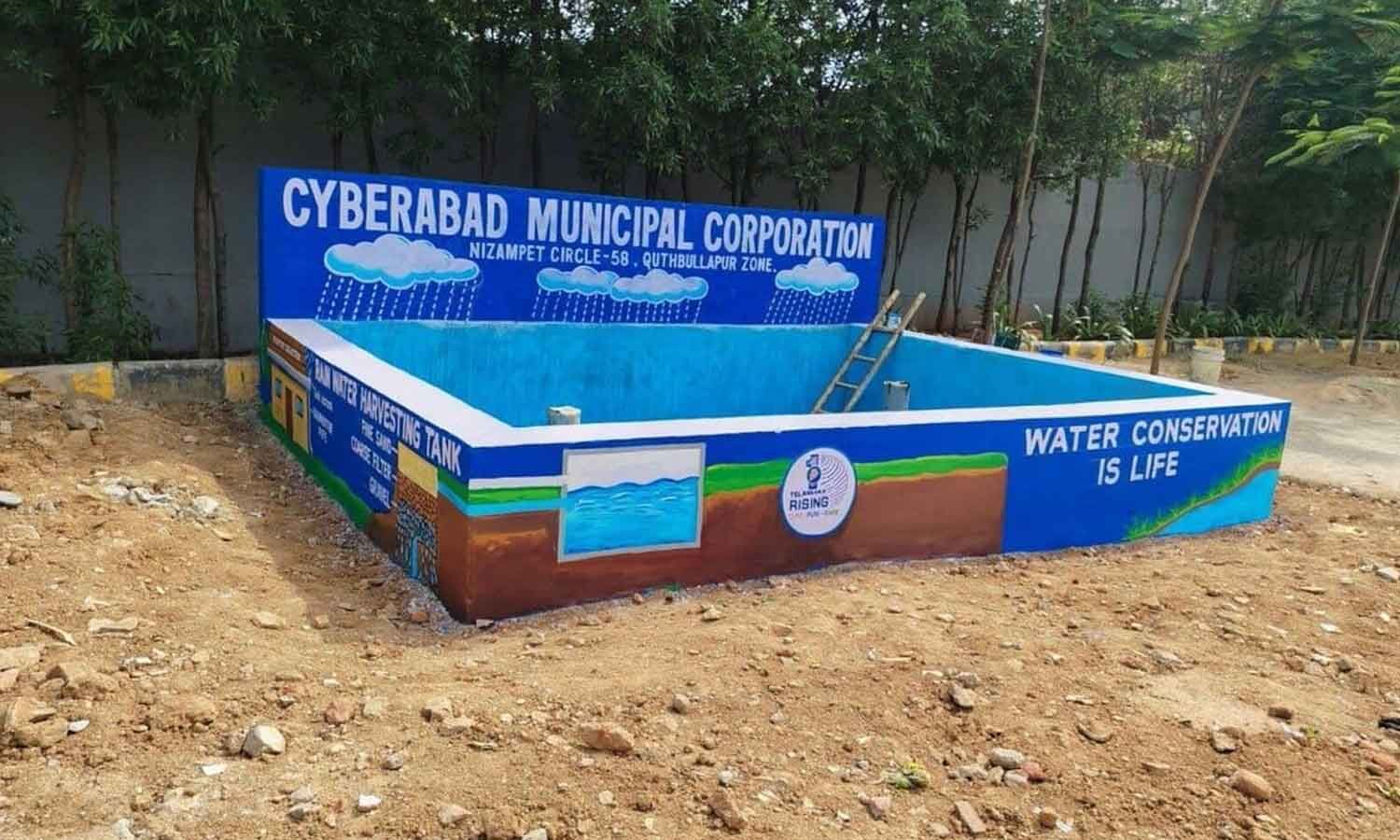
Cyberabad is testing a new way to deal with flooding on roads.
Special pits collect rainwater that stands on the streets.
The water is then sent underground to help refill groundwater.
The first test is near Pragathi Nagar Kaman.
Officials say waterlogging there has fallen by about half.
They may build similar systems at other problem locations.
Experts warn that dirty road water can carry garbage and pollution underground.
They say the pits must be filtered, cleaned and checked regularly.

Cyberabad authorities launched a pilot rainwater harvesting system near Pragathi Nagar Kaman.
The system channels stagnant road water underground instead of pumping it into drains and canals.
Officials reported nearly a 50 percent reduction in waterlogging at the pilot location.
Cyberabad has identified 202 waterlogging locations, including 82 major trouble spots.
Experts warned that filtration, maintenance and groundwater-quality monitoring are essential for expansion.
- Who
- Cyberabad authorities and the Cyberabad Commissionerate.
- What
- A pilot initiative is using harvesting pits and recharge bores to turn road runoff into groundwater recharge.
- Where
- Near Pragathi Nagar Kaman, close to KGR Function Hall, in Hyderabad.
- When
- Why
- To reduce waterlogging and rain-related traffic disruptions while replenishing groundwater.
Supporters of the initiative
Experts urging safeguards
Addressing waterlogging
Supporters of the initiative
Authorities say harvesting pits have reduced waterlogging near the pilot site by nearly 50 percent and could reduce traffic disruptions at other major trouble spots.
Experts urging safeguards
Experts caution that harvesting pits alone cannot completely solve waterlogging and require appropriate design, filtration and upkeep.
Groundwater recharge
Supporters of the initiative
The initiative is intended to send stagnant road water underground, potentially helping replenish groundwater while managing flooding.
Experts urging safeguards
Experts warn that polluted road runoff could clog the system or affect groundwater quality if it is not properly filtered and monitored.
Expansion
Supporters of the initiative
Authorities are planning similar systems at identified major waterlogging points based on local conditions.
Experts urging safeguards
Experts say expansion should include regular silt removal, filter cleaning, recharge-bore maintenance and groundwater-quality checks.
Key facts
- Pilot location
- Near Pragathi Nagar Kaman, close to KGR Function Hall
- Reported impact
- Waterlogging has been reduced by nearly 50 percent at the pilot site
- Pit dimensions
- Approximately 12 feet long, 1.5 feet wide and 20 feet deep
- Recharge bores
- Separate bores of around 300 feet and 100 feet are being drilled
- Estimated cost
- Around Rs. 5 lakh per installation
- Identified locations
- 202 waterlogging locations, including 82 major trouble spots
- Main caution
- Road runoff may carry silt, garbage, plastic and other pollutants into the system
Sources
Related news

Rainwater Harvesting Pit Eases Waterlogging at Pragathi Nagar

Gurgaon Pitches Underground Wells and Tanks to Fight Flooding

CMC Commissioner outlines roadmap for better Cyberabad civic services

Heavy Rain Revives Gurugram Waterlogging, Stranding School Buses

Nayab Singh Saini Faces Questions Over Gurugram Waterlogging Crisis

Water Hero Urges Bengaluru Homes To Harvest Rainwater

Hyderabad Police Introduce Zero-Tolerance Security for Ganesh Festival

Vaishali Nagar Underpass Traffic Advisory Extended Through September 16
Cyberabad Police Restrict Gatherings Near PG Exam Centres

NEET-PG Candidates Advised to Avoid Hyderabad Marathon Routes
