

1 week ago
AI Deepens Cyber Threats Facing India’s Critical Infrastructure
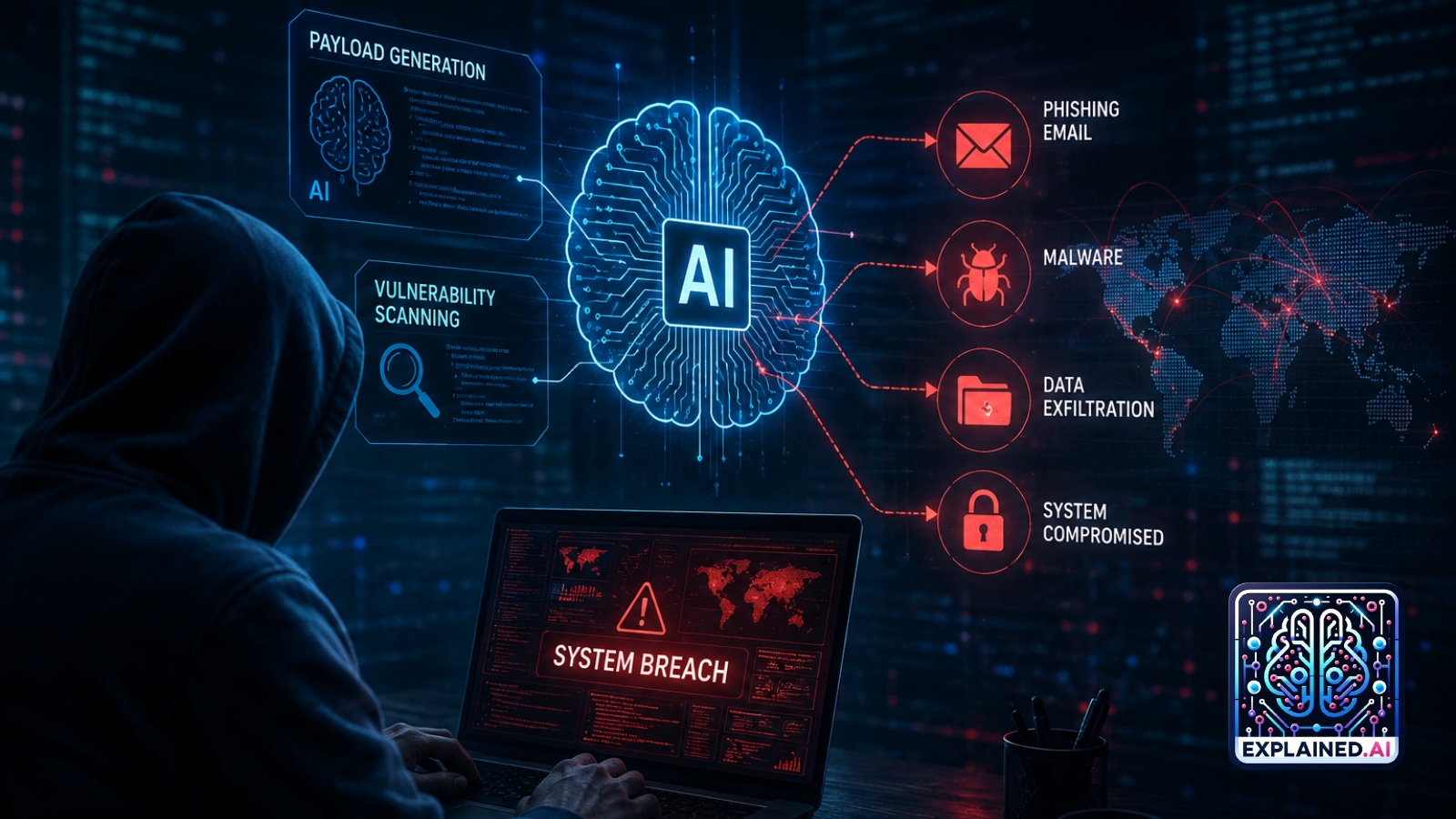
Artificial intelligence is making cyberattacks faster and harder to stop.
It can help attackers find weak spots in computer systems and create convincing fake messages or videos.
Some AI tools can even change harmful software so that older security programs do not recognise it.
This is especially dangerous for power stations, factories, communication networks and other important systems.
India has faced many cyberattacks, including attacks on defence and government networks.
A ransomware group also claimed it stole information connected to the Kudankulam nuclear plant, although the article presents this as a claim.
India is using AI to detect threats and respond more quickly.
However, it still relies on other countries for many important AI technologies.
The article argues that India must develop stronger AI and cybersecurity capabilities together.

AI is accelerating cyberattacks through automated vulnerability discovery, deepfakes, social engineering and adaptive malware.
Frontier AI systems can reportedly identify zero-day vulnerabilities and develop exploits with limited human intervention.
India remains highly exposed, with CloudSEK ranking it among the world’s most cyber-attacked countries.
Threat actors have targeted India’s defence institutions, government systems and critical infrastructure, including during Operation Sindoor.
India is expanding AI-based cyber defence but still depends heavily on foreign technology for models, chips, GPUs and data centres.
- Who
- India, its government and critical infrastructure operators, along with foreign and state-backed cyber threat actors.
- What
- AI is increasing the speed, scale and sophistication of cyber threats while also creating new tools for cyber defence.
- Where
- India’s cyberspace, including defence networks, government systems, educational portals and critical infrastructure.
- When
- The article discusses developments through 2025, including attacks during Operation Sindoor and cybersecurity measures adopted since 2025.
- Why
- AI can automate reconnaissance, exploit discovery, malware creation and social engineering, while India’s domestic AI capabilities remain behind those of the United States and China.
Key facts
- AI adoption
- The article says ChatGPT reached one billion users in three years, compared with 15 years for the Internet.
- India’s cyberattack ranking
- CloudSEK’s 2024 report ranked India as the second-most cyber-attacked nation after the United States; its 2025 report ranked India sixth.
- Reported nuclear-plant claim
- World Leaks claimed it stole and posted data related to India’s Kudankulam nuclear plant, including facility blueprints and supplier details.
- Operation Sindoor
- Pakistan-backed threat actors, including APT36, targeted India’s Ministry of Defence, Army, Navy, Defence Research and Development Organisation, and other government systems.
- AI vulnerability discovery
- Anthropic said its Claude Mythos Preview identified thousands of zero-day vulnerabilities across major operating systems and browsers.
- India’s response
- CERT-In has adopted AI-driven threat detection and issued guidance warning organisations that newly discovered vulnerabilities could be exploited within hours.
- Technology gap
- India’s indigenous AI ecosystem is described as lagging behind the United States and China in foundational models, GPUs, chip design and large-scale data centres.
Sources
Related news

AI-Driven Cyberattacks Force India to Rethink Security

Hackers dodge digital nets as India faces cyberattack surge

India’s AI Push Puts Cyber Resilience at Center
AI Agents Create New Cybersecurity Risks, Executive Warns

AI Threats Push Companies to Modernize Aging Cybersecurity Infrastructure

India Expands Digital Fertilizer Tracking for Subsidy Oversight

Pune to Temporarily Replace MH-12 With MH-61 Registration Code

NIC Opens Applications for 376 Scientific Assistant Posts

Family Allegedly Attacked During Violent Shillong KSU Rally
