

1 hr ago
SCO Urged to Refocus on Central Asia and Core Priorities
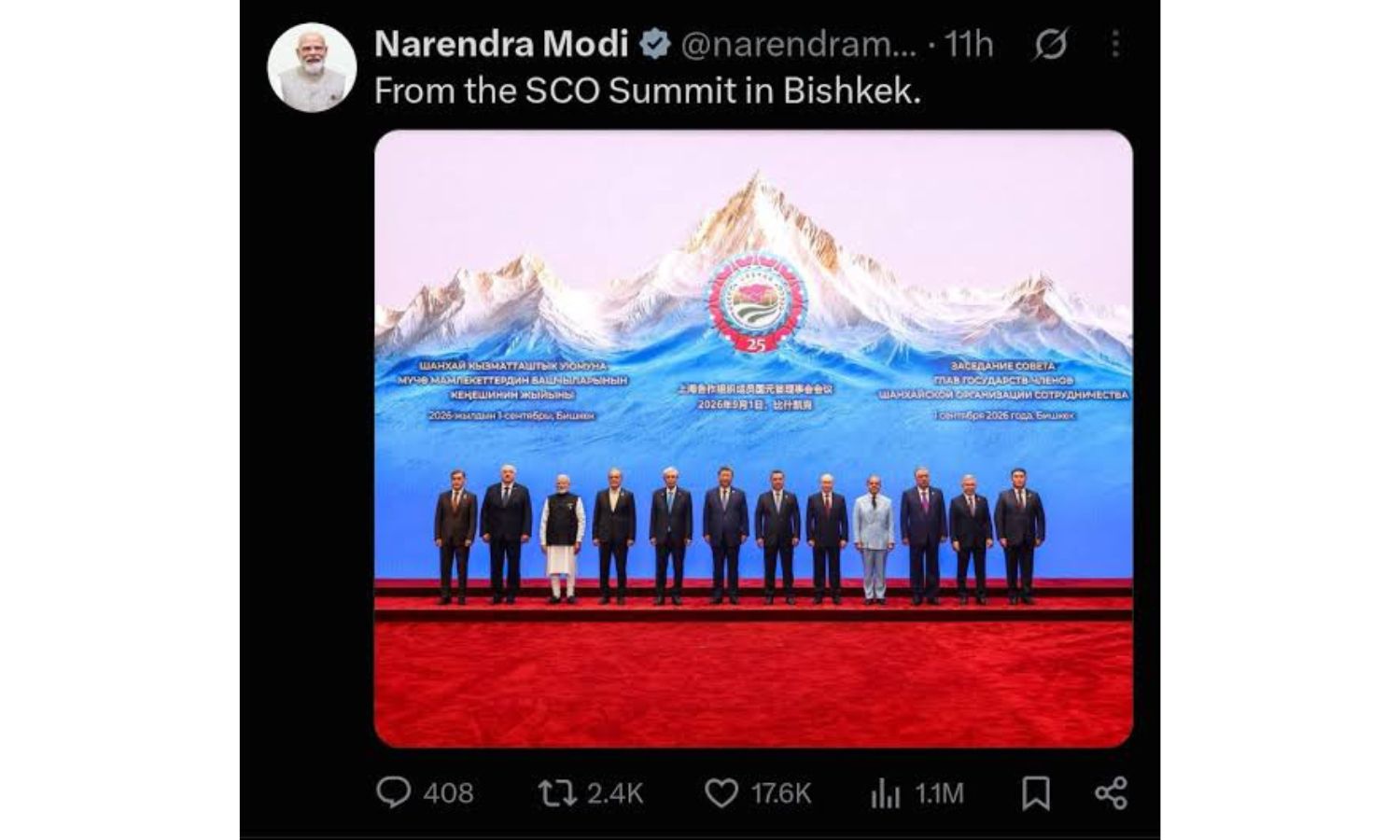
The Shanghai Cooperation Organisation is a group of countries that originally worked mainly on Central Asian issues.
It has grown to include countries from other parts of Asia and Europe.
This has created a debate about whether the group is still mainly for Central Asia or now covers all of Eurasia.
Central Asian countries want investment, transportation links, technology and jobs.
They are also increasingly making some decisions together outside the SCO.
Members have different ideas about whether security, trade, development or people-to-people ties should come first.
They agreed to create new centers to fight security threats, drugs and organized crime.
However, the group has had only modest practical results during its first 25 years.
The article says the SCO should focus on a smaller number of useful goals.

The Shanghai Cooperation Organisation began with six members focused on Central Asian cooperation and expanded to India, Pakistan, Iran and Belarus.
Central Asian states remain the SCO’s core but increasingly coordinate development, connectivity and Afghanistan policy through their own regional mechanisms.
The organisation faces debate over whether it should remain Central Asia-focused or evolve into a broader Eurasian grouping.
At the Bishkek Summit, members agreed to establish centers addressing security threats, drugs and organized crime, while a proposed development bank remained unresolved.
The article argues that the SCO should narrow its agenda and pursue a few practical priorities rather than attempt expansive cooperation across Eurasia.
- Who
- The Shanghai Cooperation Organisation’s member states, especially the Central Asian republics, China, Russia and India, are central to the discussion.
- What
- The article calls for the SCO to clarify its purpose, geographic focus and priorities after expanding beyond Central Asia.
- Where
- The organisation operates across Central Asia and the wider Eurasian region; the Bishkek Summit was held in Kyrgyzstan.
- When
- The discussion follows the SCO’s first 25 years and the 26th Summit in Bishkek on August 31, 2026.
- Why
- Expansion has produced debate over whether the SCO can manage its broad agenda and whether it should prioritize Central Asian cooperation or wider Eurasian issues.
Central Asia-Centered SCO
Broader Eurasian SCO
Geographic focus
Central Asia-Centered SCO
The SCO should keep Central Asia as its core because the organisation began there and the Central Asian republics share practical regional interests.
Broader Eurasian SCO
The SCO has expanded its membership and partnerships across Asia and beyond, making a broader Eurasian role increasingly plausible.
Main priorities
Central Asia-Centered SCO
The organisation should concentrate on practical regional needs such as connectivity, investment, development, security and Afghanistan.
Broader Eurasian SCO
The organisation should maintain a wider agenda covering Eurasian trade, security, political cooperation and a broader international order.
Institutional relevance
Central Asia-Centered SCO
Central Asian states increasingly coordinate with China, Russia and one another through Central Asia-plus-one formats, suggesting the SCO should refine its role rather than duplicate those mechanisms.
Broader Eurasian SCO
The SCO’s broad membership and new security centers could provide a platform for cooperation across a large Eurasian area, even if its outcomes have so far been modest.
Key facts
- Original members
- China, Russia, Kazakhstan, Kyrgyzstan, Tajikistan and Uzbekistan established the SCO’s original membership framework.
- Expansion
- India and Pakistan joined in 2017, Iran in 2023 and Belarus in 2024.
- Dialogue partners
- The Bishkek Summit had 15 dialogue partners, including Turkey, Saudi Arabia, the United Arab Emirates and Egypt.
- Security centers
- Members decided to establish centers for security challenges, anti-drug work and combating international organized crime.
- Afghanistan mechanism
- The SCO Contact Group on Afghanistan was revived in 2017 but has again paused formal operations since the Taliban takeover in August 2021.
- Development bank
- Progress on a proposed SCO Development Bank was limited, with Kyrgyzstan and Kazakhstan both offering to host it.
- Bishkek Declaration
- The declaration condemned military strikes on Iran and supported Iran’s sovereignty, while remaining silent on the Russia-Ukraine conflict.
Quotes

Sadyr Japarov
President of Kyrgyzstan and chairman of the SCO at the Bishkek Summit
“SCO will be free from bloc thinking and confrontation and serve as a platform for strengthening trust and ensuring peace and stability.”
 deccanchronicle.com
“taking security as a key goal, and foster an environment of common security”
deccanchronicle.com
Sources
Related news
India Urged to Take More Active Role in SCO
Bishkek Summit Offers India Lessons for Shaping BRICS Diplomacy

Modi at SCO Summit for Putin Talks, Likely Xi Meeting
SCO Summit Opens in Bishkek Amid Security and Trade Talks

Centre Approves Rs 20,800 Crore Railway Multitracking Projects

Eknath Shinde Honoured at House of Lords for Governance
Mumbai Crime Branch Takes Over Alleged Fake PMO Card Probe
BJP's Seva Campaign Marks Modi's 25 Years in Public Office
