1 hr ago
Periyar: The Atheist Who Challenged Caste and Orthodoxy
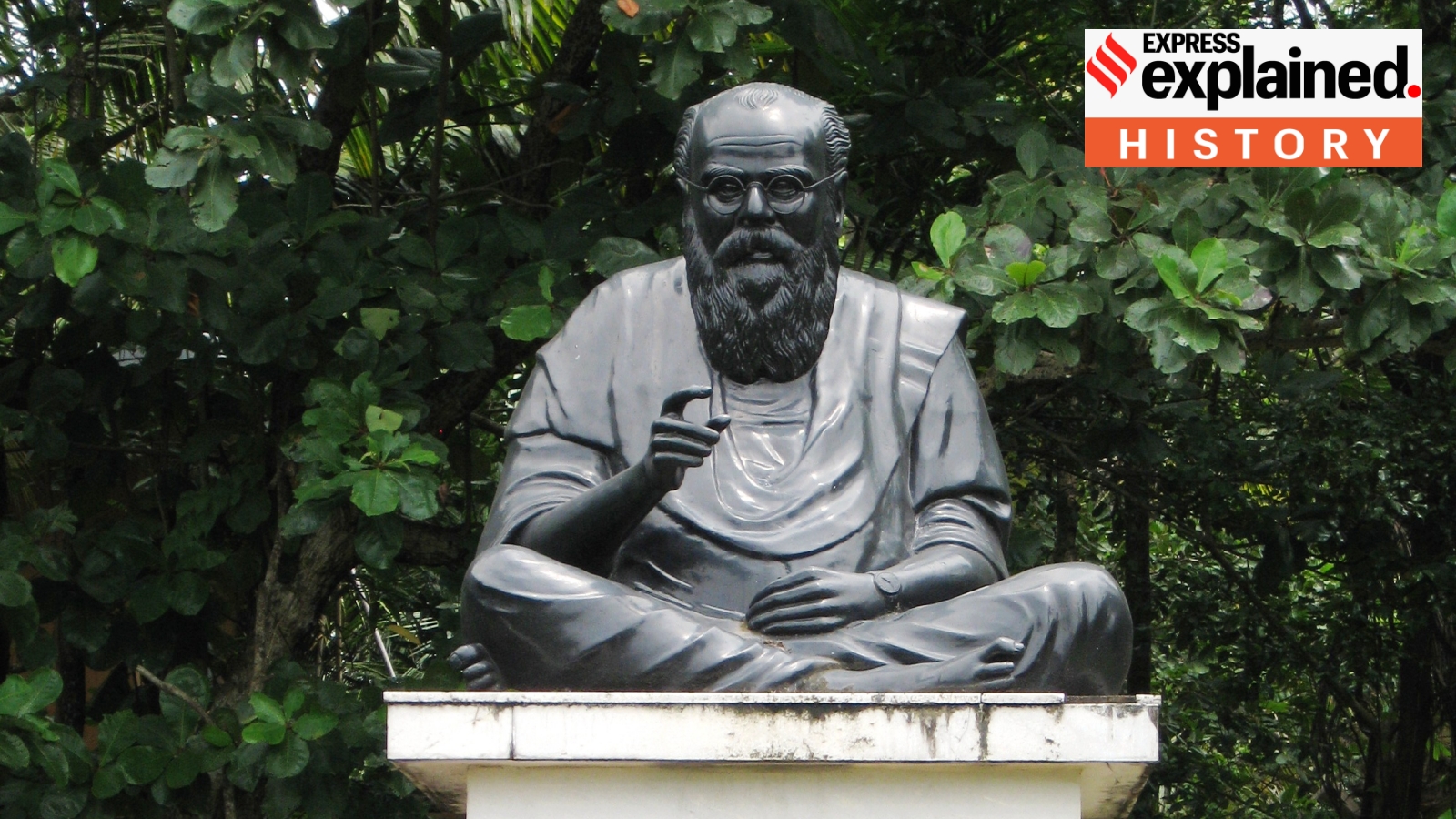
Periyar was an important social reformer from Tamil Nadu.
He believed people should be treated equally regardless of caste.
He also criticized religious rules that he thought supported inequality.
He wanted women to have greater freedom and challenged traditional marriage.
Periyar first worked with the Indian National Congress but left after disagreements about caste discrimination.
He created the Self-Respect Movement to promote equality, rational thinking and social change.
He supported B R Ambedkar’s demand for separate political representation for oppressed communities.
Periyar also opposed Hindi imposition and spoke about a separate Dravida Nadu, though the article says he had no action plan for separation.
He died in 1973, but his challenge to caste and social hierarchy remained influential.

E V Ramasamy, known as Periyar, was a rationalist and radical social reformer central to the Dravidian movement.
He left the Indian National Congress in 1925 after disputes over caste discrimination and proportional representation.
His Self-Respect Movement promoted equality, socialism, rationalism, caste annihilation and women’s liberation.
Periyar supported B R Ambedkar’s demand for separate electorates for the Depressed Classes, opposing Mahatma Gandhi on the issue.
He led the Justice Party and later the Dravidar Kazhagam, advocating social reform, linguistic rights and autonomy for southern states.
- Who
- E V Ramasamy, popularly known as Periyar, along with movements and organizations including the Self-Respect Movement, the Justice Party and the Dravidar Kazhagam.
- What
- A biographical account of Periyar’s campaigns against caste, religious orthodoxy and women’s subordination, and his role in the Dravidian movement.
- Where
- He was born in Erode and worked primarily in Tamil Nadu and other parts of southern India, including Travancore during the Vaikom Satyagraha.
- When
- Periyar lived from 1879 to 1973; his major political and reform activities described here span the 1920s through the early 1970s.
- Why
- He pursued equality, caste annihilation, rationalism, women’s liberation, linguistic rights and greater autonomy for southern states.
Key facts
- Birth
- 1879, Erode, in western Tamil Nadu
- Death
- December 24, 1973, aged 94
- Popular name
- Periyar, meaning “the Great One”
- Self-Respect Movement
- Founded after Periyar left the Congress in late 1925; it emphasized self-respect, socialism and rationalism.
- Vaikom Satyagraha
- Periyar took a leadership role in the 1924 protest for lower-caste access to public roads around the Sri Mahadeva Temple.
- Social Justice Day
- Tamil Nadu began observing Periyar’s birth anniversary, September 17, as Social Justice Day in 2021.
- Political organizations
- He led the Justice Party, which was reconstituted as the Dravidar Kazhagam in 1944.
Quotes
A. R. Venkatachalapathy and Karthick Ram Manoharan
Authors of The Cambridge Companion to Periyar (2025).
“Periyar spoke of Dravida Nadu to counter Hindi imposition and what he dubbed as the Brahmin-Baniya rule of New Delhi. He had no action plan for separation.”
 indianexpress.com
“One of the most honoured figures in the state of Tamil Nadu, arguably home to the highest number of temples in India, is an atheist who profaned the gods.”
indianexpress.com
Sources
Related news
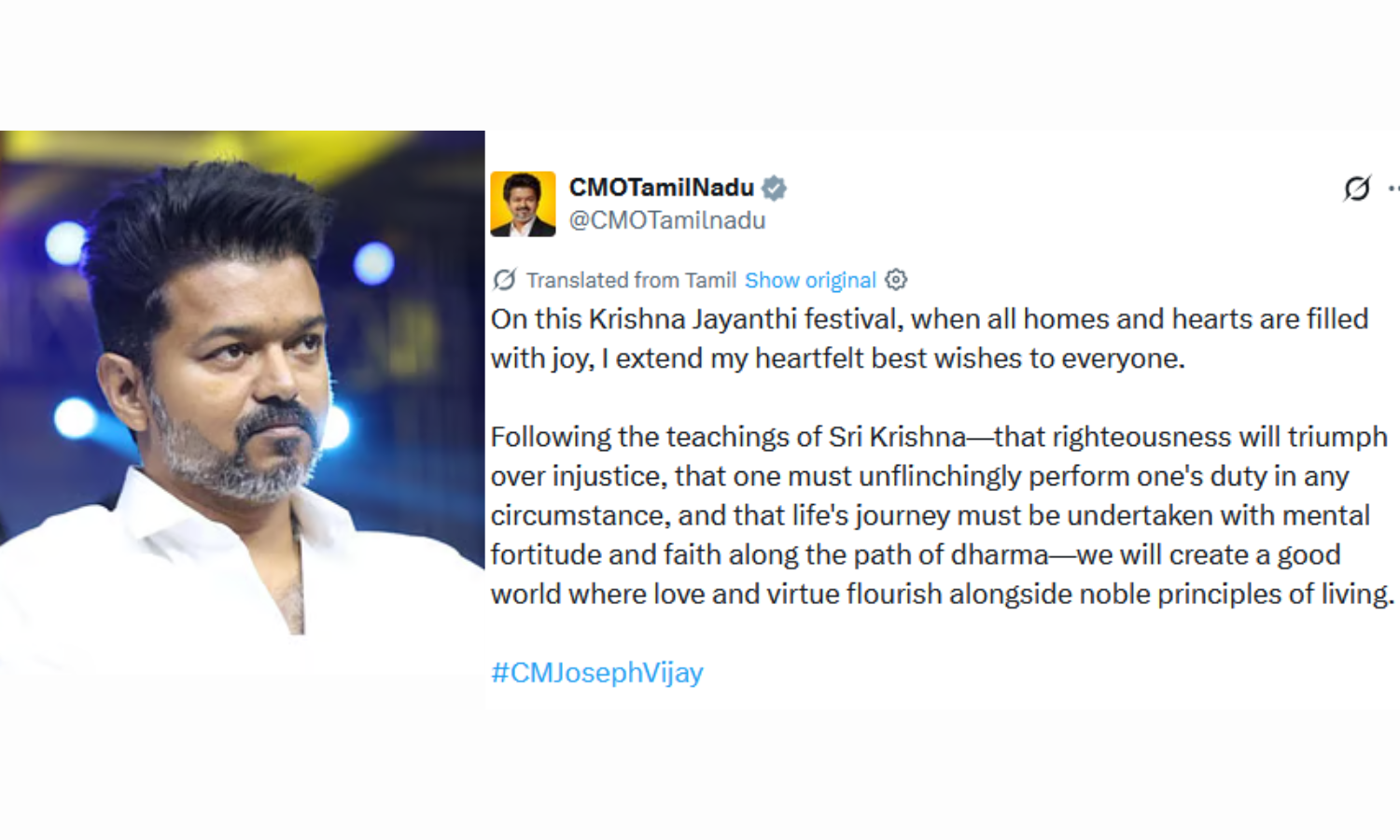
Vijay’s Krishna Jayanti Greeting Triggers Tamil Nadu Ideological Row

Narayana Guru’s Equality Message Continues to Inspire Across Generations
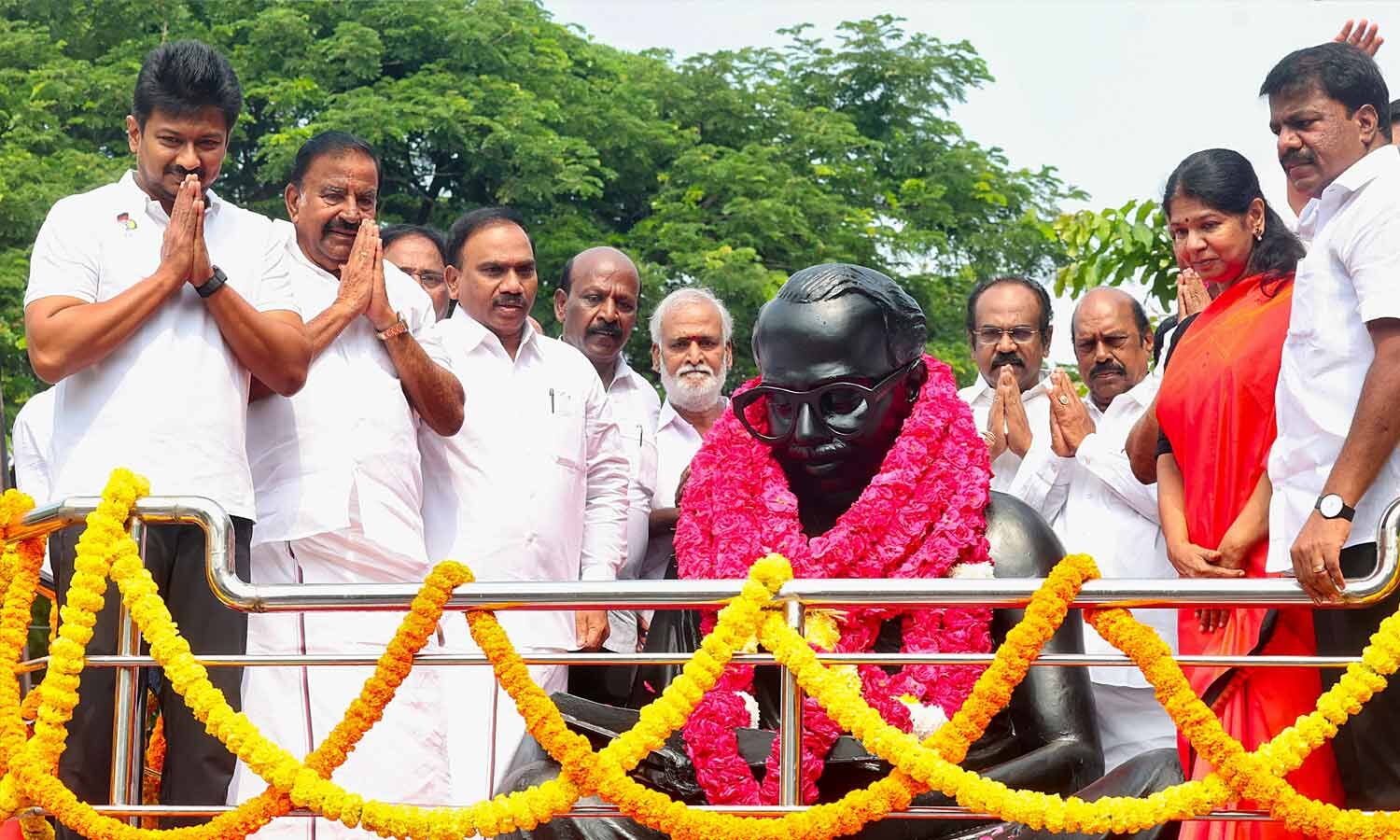
Tamil Nadu Leaders Pay Tribute to Annadurai’s Political Legacy

Tamil Nadu Congress Accuses DMK of Cheap Post-Poll Politics

Kishan Reddy Links Women’s Quota to Ambedkar, Ravidas
TVK Government to Launch Expanded Kamaraj Breakfast Scheme September 22

Tamil Nadu’s Maternity Leave Raises Questions About Shared Parenting

DMK Postpones Mupperum Vizha After Stalin Falls Ill
Tamil Nadu Assembly Debates Snake Curses and Rationalism