

1 week ago
Report Warns Western AI Bias Could Shape Global Worldviews

A report says some AI systems may reflect mostly Western ideas.
This can happen because the systems are trained on data that does not represent everyone equally.
An AI answer may sound neutral while still favoring individualism or Anglo-Saxon ways of thinking.
This could matter when people use AI for school, counselling or legal help.
Simply translating an AI tool may not make it understand local cultures.
The report says systems also need local examples, languages and community guidance.
It mentions projects in places including Egypt, Nigeria, Indonesia and Thailand.
Amazon’s work adapting Alexa for Mexico showed that cultural changes can be complicated.
The report says local communities should help decide what a good answer looks like.

A Chromatics AI report warns that Western cultural values may be embedded in widely used AI systems.
The report says under-represented languages, worldviews and communication styles can produce seemingly neutral but culturally biased responses.
It argues that translation and regional interface changes may not address assumptions embedded in AI training data.
The concern is growing as AI tools are used in education, counselling and legal guidance.
The report highlights local-language projects and says communities should help define culturally correct AI behavior.
- Who
- Chromatics AI and its founder Larry Adams issued the warning; the report concerns developers and users of AI systems worldwide.
- What
- A report warned that Western cultural bias in AI training and design could influence how users understand and interact with the world.
- Where
- The report was released in New Delhi, India, and discusses effects on users globally.
- When
- August 24; the year was not specified.
- Why
- Many AI systems are trained on data that under-represents large parts of the world’s languages, values and communication styles.
Key facts
- Report source
- Chromatics AI
- Main concern
- AI systems may prioritize individualism and Anglo-Saxon norms.
- Affected uses
- Education, professional counselling and legal guidance
- Limitation of localisation
- Translation, currency changes and regional style guides may not change underlying cultural assumptions.
- Examples cited
- Horus, N-ATLaS, Sahabat-AI, Latam-GPT, OpenThaiGPT and AI Sweden’s Swedish-language model
- Corporate example
- Amazon used reinforcement learning and custom training data to adapt Alexa for Mexico.
- Recommended approach
- Collect training data with communities and use culturally grounded evaluation benchmarks.
Quotes
Chromatics AI report
Report published by Chromatics AI on cultural bias in artificial intelligence systems
“And, as they are increasingly used for functions like legal guidance, professional counselling, and education, those embedded values risk shaping how under-represented users perceive the world around them in ways that may be directly at odds with their own,”
 livemint.com
“Research suggests that leading AI systems exhibit a default prioritisation of individualism and Anglo-Saxon norms.”
livemint.com
Larry Adams
Founder of Chromatics AI
“Bespoke culture AI requires things the mainstream market has not yet prioritized at scale. Training data must be collected in genuine partnership with the communities it is meant to serve. Evaluation benchmarks must be culturally grounded, not just linguistically accurate. Communities themselves should help define what 'correct' looks like.”
livemint.com
Sources
Related news
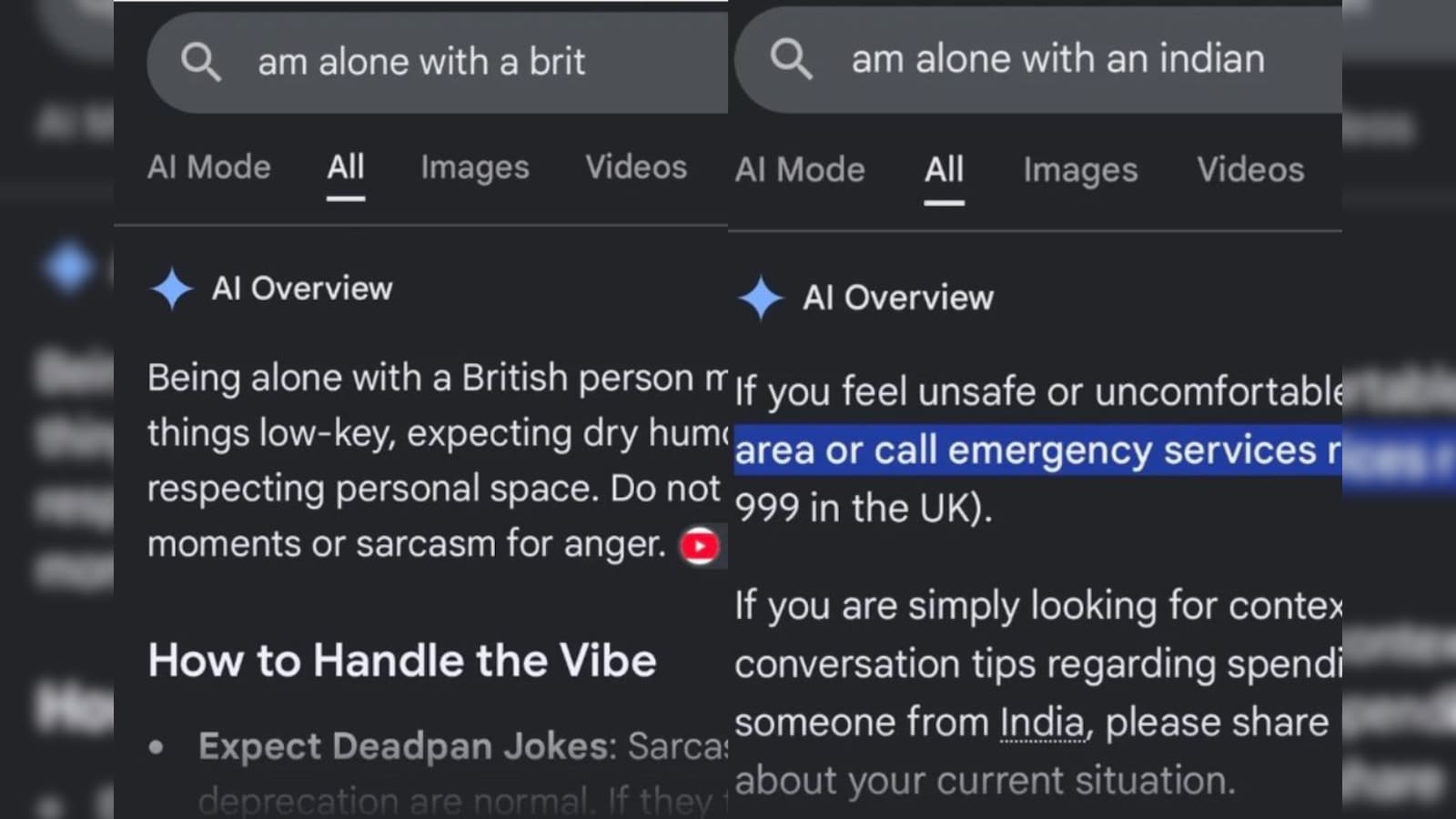
Google AI Overviews Face Criticism Over Nationality-Based Safety Responses
Meta Shows Sensitivity to Child Abuse Content in India Talks

AI, Human Agency, and Who Controls Algorithmic Conditioning

AI accusations against authors of colour spark publishing bias debate

India’s Fourth BRICS Chair Faces a Much Larger Summit

India’s Record Wheat Harvest Opens $1.5 Billion Export Window

Sitwala Settles For Silver After Gilchrist Wins Pan Am Final

India’s Forex Diversification Should Outlast Short-Term Dollar Pressures

World Coconut Day Celebrates Tree of Life’s Global Significance
