1 week ago
RBI Absorbs ₹6 Lakh Crore as Rate Outlook Shifts
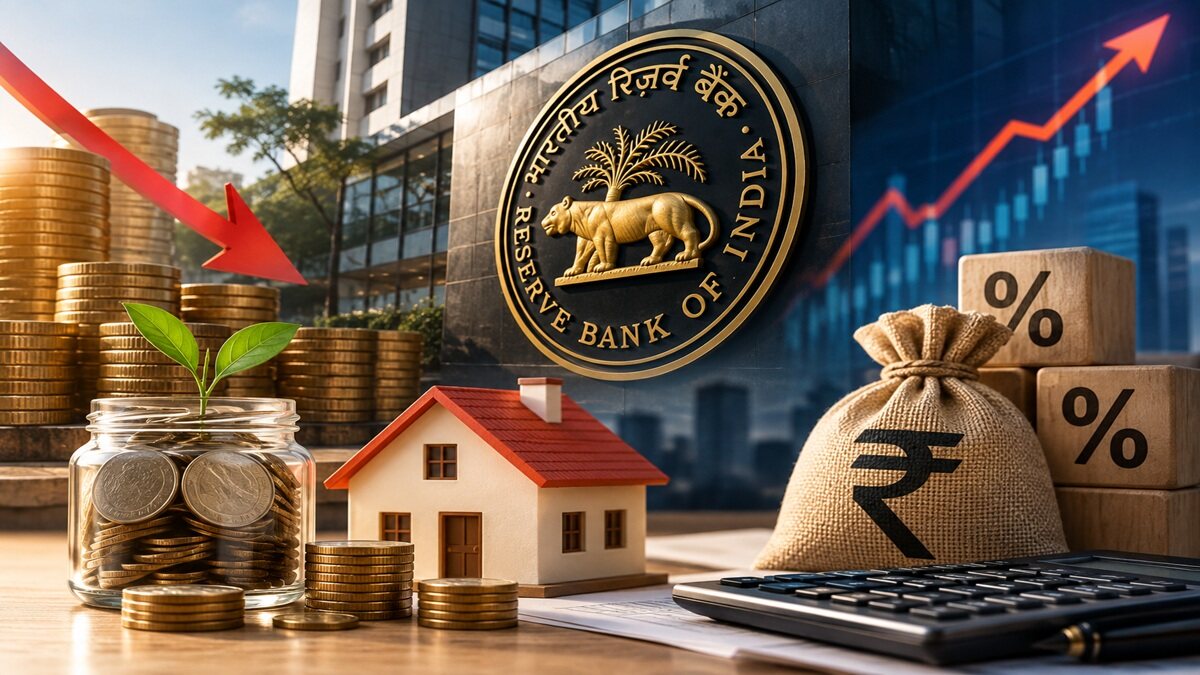
Banks had much more money than they needed.
The RBI temporarily took some of that extra money from banks to keep short-term interest rates near its target.
This does not automatically make home loans more expensive.
Home-loan rates usually change when the RBI changes its repo rate, not simply because money is temporarily absorbed.
FD rates may not rise immediately because banks still have plenty of money.
If the RBI raises rates later, banks may offer better FD rates.
Bond yields have also risen, which can reduce the value of bonds already held by debt mutual funds.
Long-term bond funds can be affected more than short-term funds.
Investors are being advised to match investments to when they will need their money and consider spreading FD maturities.

The RBI absorbed more than ₹6 lakh crore through temporary VRRR auctions after banking-system surplus liquidity reached ₹11.16 lakh crore.
Liquidity surplus fell to about ₹4.45 lakh crore by September 22, but banks still held substantial excess funds.
The operation is not an immediate rate hike; repo-linked home-loan EMIs change only when the benchmark rate changes.
FD rates may remain stable initially, while a future repo-rate increase could prompt banks to offer higher deposit rates.
Rising bond yields may pressure debt-fund NAVs, especially in long-duration funds, although higher yields can improve future reinvestment returns.
- Who
- The Reserve Bank of India, banks, savers, home-loan borrowers and debt-mutual-fund investors are involved.
- What
- The RBI absorbed more than ₹6 lakh crore through Variable Rate Reverse Repo auctions to manage excess banking-system liquidity.
- Where
- The measures affected India’s banking and bond markets, with global bond-market conditions also influencing Indian yields.
- When
- The auctions occurred on September 7; liquidity was reported at about ₹4.45 lakh crore on September 22, and markets were watching the RBI’s October policy meeting.
- Why
- The RBI aimed to prevent short-term money-market rates from falling too far below its 5.25% repo rate after excess liquidity surged.
Expectations for Further Rate Changes
Expectations for Patience
October policy outlook
Expectations for Further Rate Changes
Some economists expect the RBI to raise rates because of inflation risks, higher crude prices, rupee pressure and rising global rates.
Expectations for Patience
Other economists expect the RBI to wait for clearer evidence that domestic inflation is persistent before changing the repo rate.
FD investment approach
Expectations for Further Rate Changes
Investors concerned about potentially higher rates later may avoid locking their entire savings into one long-term FD and instead stagger maturities.
Expectations for Patience
Investors seeking predictable returns may still use an FD to match a known cash need, particularly if rates remain stable or fall.
Debt-fund duration
Expectations for Further Rate Changes
Investors worried about rising yields may prefer shorter-duration funds, which are generally less sensitive to yield changes.
Expectations for Patience
Investors with a longer horizon may accept temporary price pressure because higher yields can improve returns as funds reinvest in newer bonds.
Key facts
- Amount absorbed
- More than ₹6 lakh crore through two VRRR auctions
- Peak liquidity surplus
- ₹11.16 lakh crore by September 6
- Estimated surplus on September 22
- About ₹4.45 lakh crore
- Current repo rate
- 5.25%
- VRRR auction cut-off rate
- 5.24%
- India 10-year government bond yield
- Around 7.18% on September 28
- Foreign-currency mobilisation
- $136.38 billion by August 31, including $127.23 billion through FCNR(B) deposits
Quotes
Adhil Shetty
CEO of BankBazaar, commenting on liquidity and deposit rates
“Liquidity has eased from its record high, but the banking system still has a surplus of about ₹4.45 lakh crore as of September 22. With banks still holding surplus funds, there may not be an immediate need to raise deposit rates aggressively. FD rates may therefore remain relatively stable in the near term. Savers should watch the repo rate and banks’ deposit requirements, both of which have a greater bearing on FD pricing.”
 financialexpress.com
“Bond prices and yields generally move in opposite directions. When yields rise, prices of existing bonds could fall. Long-duration funds may be more sensitive as they hold bonds with longer maturities, while short-duration funds may see a smaller impact from a given rise in yields.”
financialexpress.com
Sources
Related news
RBI Absorbs Surplus Liquidity Through Variable Rate Reverse Repo Auctions

US Bond Yield Rise Could Reshape Indian FDs and EMIs
RBI Absorbs Over ₹6 Lakh Crore as Banks Prefer Overnight
RBI Weighs Tools to Manage ₹11.16 Lakh Crore Liquidity Surplus

RBI Says Foreign Reserves Will Generate Income Amid Liquidity Surge

RBI Launches ₹5 Trillion Liquidity Withdrawal Amid Tech Dispute

MJ Akbar Calls Partition a Continuing Tragedy for India

Tea Board Pushes Indian Industry Toward Higher Value and Global Reach

Bombay High Court Reserves Verdict in Kopardi Death Penalty Case

India’s Education Gains Outpace Women’s Economic and Political Equality

Questions Mount Over Gyanesh Kumar’s Election Commission Leadership