1 week ago
How Social Media Is Transforming the Meaning of Devotion

The essay says devotion is supposed to help people become kinder, humbler and more connected to the Divine.
Today, people can share prayers, pilgrimages and religious events online.
Sharing faith is not necessarily wrong, but it can sometimes become a way to seek attention or approval.
Religious experiences may also be sold and advertised like ordinary products.
This can move attention away from changing oneself inside.
Social media helps people connect quickly, but being connected does not always mean feeling close or understanding one another.
The essay compares the world to many cabins on one shared boat, where everyone can be affected by the same problems.
It suggests that true devotion should cross divisions and encourage compassion.
It finally asks people to pause and consider whether technology is serving them or controlling their attention.

The essay argues that devotion is increasingly being packaged, promoted and consumed through social media.
It contrasts Bhakti’s traditional emphasis on inner transformation with public displays of faith and spiritual identity.
Religious rituals, pilgrimages, courses, merchandise and spiritual personalities can now be presented like products.
The writer says social media connects people but can also encourage distraction, division, validation-seeking and commercialization.
The essay calls for discernment, compassion, self-restraint and a return to inward reflection as the basis of devotion.
- Who
- Devotees, religious institutions, spiritual teachers and social-media users are the people discussed.
- What
- The essay examines how social media and commerce may be changing devotion from an inward spiritual practice into a publicly displayed and consumed experience.
- Where
- Across social-media platforms and religious settings in an increasingly interconnected world.
- When
- In the digital age and the present day.
- Why
- The writer argues that devotion should foster inner change, compassion and humility rather than primarily serving spectacle, identity or validation.
Key facts
- Central concern
- Devotion can become packaged, promoted and consumed like a product.
- Traditional emphasis
- Bhakti is described as an inward journey rooted in faith, surrender, humility and love.
- Social-media effect
- Platforms can connect people while also shaping attention, habits and values.
- Commercial forms
- Rituals, pilgrimages, spiritual courses, merchandise and spiritual personalities may be marketed.
- Key distinction
- Connection through technology is not necessarily the same as communion or genuine closeness.
- Global metaphor
- Kishore Mahbubani describes the world as 193 cabins sharing one boat.
- Proposed response
- The essay calls for discernment, inward reflection, compassion and self-restraint.
Sources
Related news

Anup Jalota Launches Bhaktidwar App for Digital Devotion

Author Says Spirituality Is Missing While Discussing Debut Novel

Jain Devotees Turn To Digital Fasting During Paryushan

Ganeshotsav’s Creative Economy Blends Tradition, AI And Social Media

Gen Z Redefines Spirituality Beyond Religion Through Inner Peace
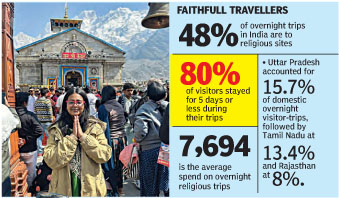
Faith Drives Nearly Half of India’s Overnight Trips

China’s Sun Tzu Trap: Mistaking American Disorder for Decline

Trump's Policies Shift Global Order