8 months ago
Bird Flu H5N1 Could Spark Next Pandemic
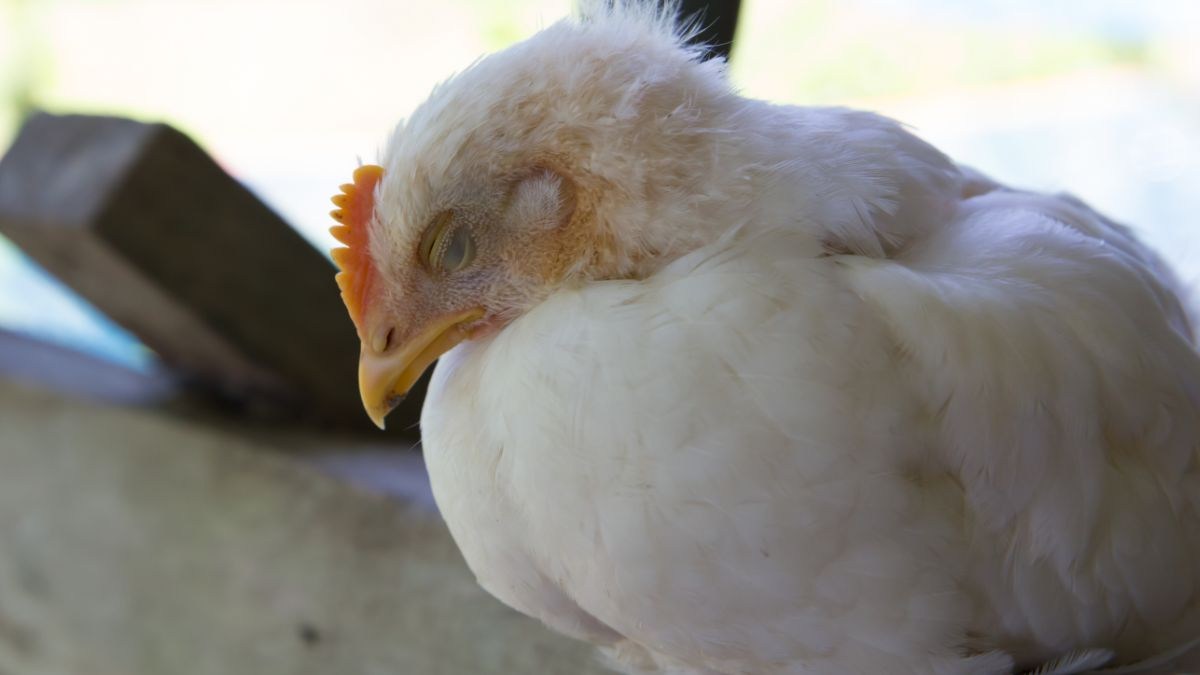
Scientists are watching bird flu, especially the H5N1 strain, because it could start spreading easily among people.
Right now, it doesn't infect humans easily, but a single mutation could change that.
If it starts spreading, it could cause a big outbreak because most people don't have immunity against it.
Researchers in India created a computer model to see how a bird flu outbreak might happen and how to stop it.
They found that quarantining households early could help contain the spread.
The model was based on a village in Tamil Nadu, India, and showed how the virus could spread through farms, markets, schools, and workplaces.

H5N1 bird flu strain could start spreading easily among humans with a single mutation.
From 2003 to August 2025, 990 human H5N1 cases were reported, with 475 deaths.
Symptoms in humans include high fever, cough, sore throat, muscle aches, and conjunctivitis.
Researchers in India created a computer simulation to model a bird flu outbreak and containment strategies.
Quarantining households of primary contacts when just two cases are detected could contain the outbreak.
- Who
- Scientists, researchers, and policymakers
- What
- Potential bird flu (H5N1) pandemic and containment strategies
- Where
- Globally, with specific focus on India and Namakkal district, Tamil Nadu
- When
- From 2003 to August 2025 (cases reported), 2024 (scientific warnings)
- Why
- To understand and prepare for a potential bird flu outbreak in humans
Key facts
- H5N1 Strain
- Rapidly spreading bird flu strain
- Human Cases
- 990 reported from 2003 to August 2025
- Deaths
- 475 deaths reported
- Symptoms
- High fever, cough, sore throat, muscle aches, conjunctivitis
- Researchers
- Philip Cherian and Gautam Menon of Ashoka University
- Simulation Location
- Namakkal district, Tamil Nadu, India
- Population Simulated
- 9,667 residents
- Key Intervention
- Quarantining households of primary contacts
Quotes
Philip Cherian and Gautam I. Menon
Researchers from the Department of Physics at Ashoka University
“In our study of the tertiary attack risk, we found that even if an infection of a primary case occurs, onward infections are limited if cases are isolated and their household contacts quarantined. However, once tertiary contacts are infected, establishing control becomes impossible unless far more stringent measures are applied, including a total lockdown.”
 freepressjournal.in
“Our model describes the two-step nature of outbreak initiation, showing how crucial epidemiological parameters governing transmission can be calibrated given data for the distribution of the number of primary and secondary cases at early times.”
freepressjournal.in
Sources

Related news

Jana Nayagan Begins Streaming On ZEE5 After Theatrical Delays

Vijay's Jana Nayagan to Stream on ZEE5 from August 21

Run was a turning point in my career, Madhavan says

Jana Nayagan Nears ₹300 Cr Worldwide Milestone on Day 11

Jana Nayagan Surpasses ₹250 Crore Worldwide in First Week