7 months ago
Iron-rich asteroids may pose greater threat to Earth
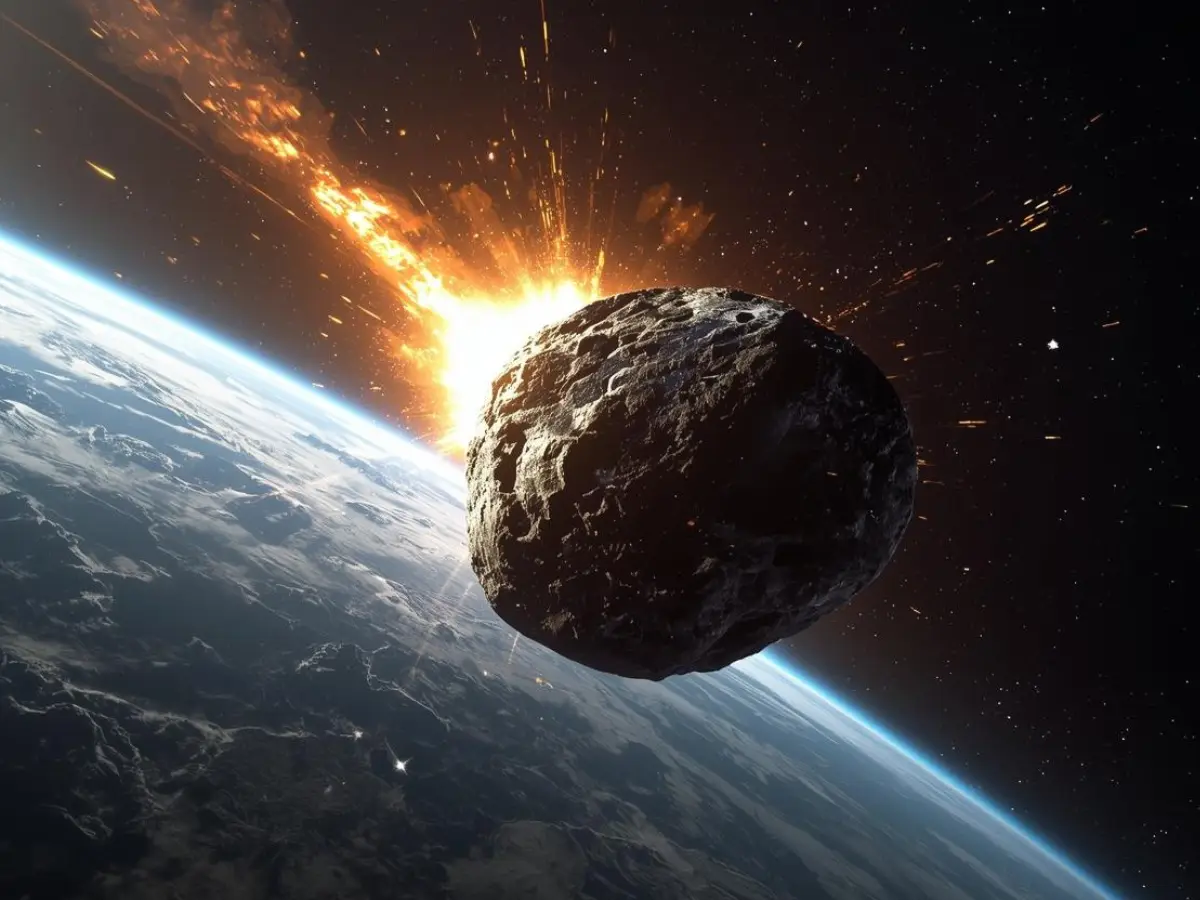
Scientists have discovered that some asteroids, called M-type asteroids, which are rich in metals, can become stronger and tougher when they enter Earth's atmosphere.
This is different from what scientists previously thought, where asteroids would break apart due to the stress.
The scientists did this by using a special machine to shoot high-energy particles at a piece of an iron meteorite and watched how it reacted.
They found that the meteorite absorbed more energy and became stronger as the stress increased.
This is important because if such an asteroid were to hit Earth, it might not break apart in the atmosphere as expected, making it a bigger threat.
There are currently 37,000 known near-Earth asteroids and 120 near-Earth comets, but scientists say Earth is safe from these for at least the next 100 years.

Iron-rich M-type asteroids can absorb more energy and grow stronger under stress, according to a new study.
The study used CERN's HiRadMat facility to irradiate a sample of the Campo del Cielo iron meteorite with 440 GeV proton beams.
The meteorite sample was observed to deform, strengthen, and adapt under extreme conditions in real-time.
This finding suggests that such asteroids may not fragment upon entering Earth's atmosphere, posing a greater threat.
There are currently 37,000 known near-Earth asteroids and 120 near-Earth comets, but Earth is considered safe from them for at least the next 100 years.
- Who
- International team of scientists, including Professor Gianluca Gregori from the University of Oxford
- What
- Iron-rich asteroids (M-type) grow stronger under stress, posing a greater threat to Earth
- Where
- The study was conducted at CERN's High Radiation to Materials (HiRadMat) facility
- When
- The study was published in Nature Communications (exact date not specified)
- Why
- To understand how iron meteorites react to the stress of entering Earth's atmosphere and the potential implications for asteroid deflection missions
Key facts
- Asteroid Type
- M-type (iron-rich)
- Study Location
- CERN's High Radiation to Materials (HiRadMat) facility
- Research Method
- Irradiation with 440 GeV proton beams
- Key Finding
- Iron meteorites grow stronger under stress
- Potential Impact
- May not fragment upon entering Earth's atmosphere
- Current Near-Earth Asteroids
- 37,000
- Current Near-Earth Comets
- 120
Quotes
Professor Gianluca Gregori
Co-author of the study and a professor in the Department of Physics at the University of Oxford
“This is the first time we have been able to observe, non-destructively and in real time, how an actual meteorite sample deforms, strengthens, and adapts under extreme conditions.”
 wionews.com