1 hr ago
India’s 7.8% GDP Growth Spurs Debate Over Gold, Travel Spending

India’s economy grew faster than expected, expanding by 7.8% in the first quarter of the new financial year.
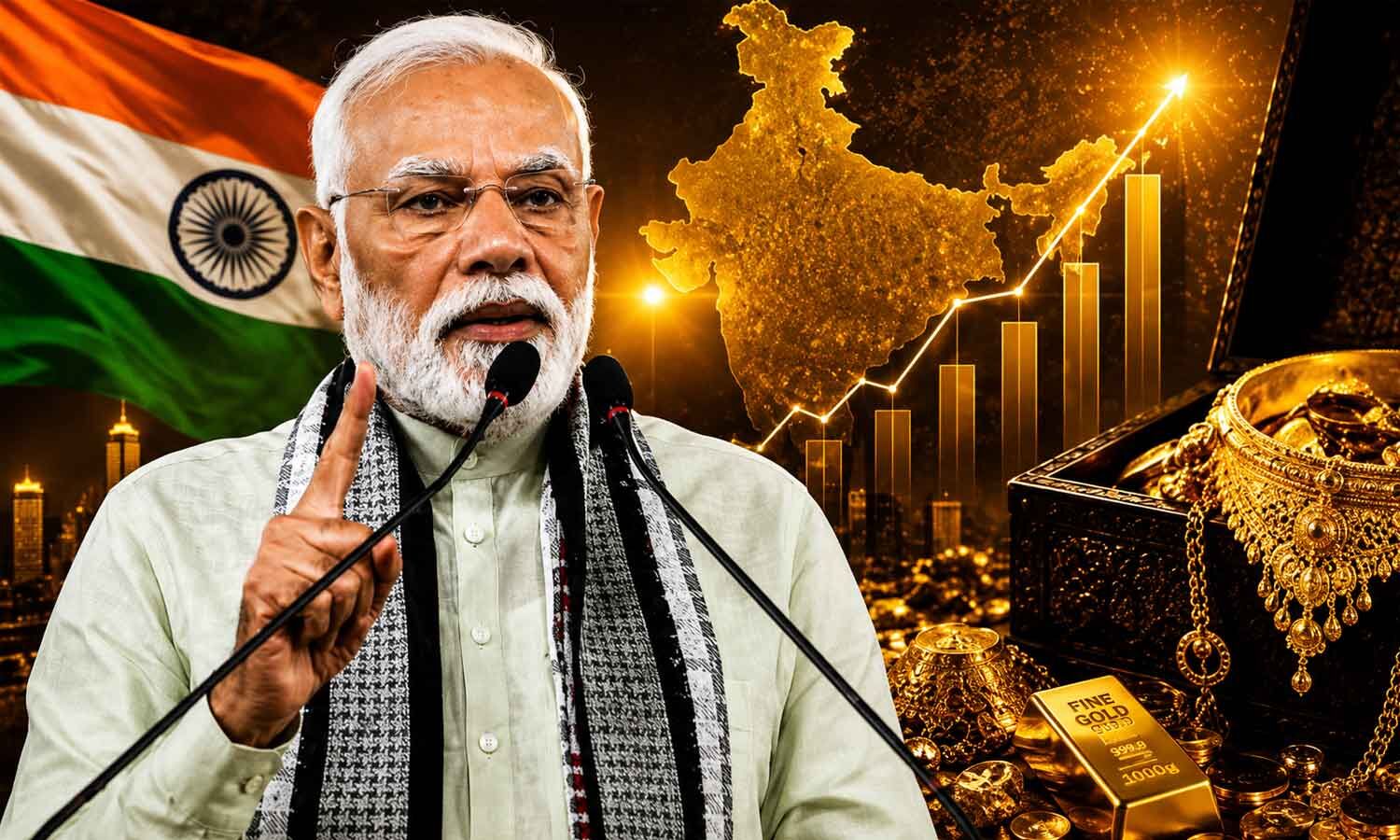
Prime Minister Narendra Modi asked people to avoid unnecessary gold buying and foreign trips.
This is because much of India’s gold is imported, and spending abroad sends money out of the country.
Gold purchases can appear in GDP figures, but they may not create factories, jobs or other productive investment.
Foreign travel similarly benefits businesses outside India rather than Indian businesses.
Economist Sujan Hajra said people could spend the money on Indian holidays, businesses or financial investments instead.
That could support jobs and reduce pressure on foreign exchange.
The advice is meant to change where people spend and save, not necessarily to make them spend less.

India’s real GDP grew 7.8% in the first quarter of fiscal 2026-27, exceeding the Reserve Bank of India’s roughly 7% projection.
Prime Minister Narendra Modi urged Indians to avoid unnecessary gold purchases, leisure travel abroad and overseas weddings.
India imported about 721 tonnes of gold worth nearly $72 billion in fiscal 2025-26.
Outbound travel spending reached an estimated $47–50 billion in 2025, according to economist Sujan Hajra.
Hajra said a 10% reduction in gold and foreign-travel spending could lower foreign-exchange demand by about $12 billion, but would not substantially change GDP growth.
- Who
- Prime Minister Narendra Modi, economist Sujan Hajra, Indian households and India’s policymakers.
- What
- The government urged people to limit unnecessary gold purchases, foreign leisure travel and overseas weddings amid strong 7.8% GDP growth.
- Where
- India; Modi made the appeal in a video from the Shanghai Cooperation Organisation summit in Bishkek.
- When
- The GDP data covered the first quarter of fiscal 2026-27; Modi made the appeal on September 1, and the cited travel data covered 2025.
- Why
- To reduce foreign-exchange outflows and encourage spending, saving and investment that support India’s domestic economy.
Domestic-first argument
Economic caveats
Reducing gold purchases
Domestic-first argument
Limiting unnecessary gold buying could reduce import-related foreign-exchange outflows and encourage deposits, mutual funds, equities or bonds that may finance domestic activity.
Economic caveats
Gold is also a form of household saving, and purchases can contribute to measured GDP even when they do not expand productive capacity.
Travel and overseas weddings
Domestic-first argument
Redirecting spending to Indian tourism, hotels, airlines, restaurants and other services could support domestic demand and employment while reducing foreign-exchange leakage.
Economic caveats
The advice changes consumer behaviour rather than imposing a restriction, and households may still choose foreign travel or overseas weddings; travel and oil imports are also larger external-balance factors.
Macroeconomic significance
Domestic-first argument
Gold and foreign travel together represent nearly $120 billion in annual foreign-exchange demand, so even a 10% reduction could meaningfully help the current account and rupee.
Economic caveats
Sujan Hajra said the potential reduction would be about 0.3% of GDP and would not alter India’s overall growth trajectory; the timing of the appeal also raises questions.
Key facts
- GDP growth
- Real GDP grew 7.8% in Q1 FY27, compared with revised growth of 8.6% in the previous quarter.
- GDP value
- Real GDP was ₹81.36 lakh crore in Q1 FY27, versus ₹75.46 lakh crore a year earlier.
- Gold imports
- India imported approximately 721 tonnes of gold worth nearly $72 billion in FY26.
- Outbound travel
- Foreign travel spending was estimated at $47–50 billion for about 33 million outbound travellers in 2025.
- Potential foreign-exchange impact
- A 10% moderation in gold and travel spending could reduce foreign-exchange demand by about $12 billion, according to Sujan Hajra.
- Foreign-exchange reserves
- Reserves declined from about $728 billion in February 2026 to around $691 billion by May, as stated in the article.
- Foreign portfolio outflows
- Foreign portfolio investors had withdrawn nearly $30 billion from Indian equities in 2026, according to the article.
Quotes
Dr Sujan Hajra
Economic expert quoted in the article
“Foreign trips, if you are going for leisure, you should not go. If you are getting married abroad, you should not do so. And if it is not necessary, you should not buy gold either.”
 livemint.com
“something approaching $120 billion of annual forex demand — in the same broad range as India's entire oil import bill.”
livemint.com
Sources
Related news
Modi Urges Swadeshi Choices After India’s 7.8% Growth
Modi Reiterates Swadeshi Appeal Amid India’s 7.8% Growth
Modi Hails 7.8% Q1 GDP Growth, Urges Swadeshi Amid Criticism
Why India Must Conserve Forex Despite Strong GDP Growth
PM Modi Urges Indians to Avoid Gold and Foreign Spending

NDMC to Lead 40th Weekend Plantation Drive in Raja Bazar
Modi Warns Pakistan India Will Strike Against Terror Attacks
Haryana CM Reviews Seva Sankalp Abhiyan Preparations Across State

Modi Defends 7.8% Growth as Critics Question India’s GDP