2 hrs ago
Waiting Hai Turns Tatkal Ticket Chaos Into Uneven Crime Drama
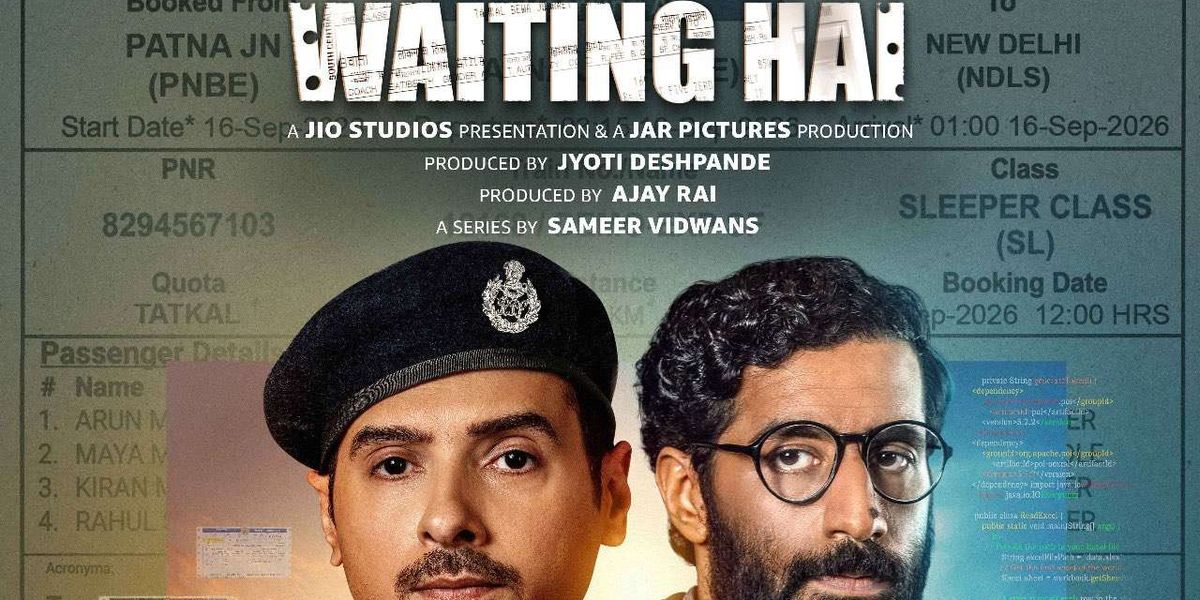
Waiting Hai is a series about people trying to get train tickets quickly.
In India, Tatkal tickets can be difficult for ordinary passengers to book.
A railway police officer notices that illegal agents seem to get tickets unusually easily.
He starts investigating the suspicious ticketing network.
A computer student helps manipulate the booking system and becomes involved in the crime.
The police officer and student begin on opposite sides of the law.
Their stories slowly move closer together.
The actors make both characters interesting and believable.
However, the series sometimes loses focus because its writing and tone change too suddenly.

Waiting Hai follows a Railway Protection Force constable investigating suspicious Tatkal ticket sales in Patna.
A computer student becomes involved in an illegal ticketing network after discovering ways to manipulate the railway booking system.
Divyenndu Sharma and Bhuvan Arora give convincing performances as the central characters.
The series explores technology, ambition, corruption and the pressures of working within rigid systems.
Uneven writing, unnecessary diversions and abrupt tonal shifts weaken the seven-episode crime drama.
- Who
- Railway Protection Force constable Sugam Mishra, computer student Afroz Hamsa, and the illegal Tatkal ticketing network are central to the story.
- What
- A railway cop investigates a ticketing racket involving agents who manipulate the railway booking system.
- Where
- Patna, India.
- When
- Why
- Sugam investigates after noticing that ordinary passengers struggle to obtain confirmed Tatkal tickets while certain agents secure them unusually easily.
Key facts
- Series
- Waiting Hai
- Format
- Seven-episode crime drama
- Setting
- Patna
- Central issue
- Illegal Tatkal railway ticketing
- Lead actors
- Divyenndu Sharma and Bhuvan Arora
- Positive assessment
- Strong central performances and a relatable premise
- Main criticism
- Uneven writing, digressions and distracting tonal shifts
Sources
Related news

Waiting Hai Turns Tatkal Ticket Fraud Into Crime Comedy

‘Waiting Hai’ Trailer Reveals High-Stakes Hack-Driven Face-Off in Patna

Waiting Hai Teaser Explores Mystery Behind Unconfirmed Railway Tickets

Waiting Hai Review Explores Tatkaal Railway Ticket Scam

Rajkumar Hirani Explains Bittersweet Pritam and Pedro Ending
Pratik Gandhi Discusses Breaking Cop Stereotypes In Ghamasaan
Patna High Court Quashes Bihar Branding of Two Men
Viral Video Prompts Bihar Police Action Over Vendor Assault

Ganesh Chaturthi Boosts Quick-Commerce Sales of Festive Essentials