5 hrs ago
CIC Allows Inspection of Gandhi Smriti Financial Records

A person asked for financial information about Gandhi Smriti and Darshan Samiti.
They wanted to know how much money the group received and how it spent that money.
They also asked for copies of audit reports.
The information officer said some records were already available online and that the remaining records were too large to provide all at once.
The officer offered the person a chance to inspect the files.
The person said the information given was incomplete and misleading.
The Central Information Commission said the response was generally proper but gave the person another chance to inspect the records.
Some private or legally protected information may be hidden from the copies.

The Central Information Commission allowed an applicant to inspect four years of Gandhi Smriti and Darshan Samiti financial records.
The applicant sought ministry funding details, year-wise and item-wise expenditure records, and certified audit reports.
The Central Public Information Officer said relevant annual accounts were publicly available and offered inspection because the records were voluminous.
The applicant alleged that the information provided was incomplete, false and misleading, while the CIC found the reply and subsequent action were in order.
The applicant has four weeks to inspect the records, with up to 20 pages of copies available free and additional pages subject to prescribed fees.
- Who
- The Central Information Commission, an RTI applicant, the Central Public Information Officer, and the Gandhi Smriti and Darshan Samiti.
- What
- The CIC allowed inspection of four years of financial records, including funding, expenditure and audit documents.
- Where
- At the office of the Gandhi Smriti and Darshan Samiti in New Delhi.
- When
- The report was published on October 1; the applicant was given four weeks to approach the office.
- Why
- The records were considered voluminous, while some information was already publicly available and some material could be exempt or contain third-party information.
Applicant's Concerns
Official and CIC Position
Completeness of information
Applicant's Concerns
The applicant alleged that the information supplied was incomplete, false and misleading.
Official and CIC Position
The CPIO said it had provided the available information, explained how to access publicly available records and offered an inspection of voluminous documents.
Access to records
Applicant's Concerns
The applicant sought detailed financial records and certified audit reports through the RTI process.
Official and CIC Position
The CIC said inspection was an appropriate way to access extensive records and allowed the applicant another opportunity to inspect them.
Disclosure limits
Applicant's Concerns
The applicant sought copies of the requested documents.
Official and CIC Position
The CPIO may withhold or redact third-party information and other exempt material under Sections 8 and 10 of the RTI Act.
Key facts
- Authority
- Central Information Commission
- Records covered
- Four years of financial records
- Requested information
- Ministry funding, year-wise and item-wise expenditure, and certified audit reports
- Inspection deadline
- Four weeks from the CIC direction
- Free copies
- Up to 20 pages
- Additional copies
- Prescribed fees may be charged beyond 20 pages
- Possible redactions
- Third-party information and other material exempt under Sections 8 and 10 of the RTI Act
Quotes
P. R. Ramesh
Information Commissioner who issued the CIC’s observations
“Where information is already available in the public domain, the CPIO may appropriately intimate the applicant about the manner in which such information can be accessed.”
 theprint.in
“Where records are voluminous, the applicant may be allowed to inspect them and identify the specific documents or pages for which copies are required.”
theprint.in
Sources
Related news

Odisha Spends Rs 3.31 Crore On CM Quarters

CIC Orders CBSE to Follow RTI Fees for Answer Sheets

Karnataka High Court Orders Digital Tracking of RTI Penalties
Allahabad High Court Limits Direct CCTV Access Under RTI
Delhi Assembly Panel Defers Sheesh Mahal Visit Over Confidentiality Leak
Gujarat High Court Upholds Privacy For Modi’s Degree
Panvel Corporation Trains Officials on RTI for Transparency
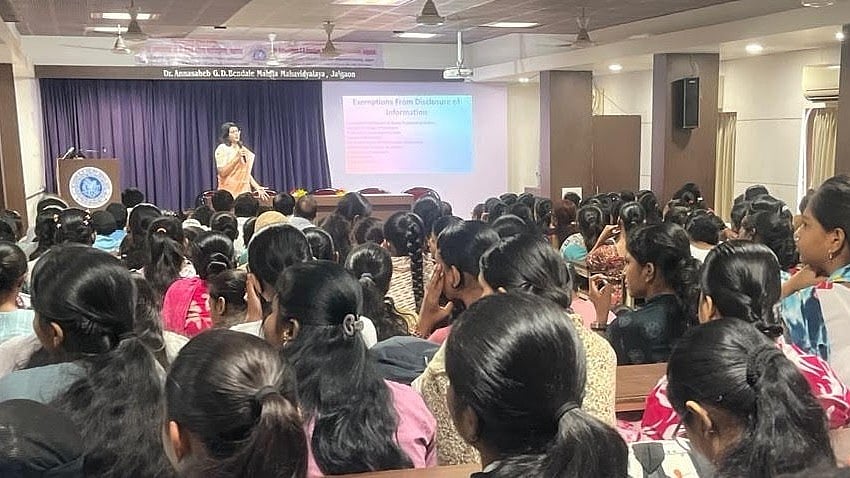
Jalgaon Programme Highlights RTI’s Role in Transparent Administration

Tamil Nadu Revokes Controversial RTI Exemption After Backlash