2 hrs ago
Gujarat High Court Upholds Privacy Over Modi Degree Disclosure

The Gujarat High Court considered whether Narendra Modi’s university degree had to be given to Arvind Kejriwal.
The court said the degree is personal information.
It ruled that being the prime minister does not automatically make private information public.
The court also said general curiosity is not enough to override privacy protections.
It upheld an earlier decision canceling the disclosure order.
It also upheld a Rs 25,000 cost imposed on Kejriwal.
The Central Information Commission had originally ordered Gujarat University to provide the records.
Gujarat University had separately published information about the degree on its website.

The Gujarat High Court upheld a ruling canceling the Central Information Commission’s order to disclose Narendra Modi’s academic degree.
The division bench said the degree qualifies as exempt personal information under Sections 8(1)(e) and 8(1)(j) of the RTI Act.
The court said public curiosity and Modi’s position as prime minister do not automatically establish a larger public interest.
The ruling rejected Arvind Kejriwal’s appeal and upheld a Rs 25,000 cost imposed on him.
Gujarat University had already published details of Modi’s degree online and had challenged the CIC disclosure directive.
- Who
- The Gujarat High Court, Arvind Kejriwal, Narendra Modi, the Central Information Commission, and Gujarat University.
- What
- The court rejected Kejriwal’s appeal and upheld the cancellation of an order directing disclosure of Modi’s academic degree.
- Where
- The case was heard by the Gujarat High Court, involving records held by Gujarat University.
- When
- The ruling was passed on Tuesday, with details made available on Wednesday; the report is dated September 30.
- Why
- The court found the degree to be exempt personal information and said no public or larger public interest requiring disclosure had been shown.
Disclosure Advocates
Privacy Defenders
Public interest and transparency
Disclosure Advocates
Arvind Kejriwal argued that the degree information should be public and said Gujarat University had already placed it on its website, leaving no continuing basis for the university’s challenge.
Privacy Defenders
The Gujarat High Court said public curiosity and the fact that Modi holds public office do not automatically amount to public or larger public interest.
Use of the RTI Act
Disclosure Advocates
Kejriwal argued that information already displayed publicly should not remain protected from disclosure under the RTI Act.
Privacy Defenders
Gujarat University argued that the CIC order violated the RTI Act and existing judicial principles, and that requests lacking the legislation’s purpose should not burden officials.
Personal information
Disclosure Advocates
Kejriwal’s position was that records concerning Modi’s educational qualifications should be disclosed, particularly after the university published the degree online.
Privacy Defenders
The court held that the degree was exempt personal information under Sections 8(1)(e) and 8(1)(j), and that disclosure should have been left to Modi’s discretion.
Key facts
- Court decision
- The Gujarat High Court division bench rejected Kejriwal’s appeal.
- Information at issue
- Narendra Modi’s educational degree and related academic records.
- Legal provisions
- Sections 8(1)(e) and 8(1)(j) of the Right to Information Act, 2005.
- Original CIC order
- The Central Information Commission directed Delhi University and Gujarat University to provide information on Modi’s degrees in 2016.
- Cost upheld
- A Rs 25,000 cost imposed on Kejriwal was upheld.
- University disclosure
- Gujarat University published details stating that Modi completed an MA in Political Science in 1983 with 62.3 per cent marks as an external student.
- Bench
- Chief Justice Sunita Agarwal and Justice DN Ray issued the division bench ruling.
Quotes

Gujarat High Court division bench
The division bench comprising Chief Justice Sunita Agarwal and Justice DN Ray.
“exempted personal information of an individual falling within the ambit of section 8(1)(e) and (j) of the RTI Act, 2005 and the respondent University cannot be asked to disclose the same.”
 theprint.in
“None of the information directed to be disclosed can be said to be necessary for disclosure in public interest or larger public interest”
theprint.in
Sources
Related news
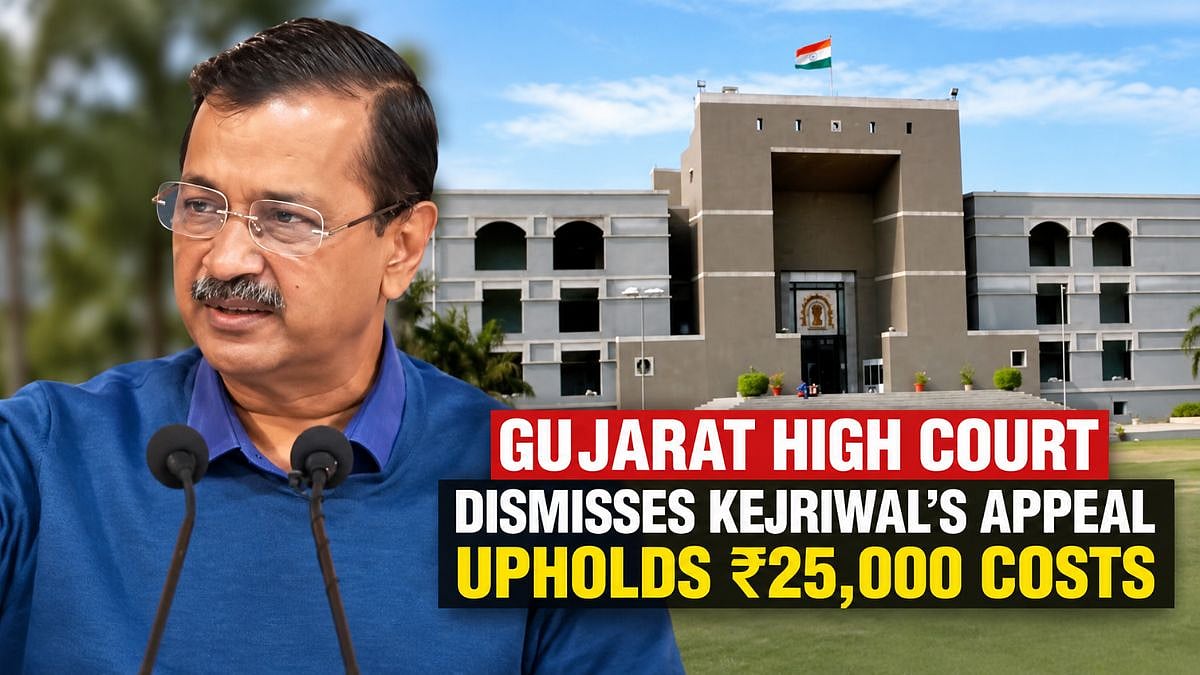
Gujarat High Court Upholds Kejriwal Cost in Modi Degree Case

Dipke Renews Degree Challenge to Prime Minister Narendra Modi
Abhijit Dipke Challenges Narendra Modi to Show Degrees
Tamil Nadu Withdraws Law-and-Order RTI Exemption After Backlash

Tamil Nadu Revokes Controversial RTI Exemption After Backlash
Rahul Gandhi Accuses Modi of Discouraging Education and Debate
Gyanesh Kumar Calls India’s Electoral Process Among World’s Most Transparent

Election Chief Takes Responsibility for Electoral Roll Shortcomings, Praises BLOs
Retired High Court Judge to Probe Gujarat University Allegations