

1 hr ago
CDSCO Warns Against Repeated Painkiller and Antibiotic Use
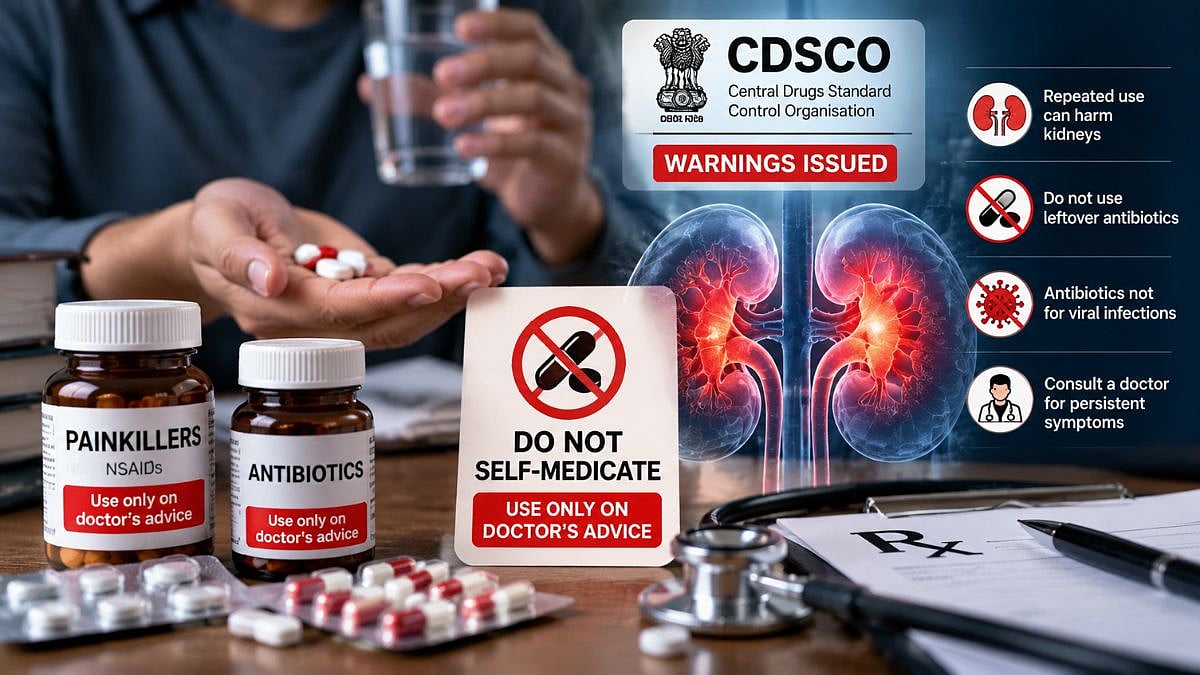
India’s drug regulator has warned people not to keep taking painkillers or antibiotics on their own.
Using some painkillers too often can hurt the kidneys.
Antibiotics do not help most simple viral illnesses.
People should not use antibiotics left over from an earlier illness or share them with others.
If pain, fever, or other symptoms continue or return, they should see a doctor.
People with kidney problems need to be especially careful.
Doctors should use the lowest effective painkiller dose for the shortest suitable time.
Pharmacists and hospitals were also told to follow prescription rules and help reduce unnecessary antibiotic use.

CDSCO warned the public against repeatedly using painkillers or antibiotics without medical advice.
Most NSAID painkillers require prescriptions under Schedule H rules, while most antibiotics fall under Schedule H1.
People were told not to use leftover antibiotics, share them, or take them for most uncomplicated viral infections.
Those with kidney disease, dehydration, or cardiovascular disease may face additional risks from NSAIDs.
Doctors, pharmacists, hospitals, and retailers were urged to support careful prescribing and prevent self-medication.
- Who
- The Central Drugs Standard Control Organisation (CDSCO), led in the circular by Drugs Controller General of India Dr Rajeev Singh Raghuvanshi, issued the warning.
- What
- CDSCO warned against repeated or prolonged self-medication with painkillers and antibiotics.
- Where
- The warning applies in India and was reported from Mumbai.
- When
- The warning was reported on September 29, 2026; the circular was issued the previous week.
- Why
- To reduce avoidable kidney complications, other medicine-related risks, inappropriate antibiotic use, and antibiotic resistance.
Key facts
- Regulator
- Central Drugs Standard Control Organisation (CDSCO)
- Painkiller classification
- Most non-steroidal anti-inflammatory drugs are covered under Schedule H and require a prescription.
- Antibiotic classification
- Most antibiotics are covered under Schedule H1 and must carry warnings against sale without a prescription.
- Higher-risk groups
- People with kidney disease, dehydration, or cardiovascular disease may need additional precautions with NSAIDs.
- Public advice
- Do not repeatedly self-medicate, use leftover antibiotics, or share antibiotics.
- Clinical guidance
- Doctors were advised to prescribe NSAIDs only when necessary, at the lowest effective dose and for the shortest appropriate duration.
- Institutional measures
- Pharmacists, retailers, and hospitals were directed to follow prescription rules and strengthen monitoring and antimicrobial stewardship.
Sources
Related news

Indian Regulator Warns Against Misuse of Painkillers and Antibiotics

India's Drug Regulator Warns Against Indiscriminate Painkiller, Antibiotic Use

CDSCO Warns Against Indiscriminate Painkiller and Antibiotic Use

Indore Man’s Painkiller Overuse Leads To Kidney Failure

CDSCO Warns About Painkillers That May Affect Kidneys

Experts Warn Irrational Medicine Use Can Cause Serious Health Problems

India Considers Public Platform for Drug Batch-Test Reports
