8 months ago
Nuclear Engines for Space Rockets
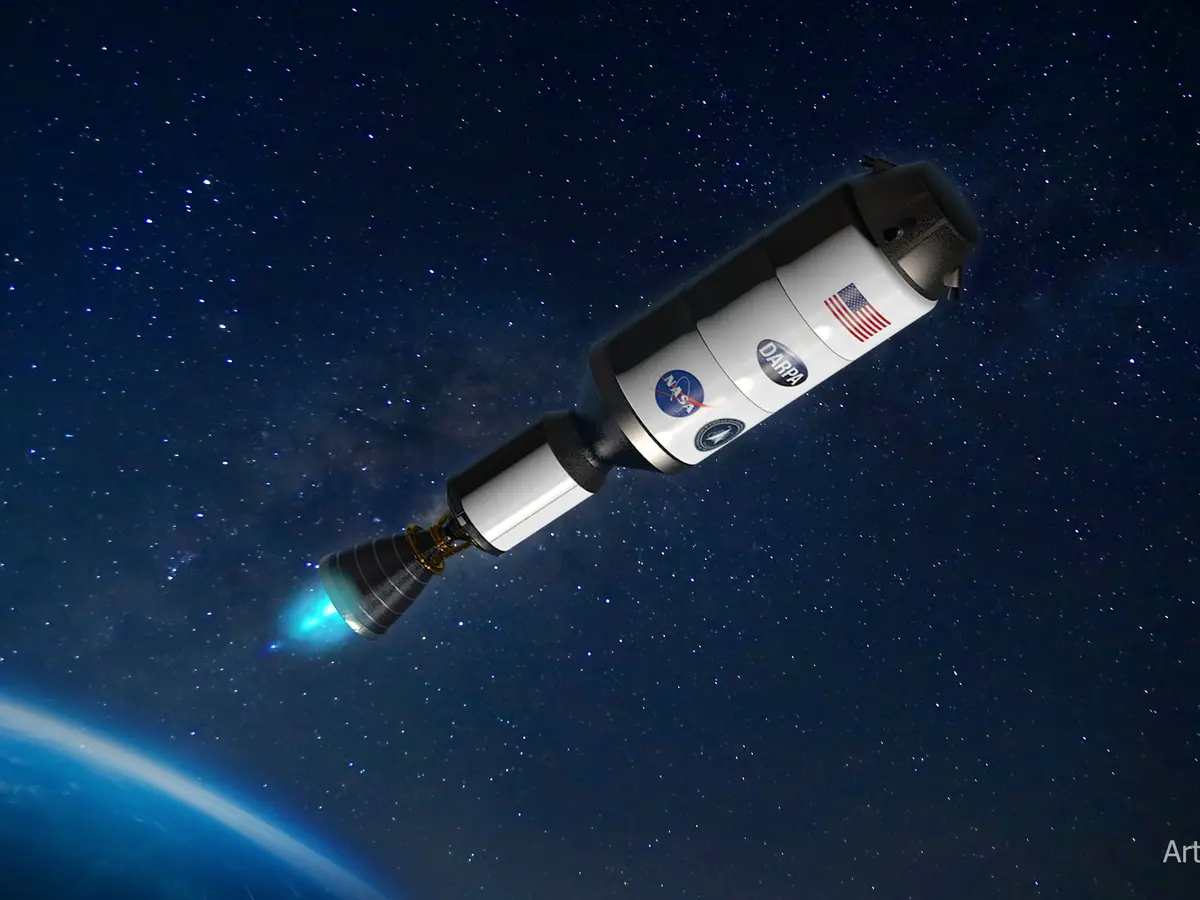
Scientists are working on a new type of rocket engine that uses nuclear power instead of regular fuel.
This technology, called Nuclear Thermal Propulsion (NTP), could make space travel faster and more efficient.
The first test of this engine in space is planned for early 2026.
NTP works by heating hydrogen with a small nuclear reactor to create thrust.
This could help astronauts travel to Mars quicker, reducing their exposure to space radiation.
However, there are concerns about safety and the handling of nuclear material.
Engineers are working to make sure the technology is safe for both space and Earth.
The development of NTP involves several organizations, including NASA and India's space agency, ISRO.

Nuclear Thermal Propulsion (NTP) engines use nuclear fission to produce thrust, promising faster and more efficient deep-space missions.
The first in-space demonstration of an NTP engine is planned for early 2026, with NASA and DARPA leading the DRACO program.
NTP engines could reduce travel time to Mars by about 25%, benefiting astronaut health and mission flexibility.
Safety concerns include radiation, nuclear material proliferation, and the risk of launch failures, with engineers developing solutions like low-enriched uranium and robust fuel forms.
Challenges ahead include high-temperature engineering, hydrogen storage, and political hurdles related to nuclear safety and non-proliferation.
- Who
- NASA, DARPA, Lockheed Martin, BWX Technologies, ISRO, Pulsar Fusion
- What
- Development and testing of nuclear thermal propulsion (NTP) for space rockets
- Where
- Earth orbit and potentially Mars missions
- When
- First in-space test planned for early 2026 (possibly 2027)
- Why
- To enable faster, more efficient deep-space missions, particularly to Mars
Key facts
- Technology
- Nuclear Thermal Propulsion (NTP)
- First In-Space Test
- Early 2026 (possibly 2027)
- Efficiency
- Twice as efficient as chemical rockets
- Mars Mission Benefit
- 25% reduction in travel time
- Key Programs
- NASA-DARPA DRACO, ISRO's foundational research
- Fuel Type
- Low-enriched uranium
- Challenges
- High temperatures, hydrogen storage, political hurdles
Sources
Related news

How India Can Build a Globally Competitive Deep-Tech Ecosystem

AI Tool Argo Targets Vulnerabilities in Critical Infrastructure Systems

U.S. military funding propelled China's Unitree robot dogs

DARPA's NGHCM: More Survivable, Longer-Range Hypersonic Cruise Missile