3 weeks ago
Bicep Curls vs Pull-Ups: Which Builds Bigger Biceps?

Imagine you want the muscles on the front of your upper arms — your biceps — to grow bigger.
There are two main ways to exercise them: bicep curls and pull-ups.
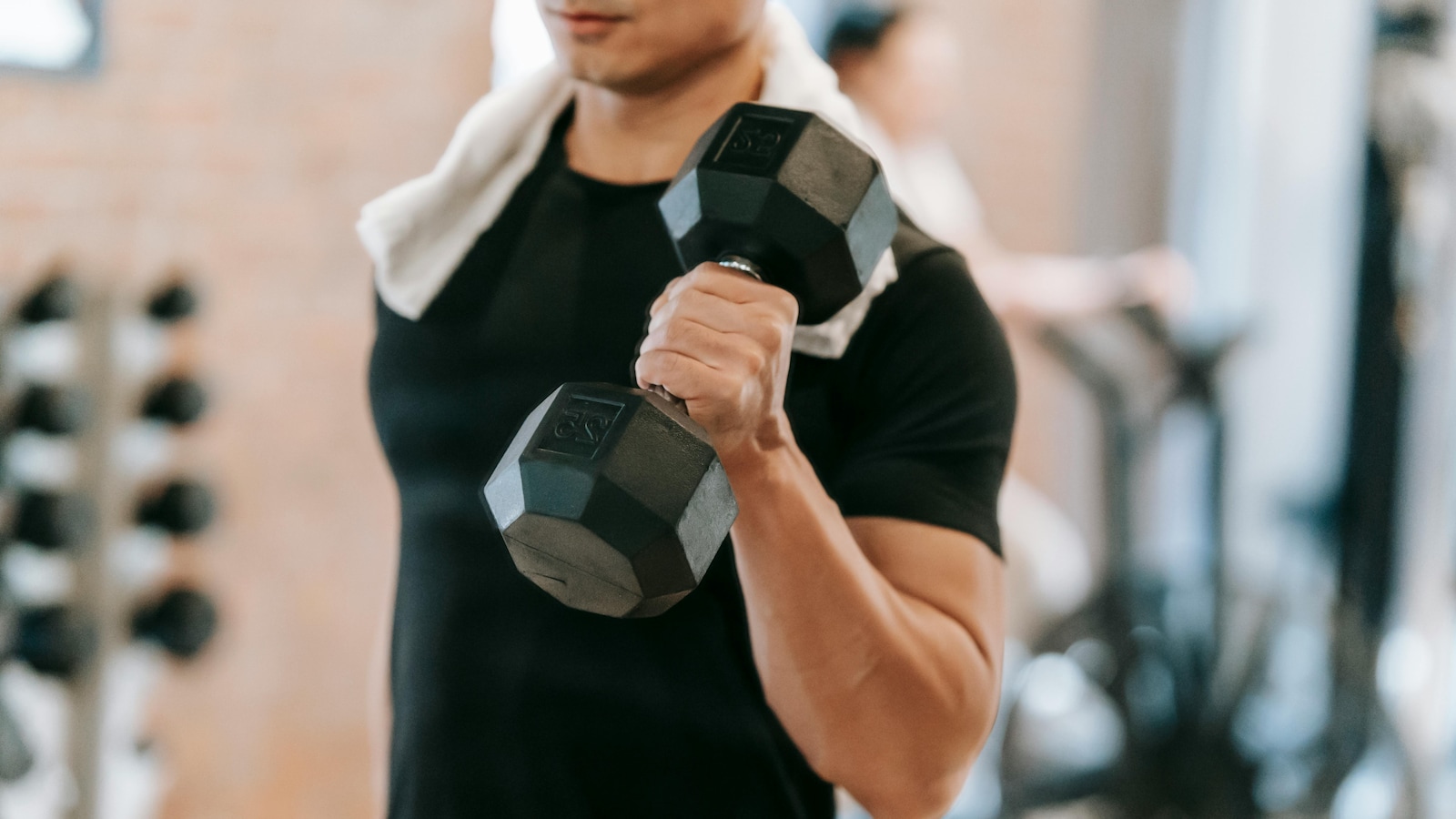
A bicep curl is when you lift a weight by bending your elbow, and it works almost only the biceps.
A pull-up is when you pull your body up to a bar, and it works your biceps together with many other muscles in your back, shoulders, arms, and tummy.
If your only goal is big biceps, curls are usually the better choice because all the effort goes straight to those muscles.
But pull-ups are also wonderful because they make your whole upper body stronger at the same time.
Simply doing ten of either exercise will not automatically make your muscles grow.
You have to keep making the exercise a little harder over time, so your muscles always get a good challenge — experts call this progressive overload.
That is why most fitness experts suggest doing both exercises: curls to focus on the biceps and pull-ups to build overall strength.

Bicep curls are an isolation exercise that primarily targets the biceps brachii, placing continuous tension on the biceps throughout the range of motion.
Pull-ups are a compound movement that recruit multiple upper-body muscles, including the lats, rhomboids, trapezius, rear deltoids, forearms, and core.
For maximum biceps growth, curls generally have the advantage because they place greater mechanical tension directly on the biceps without fatigue from larger muscle groups.
Pull-ups build a bigger overall upper body and functional pulling strength while still challenging the biceps, especially with an underhand chin-up grip.
Simply doing 10 repetitions of either exercise does not guarantee muscle growth — progressive overload is key, and experts recommend combining both exercises.
- Who
- People who want to build bigger biceps, and the fitness experts and strength coaches who recommend how to train them.
- What
- A comparison of whether 10 bicep curls or 10 pull-ups build bigger biceps, looking at muscle isolation, compound recruitment, mechanical tension, and progressive overload.
- Where
- Not specified in the article.
- When
- Not specified in the article.
- Why
- To help readers choose the right exercise for their goals, since curls maximize biceps isolation while pull-ups build overall upper-body strength and development.
Bicep Curl Advocates
Pull-Up Advocates
The best approach for bigger biceps
Bicep Curl Advocates
Bicep curls, as an isolation exercise, place continuous and greater mechanical tension directly on the biceps, giving them the advantage for maximum biceps growth, size, and definition.
Pull-Up Advocates
Pull-ups build the biceps while simultaneously training the back, grip, shoulders, and core, offering a greater overall return for upper-body strength and muscular development.
Key facts
- Primary muscle targeted (curls)
- Biceps brachii, with assistance from the brachialis and brachioradialis
- Muscles recruited (pull-ups)
- Latissimus dorsi, rhomboids, trapezius, rear deltoids, forearms, and core
- Key factor for muscle growth
- Progressive overload — gradually increasing resistance, training volume, exercise difficulty, or time under tension
- Curl variations
- Dumbbell curls, barbell curls, preacher curls, and incline curls
- Best choice for maximum biceps growth
- Bicep curls
- Best choice for overall upper-body development
- Pull-ups
- Expert recommendation
- Combine both exercises — curls for isolation and pull-ups for compound strength
Sources
Related news
Common Biceps Training Mistakes That Can Limit Muscle Growth
Resistance Bands vs Dumbbells: Which Builds Defined Arms Better?
Swole Press Trains Multiple Upper-Body Muscles Together
Arnold Schwarzenegger's Son Shares Old-School Back Workout Routine