1 hr ago
NASA Backs Mission to Probe Mysterious Lunar Pit
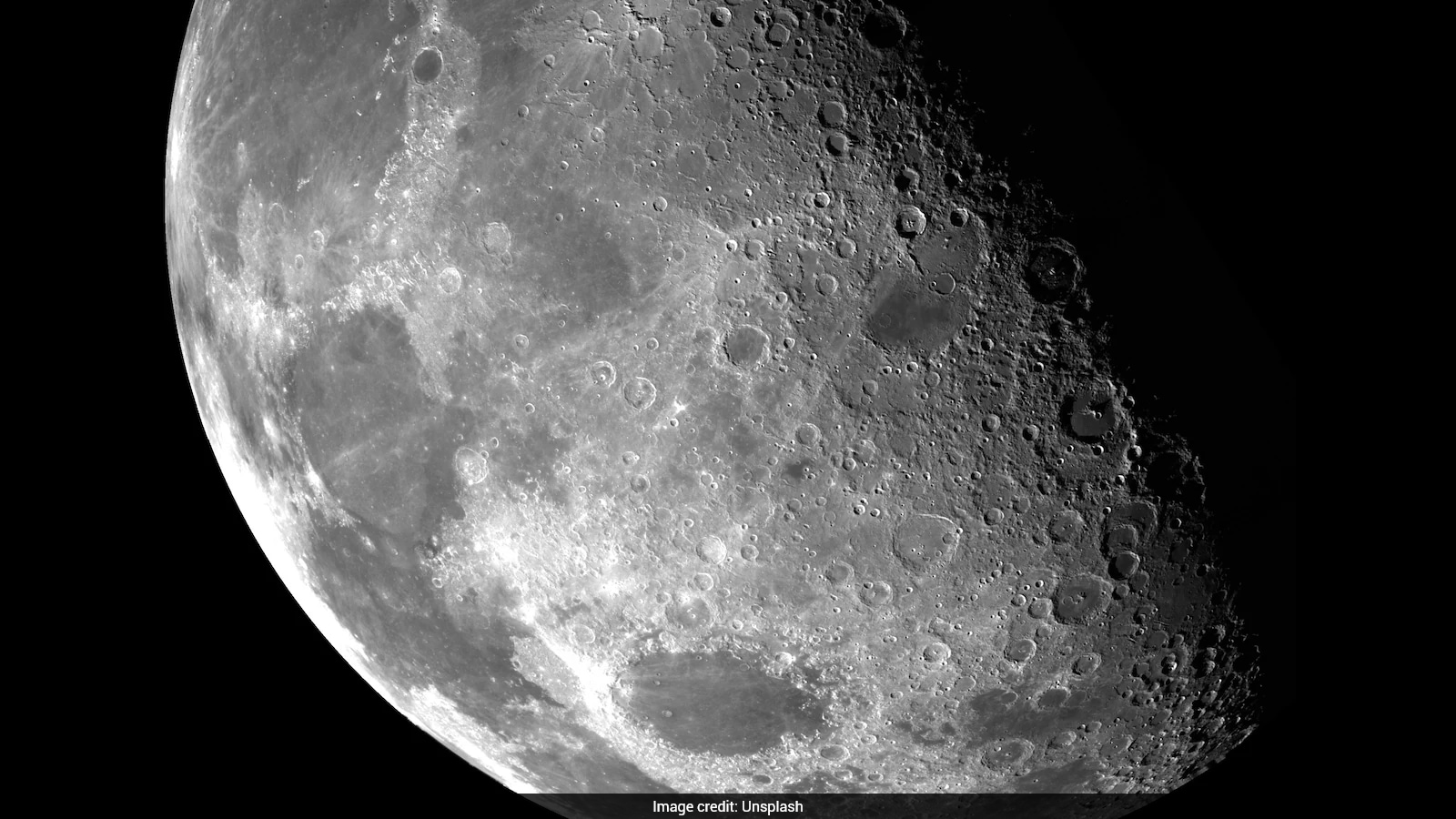
NASA is supporting a project to study a large hole on the Moon.
The hole is called Marius Hills Pit.
Scientists want to find out whether it opens into a long cave made by ancient lava.
They plan to use radar, sensors that detect shaking, a gravity-measuring instrument, and cameras.
These tools will help them examine both the pit and the ground below it.
The Moon’s old lava caves might teach scientists about its past.
If some caves are still intact, they could also offer shelter for people living on the Moon.

NASA has backed GIMLI, a project led by the Planetary Science Institute through its PRISM programme.
The mission will investigate Marius Hills Pit, about 34 meters deep and 65 by 90 meters across.
Researchers do not yet know whether the pit connects to an extensive underground lava tube.
GIMLI will use ground-penetrating radar, seismic sensors, a gravimeter, and cameras to study the pit and its surroundings.
The findings could reveal lunar volcanic history and assess whether intact lava tubes could provide natural shelter for future human outposts.
- Who
- The Planetary Science Institute is leading GIMLI with NASA and Honeybee Robotics as partners.
- What
- The project will investigate whether Marius Hills Pit connects to an underground lava tube.
- Where
- Marius Hills Pit, in an ancient volcanic region on the Moon's nearside.
- When
- Why
- To investigate the Moon's subsurface and volcanic history, and explore whether intact lava tubes could provide natural shelter.
Potential lava tube
Unconfirmed underground extension
Whether the pit opens into a cave
Potential lava tube
The mission is designed to investigate the anticipated possibility that a lava tube extends from Marius Hills Pit.
Unconfirmed underground extension
The existence of the pit is confirmed by satellite imagery, but available data do not prove that it connects to a long underground cave system.
Potential use of intact tubes
Potential lava tube
Intact lava tubes could provide structurally sound natural shelters for long-term human outposts.
Unconfirmed underground extension
Their existence and condition at this site have not yet been established; GIMLI aims to search for an underground void.
Key facts
- Project
- GIMLI (Geophysical Investigation of the Marius Hills Pit Lava Tube and Interior)
- Programme
- NASA's Payloads and Research Investigations on the Surface of the Moon (PRISM)
- Pit dimensions
- Approximately 34 meters deep and 65 by 90 meters across
- Study site
- Marius Hills Pit, on the lunar nearside
- Planned instruments
- Ground-penetrating radar, seismic sensors, a gravimeter, and cameras
- Lead organization
- Planetary Science Institute
- Potential significance
- Lava tubes could help reveal lunar history and potentially serve as natural shelters for human outposts.
Quotes

Amanda Hendrix
Director and CEO of the Planetary Science Institute
“GIMLI represents the type of ambitious planetary science that PSI was built to pursue”
 NDTV
NDTV
Putzig
GIMLI team member discussing the mission’s seismic methods
“It's long been a desire of mine to reintroduce intentional active-source seismic methods to planetary science, as it has essentially not been done since the Apollo astronauts conducted the first seismic surveys on the Moon”
NDTV
Sources
Related news

NASA and IBM Launch Open-Source AI Model for Moon Mapping
NASA Finds Broad, Shallow Pits During Curiosity’s Mars Traverse
Rare Moon Crater Discovered in NASA Scan After 2024 Impact
Science Quiz Covers Moon Basins, Space Weapons and Quantum Concepts