

5 days ago
Gnani Launches Artha Sovereign AI Stack for Indian Institutions

Gnani AI has launched a system called Artha for using artificial intelligence in India.
Artha includes a language model named Evon and an AI-agent platform called Plexus.
Evon can work with more than 11 Indian languages.
Its weights can be requested under an Apache 2.0 licence.
Gnani says Evon uses fewer computer tokens when reading Indian-language text, which may lower costs.
The model can be hosted on an organisation’s own computers or private cloud.
Plexus lets people create AI agents that perform tasks instead of only answering questions.
These agents could help process bank records or handle government complaints.
Gnani says the system is meant to keep sensitive data inside the organisation and allow people to oversee the agents.

Gnani AI launched Artha, a sovereign AI stack combining Evon v3.3 and Plexus.
Evon v3.3 is a 30-billion-parameter open-weight model supporting more than 11 Indian languages.
Gnani says its Indian-script tokeniser uses about 20% fewer tokens than GPT-5-family tokenisers and less than half as many as byte-level alternatives.
Plexus enables enterprises and government agencies to build AI agents that work across documents, systems, and conversations.
The stack is designed for banks, insurers, and public institutions that need self-hosting, data residency, and controls such as audit logging.
- Who
- Bengaluru-based AI company Gnani AI launched the stack; Vice-President C P Radhakrishnan attended and unveiled it, while CEO and co-founder Ganesh Gopalan discussed the model.
- What
- Gnani introduced Artha, an end-to-end sovereign AI stack combining the Evon v3.3 open-weight language model with the Plexus agentic AI platform.
- Where
- The platform was unveiled at the Vice-President’s official residence in New Delhi.
- When
- The launch took place on a Friday, identified by one article as August 28; the year is not specified in the articles.
- Why
- Gnani designed Artha for Indian enterprises and public institutions that need to process Indian-language information while retaining control over sensitive data, infrastructure, and compliance requirements.
Key facts
- AI stack
- Artha is Gnani AI’s end-to-end sovereign AI stack.
- Language model
- Evon v3.3 has 30 billion parameters, with roughly 3.5 billion active on any given token.
- Language support
- Evon v3.3 supports more than 11 Indian languages and was evaluated on the 11-language MILU benchmark.
- Tokenisation claim
- Gnani says Evon uses about 20% fewer tokens per Indian-language word than GPT-5-family tokenisers and less than half as many as byte-level tokenisers used by DeepSeek, Llama, and Qwen.
- Licence and hosting
- Evon v3.3 weights are available by request on Hugging Face under the Apache 2.0 licence and are designed to run on a single node.
- Enterprise platform
- Plexus builds and deploys AI agents through natural-language prompts, with tool calling and workflows across documents, systems, and conversations.
- Target users
- Artha targets banks, insurers, and government bodies with data-residency and sensitive-information requirements.
- Government programme
- Gnani AI is one of 12 entities selected under the India AI Mission, which has an initial outlay of Rs 10,372 crore.
Quotes

C P Radhakrishnan
Vice-President of India who attended the Artha launch
“Both these platforms reflect the growing strength of India’s technology ecosystem. This initiative shows that our engineers have the capability not only to use frontier technologies, but also to build them.”
 indianexpress.com
“Sovereign AI is not about keeping the world out. It is about India having the capability to build for itself – and then for every country that shares its problems.”
indianexpress.com
Gnani AI
Gnani AI, the company developing the Plexus platform
“Each agent is a discrete, identity-bearing unit – closer to an employee than a script – combined with other agents into workflows built around a defined outcome. These workflows run under an orchestration layer that can be human-in-the-loop or AI-led, with guardrails, observability, and audit logging built in rather than added afterwards.”
indianexpress.com
Sources
Related news

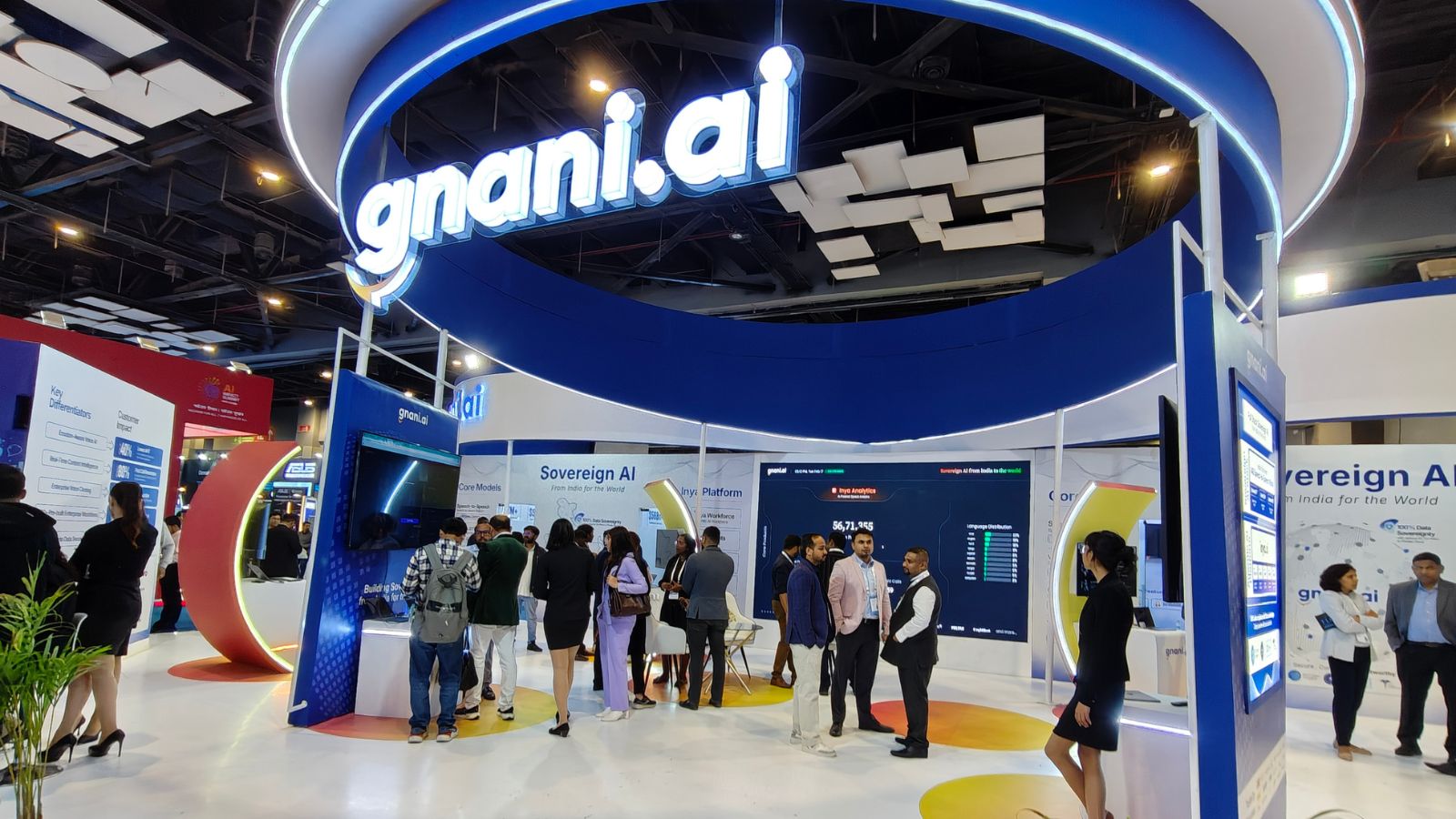
Gnani.ai launches sovereign AI stack for Indian enterprises

India’s Vice-President Launches Gnani Artha Sovereign AI Stack
BharatGen CEO Rishi Bal Details India’s Sovereign AI Strategy

Maharashtra Approves Sarvam AI Sovereign Solutions for Digital Governance
Maharashtra approves Sarvam AI deployment for 2,500 government users
