

3 hrs ago
BRICS Declaration Seeks Economic Leverage Beyond Dollar Dependence
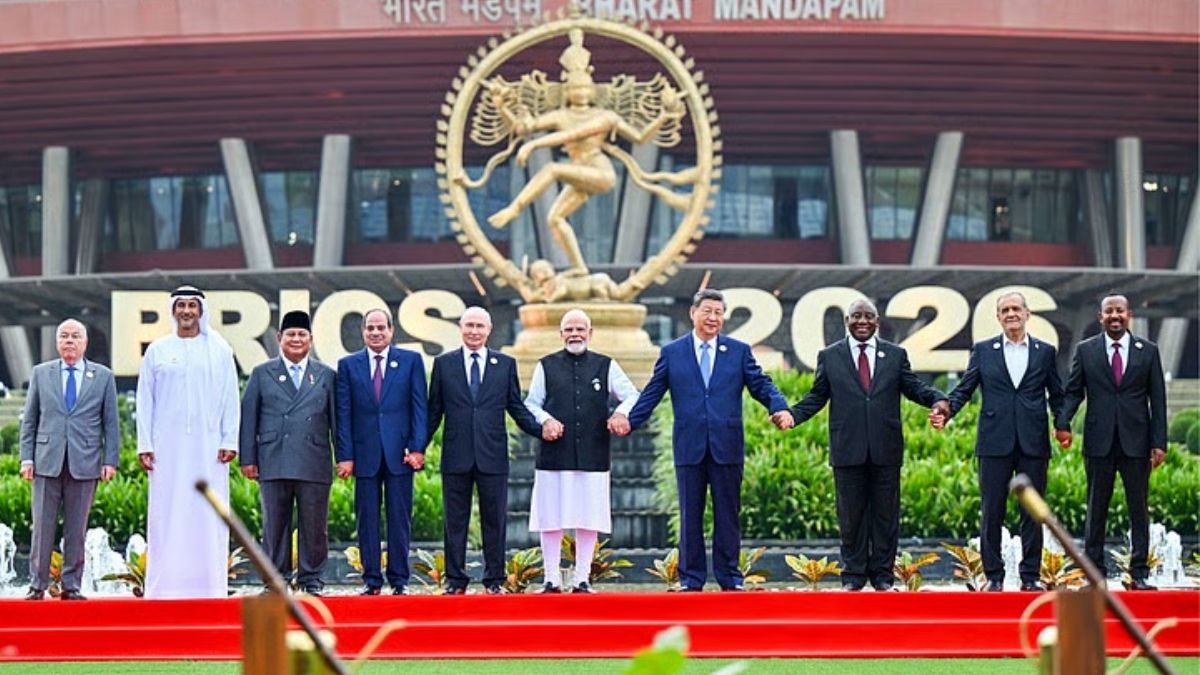
BRICS is a group of countries trying to work together on trade and money.
Its leaders met in New Delhi and made a long plan called the New Delhi Declaration.
They criticized tariffs, sanctions and other trade barriers.
They also want countries to use their own currencies more often instead of relying only on the US dollar.
However, BRICS did not agree to create one shared currency or one replacement payment system.
The New Development Bank is already planning to provide more loans in local currencies.
Other plans, such as customs cooperation and a Grain Exchange, still need to move from discussion to action.
BRICS has a lot of economic power, but its members have different interests.
Its influence will depend on whether it actually builds and uses these new systems.

The New Delhi Declaration opposes unilateral tariffs, sanctions and protectionist trade measures while urging reform of the World Trade Organization.
BRICS supports greater use of local currencies but makes no commitment to create a common currency or unified payment system.
The New Development Bank plans to raise local-currency lending to 40–50% during 2027–2031, including a planned rupee bond program for India.
Proposed customs cooperation, a Grain Exchange and critical-minerals initiatives could provide measurable tests of BRICS economic coordination.
The group’s expanded membership gives it greater economic weight but also makes agreement and implementation more difficult.
- Who
- Leaders of the expanded BRICS group, including India as summit host, met to discuss trade and financial cooperation.
- What
- The 18th BRICS Summit adopted a 140-paragraph New Delhi Declaration addressing protectionism, local-currency use, financial cooperation and global economic governance.
- Where
- Bharat Mandapam in New Delhi, India.
- When
- September 12–13, during India’s 2026 BRICS chairship.
- Why
- BRICS members sought to strengthen their collective economic influence, reduce dependence on existing Western financial systems and respond to trade restrictions.
Gradual Alternatives
Immediate Transformation
Dollar dependence
Gradual Alternatives
BRICS can gradually expand local-currency trade, connect existing payment systems and create additional options without trying to replace the dollar immediately.
Immediate Transformation
A stronger challenge to dollar dominance would require faster, more unified action, such as a common currency or a single BRICS payment system; the declaration does not commit to either.
Economic influence
Gradual Alternatives
Measurable projects such as customs cooperation, local-currency lending and a Grain Exchange could steadily increase BRICS bargaining power.
Immediate Transformation
Declarations and technical discussions will have limited impact unless members implement these projects with clear deadlines, participants and transaction targets.
Internal coordination
Gradual Alternatives
Careful language and phased implementation can keep the expanded group united despite differing economic and political interests.
Immediate Transformation
The group’s larger membership and competing priorities may prevent it from taking sufficiently strong or coordinated action against protectionism and existing financial systems.
Key facts
- Summit
- 18th BRICS Summit
- Declaration
- The 140-paragraph New Delhi Declaration
- Intra-BRICS trade
- Approximately $1.17 trillion in 2024, according to UNCTAD figures
- Local-currency lending
- The New Development Bank plans 40–50% of lending in local currencies during 2027–2031
- India financing
- The New Development Bank announced a $7.5 billion five-year commitment to India, including a planned rupee bond program
- Dollar reserves
- The US dollar accounted for 57.13% of global foreign-exchange reserves in the first quarter of 2026, according to IMF data
- Foreign-exchange transactions
- The US dollar was involved in around 89% of global foreign-exchange transactions in 2025, according to the Bank for International Settlements
Sources
Related news
BRICS Declaration Flags Trade Barriers Amid Global Economic Tensions

BRICS Summit Seeks Cooperation Despite China’s Growing Influence and Divisions
Why Cooperation Between India and China Could Reshape BRICS
BRICS Chooses Local-Currency Diversification Over Replacing the Dollar

BRICS Pushes Local-Currency Trade and Payment Interoperability Amid Tariff Concerns

BRICS Adopts New Delhi Declaration Despite West Asia Divisions

BRICS Declaration to Emphasize Terrorism, Reform and Global South

Modi, UN Chief Discuss Global Conflicts Before BRICS Summit

NDB President Dilma Rousseff Arrives for BRICS Summit

Wars and Tariffs Test BRICS Unity at Delhi Summit
