5 days ago
Why the Manusmriti Still Shapes India’s Social Discourse
The Manusmriti is an old Hindu text about rules for society and behavior.
The author says it has influenced Indian society for a very long time.
Many people may not have read it, but they can still learn ideas from leaders, customs and institutions.
Some people defend the text by saying it is not widely followed.
The author disagrees and says parts of society still show caste and gender discrimination.
The text contains some teachings that apply to everyone, but it also contains unequal rules.
The author says people should not choose only the verses that support their argument.
The article also says other religions should be examined by people within those traditions.
It concludes that ideas linked to Manu remain alive, which is why B.R. Ambedkar opposed the text.

The Manusmriti is a widely commented-on dharmashastra concerning social, legal and ethical norms.
The article argues that texts can influence social practices even when most people have not read them.
It says defenders selectively quote inclusive verses while overlooking the text’s discriminatory prescriptions.
The author links caste and gender discrimination in India to ideas associated with the Manusmriti.
The article argues that Manusmriti-related ideas remain visible in institutions, political debates and everyday social practices.
- Who
- The article discusses the Manusmriti, B.R. Ambedkar, Prime Minister Narendra Modi, Udhayanidhi Stalin, Mallikarjun Kharge and Indian social groups.
- What
- It examines the Manusmriti’s continuing political and social influence and debates over its discriminatory prescriptions.
- Where
- The discussion centers on India, with examples from Tamil Nadu, Rajasthan and Uttarakhand.
- When
- The issue repeatedly resurfaces in political discourse, including in recent controversies mentioned by the author.
- Why
- The author argues that casteist and misogynistic practices, institutions and public arguments continue to reflect ideas associated with the text.
Critics of the Manusmriti’s Continuing Influence
Defenses of the Manusmriti
Relevance to Social Practice
Critics of the Manusmriti’s Continuing Influence
The author argues that the text can shape society indirectly through customs, religious authority and institutions, even if most people have never read it.
Defenses of the Manusmriti
Defenders argue that the Manusmriti has little practical relevance because it is not widely read or followed by Hindus.
Use of Its Teachings
Critics of the Manusmriti’s Continuing Influence
The article says it is inconsistent to quote inclusive verses while ignoring the text’s discriminatory rules concerning social duties and hierarchy.
Defenses of the Manusmriti
Supporters can point to verses presenting truthfulness and pleasant speech as an eternal dharma applying broadly to people.
Meaning of Hindu Diversity
Critics of the Manusmriti’s Continuing Influence
The author argues that philosophical ideas such as “aham brahmasmi” do not automatically remove caste or gender discrimination from social life.
Defenses of the Manusmriti
The article describes an opposing view that Hinduism’s diversity and emphasis on shared philosophical principles can unite people beyond discrimination.
Key facts
- Text
- The Manusmriti is part of the dharmashastra tradition, which discusses socio-structural, legal and ethical norms.
- Historical reach
- The article says the text was influential in medieval India and also influenced Buddhist Southeast Asia.
- Political significance
- Its 20th-century political significance is associated with B.R. Ambedkar’s attack on its discriminatory social prescriptions.
- Common defense
- Defenders argue that the Manusmriti is irrelevant because few people have read or followed it.
- Author’s argument
- The article says written texts can shape practices through traditions, interpretations and social customs without being widely read.
- Public example
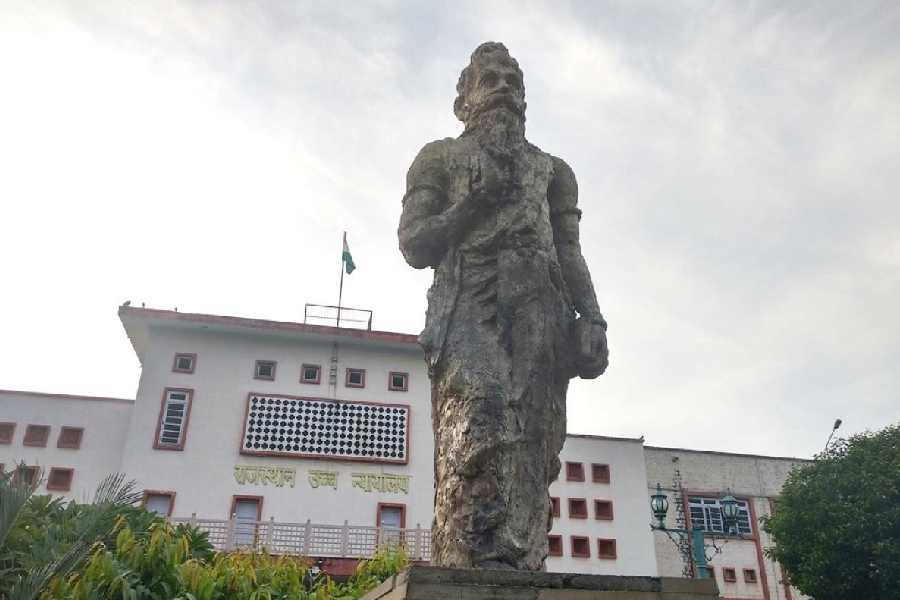
- A statue of Manu remains at the entrance to the Rajasthan High Court in Jaipur, despite demands for its removal.
- Contemporary reference
- The article says high court judges have referred to the Manusmriti and that a purification ceremony followed Mallikarjun Kharge’s address in Haldwani.
Sources
Related news
Rahul Gandhi’s Manusmriti Speech Draws Criticism Over Selective Scripture

Swami Challenges Rahul Gandhi’s Manusmriti Remarks Over Women’s Rights
Pawan Khera Manusmriti Joke Sparks Debate Over Congress Secularism

Hindu Leader Demands Rahul Gandhi Apologise Over Manusmriti Remarks

Rahul Gandhi’s Manusmriti Remarks Trigger BJP Patriarchy Debate

Government Defends 7.8% GDP Growth as Congress Raises Doubts

Kerala BJP Chief Attacks IUML Over Sharia Law Allegations
BJP, Karni Sena Criticize Swara Bhasker’s Padmaavat Comments
Akhilesh Yadav Questions Irregularities After Ram Temple CEO Appointment
Jharkhand Authorities Probe Voter Deletion Forms After Express Report