2 weeks ago
Personal Branding Promises Reputation, But Can It Replace Authenticity?
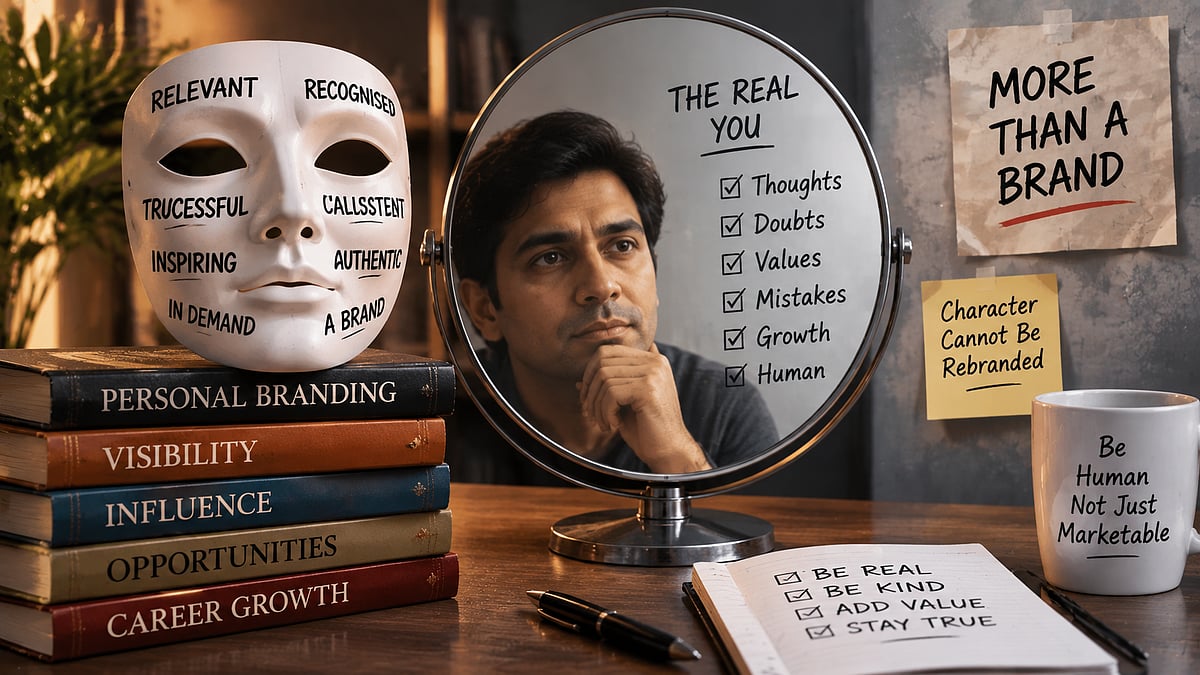
Sanjeev and his friend Vermajee discuss whether people should think of themselves as brands.
Vermajee says branding can help people become known as trustworthy and dependable.
Sanjeev worries that brands sometimes hide uncomfortable truths behind appealing messages.
He thinks people cannot simply redesign themselves when their actions have consequences.
Personal branding can also make authenticity feel like another product to package and sell.
Vermajee replies that people already act differently in different situations.
Sanjeev agrees that reputation matters but says it should come from behavior.
The discussion concludes that people may need to manage their reputation because others are already judging them.
However, they should not confuse a carefully designed image with genuine character.

Sanjeev Kotnala questions the advice to treat oneself as a brand.
He argues that brands can prioritize perception and profits over reality and consequences.
Personal branding encourages people to package, position and promote even their authenticity.
The author says reputation should result from behavior rather than deliberate self-branding.
He acknowledges that people may be branded by others even if they reject personal branding.
- Who
- Sanjeev Kotnala and his friend and marketing consultant, Vermajee, debate personal branding.
- What
- They discuss whether people should think of themselves as brands and whether branding conflicts with authenticity.
- Where
- The conversation takes place in an unspecified setting.
- When
- Why
- Sanjeev questions personal branding because brands can rely on perception even when it differs from reality, while Vermajee argues that reputation and trust still matter.
In Favor of Personal Branding
Skeptical of Personal Branding
Value of branding
In Favor of Personal Branding
Branding can clarify what people stand for and help others know what to expect from them. Relevance, trust and reputation remain important.
Skeptical of Personal Branding
Branding can reduce a person to an image designed for the best public response rather than reflecting who they genuinely are.
Managing reputation
In Favor of Personal Branding
People already present different sides of themselves to bosses, family, friends and strangers, so deliberately managing reputation is practical.
Skeptical of Personal Branding
Changing behavior across situations is part of being human and does not necessarily mean people should package themselves as products.
Authenticity
In Favor of Personal Branding
Personal branding can communicate a promise if it is grounded in dependable behavior and reality.
Skeptical of Personal Branding
Modern branding can turn even authenticity into something to package, position and promote, making genuine self-expression feel strategic.
Key facts
- Author
- Sanjeev Kotnala
- Central question
- Whether people should think of themselves as brands
- Brand qualities discussed
- Relevance, recognition, consistency, trust and a dependable promise
- Main criticism
- Branding can manage perception and conceal inconvenient truths
- Alternative proposed
- Think about how behavior creates reputation
- Key tension
- Personal branding versus authenticity
- Final observation
- People may be branded by others even if they do not participate
Quotes
Sanjeev Kotnala
The article’s narrator and a brand and marketing consultant
“Because unfortunately, Sanjeev, the world hasn't stopped branding you just because you don't want to participate.”
 freepressjournal.in
“Because I have to live with myself after the campaign ends.”
freepressjournal.in
Sources
Related news

Sachin Tendulkar’s Enduring Trust Powers Brands Despite Overexposure Concerns

How Self-Stories and Pretending Can Change Your Behavior

Vimarsh Razdan on Fashion, Work, Balance and Brands

NDTV’s New Campaign Puts Witnessing Ahead Of The Feed

Tukaram Mundhe Challenges Celebrity Paan And Gutka Endorsements
Ranveer Allahbadia Says Influence Begins After People Listen
Kashmir Administration Calls Retreat Unauthorized Amid Outcry
Brands Turn To Meaning, Memory And Trust For Preference

Chiranjeevi Seeks A Career Revival With Socio-Fantasy Vishvambhara

Ravi Kishan on Viral Memes: Gen Z Connects With Imperfections