

1 week ago
Satheesan’s First 100 Days Have Not Broken Kerala’s Borrowing Cycle
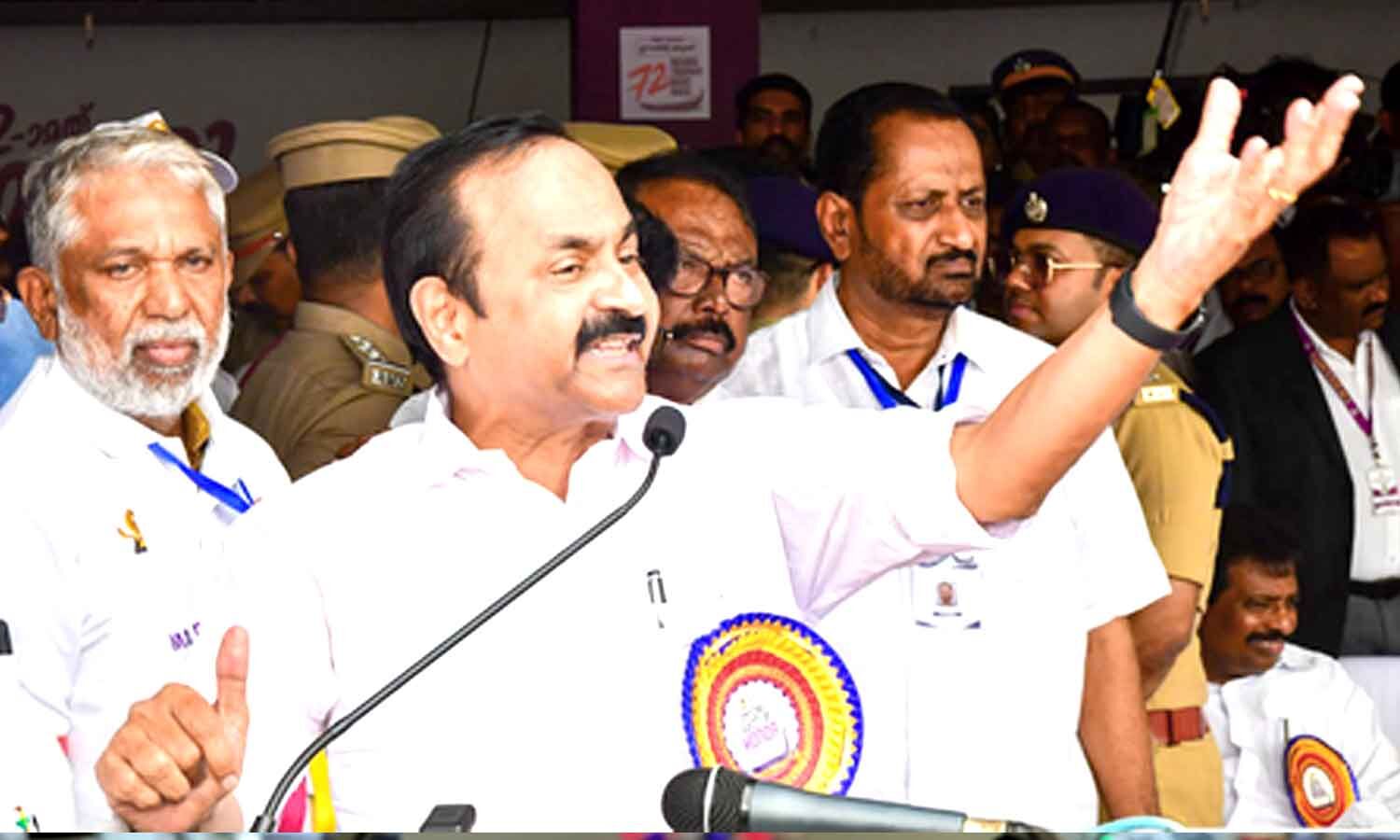
When V.D. Satheesan became Kerala’s Chief Minister and Finance Minister, he inherited a state with large debts and many fixed expenses.
These expenses include salaries, pensions and interest payments.
The government still plans to borrow a large amount of money in the next financial year.
In fact, planned borrowing is higher than the previous year’s revised estimate.
The government says it can collect more taxes to reduce the need for borrowing later.
It also wants to recover unpaid taxes and improve property and other tax collections.
A committee is studying the future of KIIFB, an infrastructure financing agency.
After 100 days, the government has started addressing the problem, but it has not yet shown that Kerala’s borrowing dependence has fallen.

Kerala’s White Paper placed the state’s total liabilities at Rs 5.07 lakh crore.
The 2026-27 Budget plans gross borrowings of about Rs 1.92 lakh crore, up from Rs 1.70 lakh crore in the previous year’s revised estimate.
The government targets an 18 per cent increase in own tax revenue to Rs 99,002 crore.
Measures include recovering tax arrears, addressing property undervaluation and improving tax collection.
A committee is reviewing KIIFB’s financial structure, but there is not yet evidence of a major change in Kerala’s borrowing pattern.
- Who
- V.D. Satheesan’s government, with Satheesan also holding the Finance portfolio.
- What
- The government is attempting to address Kerala’s high liabilities and dependence on borrowing through higher revenue targets, tax-recovery measures and a review of KIIFB.
- Where
- Kerala, with the government based in Thiruvananthapuram.
- When
- The assessment covers the government’s first 100 days in office and includes plans for financial year 2026-27.
- Why
- Kerala’s income is heavily committed to salaries, pensions, interest payments and other expenses, leaving limited funds for development without additional borrowing.
Government’s Reform Argument
Criticism of Continued Borrowing
Can revenue growth reduce borrowing?
Government’s Reform Argument
The government expects own tax revenue to rise by 18 per cent and has announced measures to recover arrears and improve tax collection.
Criticism of Continued Borrowing
These remain targets and planned measures; the article says there is not yet clear evidence of substantial additional revenue collected during the first 100 days.
Has the borrowing cycle changed?
Government’s Reform Argument
The government is examining KIIFB’s financial structure and working on the financial problems identified in the White Paper.
Criticism of Continued Borrowing
Planned gross borrowing rises to about Rs 1.92 lakh crore in 2026-27 from about Rs 1.70 lakh crore in the previous year’s revised estimate, suggesting no major change so far.
Satheesan’s position in government
Government’s Reform Argument
As Chief Minister and Finance Minister, Satheesan has begun addressing the fiscal problems he previously highlighted.
Criticism of Continued Borrowing
His government faces the same borrowing challenge he had repeatedly criticized when Pinarayi Vijayan was Chief Minister, and the article says the crucial test remains ahead.
Key facts
- Total liabilities cited
- Rs 5.07 lakh crore, according to the White Paper presented after the change of government.
- Planned gross borrowing for 2026-27
- Around Rs 1.92 lakh crore.
- Previous year’s revised borrowing estimate
- About Rs 1.70 lakh crore.
- Own tax revenue target
- Rs 99,002 crore, representing an expected 18 per cent increase.
- Revenue measures
- Recovery of tax arrears, action on property undervaluation and improved tax collection.
- KIIFB review
- A committee has been asked to examine KIIFB’s financial structure and suggest changes.
- Current assessment
- There is no evidence yet of a major change in Kerala’s borrowing pattern.
Sources
Related news

Tamil Nadu Borrowing Rises as Spending Outpaces Revenue
Satheesan Government Struggles for Direction After Kerala’s First 100 Days
TVK Government Plans to Raise Rs 15,000 Crore Funds

Onam Celebrations Bring Joy but Financial Burden for Keralam Government
Tamil Nadu Budget 2026: Rising Interest Payments Shrink Fiscal Space
BJP chief attacks Kerala UDF government over development, appeasement politics
Kerala Governor Omits Policy Address Parts
Kerala Launches 'Work Near Home' Project
Kerala CM Accuses Centre of Financial Blockade
ED Accuses Kerala Leaders of Forex Violations in KIIFB Masala Bond Case
