3 days ago
Mumbai Court Rejects NIA Plea to Cancel Activists’ Bail
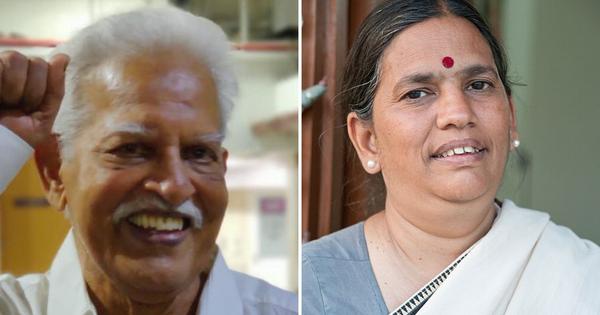
A court in Mumbai decided that four activists should keep their bail.
The investigators said the activists broke their bail rules by attending a meeting with other accused people.
The judge said that simply meeting them did not prove that the rules were broken.
The judge also noted that the accused had already met inside and outside the courtroom.
The case is connected to violence near Bhima Koregaon in 2018.
Investigators say the violence was linked to a larger Maoist conspiracy.
Some courts have questioned the strength of important evidence in the case.
Fourteen of the 16 accused have now been released on bail.

A Mumbai court rejected the National Investigation Agency’s request to cancel bail for four Bhima Koregaon case activists.
The NIA alleged that Varavara Rao, Sudha Bharadwaj, Arun Ferreira and Vernon Gonsalves violated bail conditions by attending a Mumbai Press Club gathering.
Special Judge Chakor S. Baviskar ruled that merely meeting and possibly discussing the case did not prove a breach of bail conditions.
The NIA claimed the gathering promoted the banned Communist Party of India (Maoist) and planned the future of the “Urban Naxal movement.”
Fourteen of the 16 accused have been released on bail; the case concerns violence near Pune on January 1, 2018.
- Who
- The National Investigation Agency, four activists—Varavara Rao, Sudha Bharadwaj, Arun Ferreira and Vernon Gonsalves—and Special Judge Chakor S. Baviskar.
- What
- A Mumbai court rejected the NIA’s application to cancel the four activists’ bail.
- Where
- The ruling was made in Mumbai, and the gathering took place at the Mumbai Press Club. The underlying violence occurred near Pune.
- When
- The court’s decision was reported on Sunday; the ruling was issued on Friday. The disputed gathering took place on January 19.
- Why
- The NIA alleged that the activists breached bail conditions by attending the gathering and advancing a banned Maoist ideology; the court found that meeting alone did not establish a breach.
NIA’s Position
Court’s Position
Whether the gathering breached bail conditions
NIA’s Position
The NIA argued that the four activists violated their bail conditions by attending a gathering with other accused people.
Court’s Position
The court held that merely meeting and possibly discussing the case did not establish that the activists had breached the conditions.
Purpose of the Mumbai Press Club meeting
NIA’s Position
The NIA claimed the gathering was intended to propagate the ideology of the banned Communist Party of India (Maoist) and decide the future of the “Urban Naxal movement.”
Court’s Position
The ruling did not accept the gathering itself as sufficient proof of a bail violation, noting that the accused also met inside and outside the courtroom.
Strength of the prosecution evidence
NIA’s Position
The NIA has alleged that the Elgar Parishad event formed part of a wider Maoist conspiracy to incite caste violence, destabilize the Union government and assassinate Prime Minister Narendra Modi.
Court’s Position
The Supreme Court has said the letters cited as primary evidence had weak probative value, and Arsenal Consulting reported that false evidence had been planted on some devices.
Key facts
- Case
- Bhima Koregaon case concerning violence near Pune on January 1, 2018.
- People granted bail
- Varavara Rao, Sudha Bharadwaj, Arun Ferreira and Vernon Gonsalves.
- NIA allegation
- The activists’ January 19 gathering violated a condition barring contact or communication with co-accused or people involved in similar activities.
- Court finding
- Special Judge Chakor S. Baviskar said that merely meeting, even if the case was discussed, did not prove a bail-condition violation.
- Number of accused
- Sixteen people were arrested in the case, and 14 have been released on bail.
- Other accused
- Jesuit priest Stan Swamy died in prison in 2021; Surendra Gadling received bail in the Bhima Koregaon case but remains jailed in connection with another case.
- Evidence dispute
- The Supreme Court described the NIA’s primary letter evidence as having weak probative value, while Arsenal Consulting concluded that false evidence had been planted on some accused persons’ devices.
Quotes
Chakor S Baviskar
Special judge of the Mumbai court hearing the bail-cancellation application
“By that alone, it cannot be concluded that, they committed breach of the condition imposed, that ‘the accused shall not come in contact or communicate with co-accused or any other person involved in similar activities’”
 scroll.in
“Hence, merely because a venue of the meeting/gathering of the accused changed, they cannot be said to have committed breach of the bail condition, as above and as alleged”
scroll.in
Sources
Related news
Court Rejects Bail Cancellation Plea Against Four Elgar Accused

Bombay HC to Hear Bail Plea in Saibaba Slogans Case

Ex-TISS Student Arrested After Court Rejects Bail in Saibaba Case

Mumbai Court Grants Bail to Seven TISS Students, Rejects Two
BJP Corporator Akash Purohit Remanded to Judicial Custody

NIA Court Rejects Shamil Nachan's Bail, Cites Suppression of Facts

Civil Liberties Groups Demand Release of Telangana Political Prisoners
Theatre artiste attacked by vigilantes after admitting he is Muslim
CJP Protest in Mumbai: Azad Maidan Restrictions and Controversy