1 hr ago
India Responds to Pakistan’s Kashmir and Minority Rights Claims
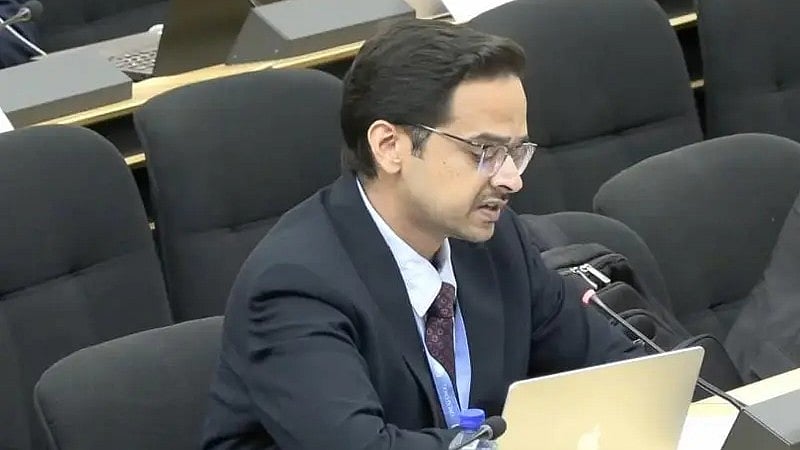
India and Pakistan argued about Kashmir and minority rights at a United Nations meeting.
India said Jammu and Kashmir is and will remain part of India.
It asked Pakistan to leave the part of the region that Pakistan controls.
India also discussed the 1990 departure of many Kashmiri Pandits from the Valley.
Indian diplomat Kshitij Tyagi said terrorists allegedly armed and trained by Pakistan were responsible for driving them out.
He said some of the same groups later attacked people from different religious communities.
India also accused Pakistan of treating some minorities unfairly.
Pakistan continues to raise concerns about Kashmir and minorities, so the two countries still strongly disagree.

At the United Nations Human Rights Council in Geneva, Indian diplomat Kshitij Tyagi answered Pakistan’s remarks on Jammu and Kashmir and minorities in India.
Tyagi said Jammu and Kashmir is an integral part of India and called on Pakistan to vacate the territory it controls.
India blamed Pakistan-backed terrorists for the 1990 exodus of Kashmiri Pandits and later violence against Kashmiris of different faiths.
Tyagi challenged Pakistan’s record on minority rights, citing alleged forced conversions, abductions, blasphemy laws and discrimination against minority groups.
The exchange also covered cross-border terrorism, economic difficulties, and competing claims over territories administered by India and Pakistan.
- Who
- India, represented by diplomat Kshitij Tyagi, responded to Pakistan at the United Nations Human Rights Council.
- What
- The countries exchanged opposing views on Jammu and Kashmir, terrorism and minority rights.
- Where
- At the United Nations Human Rights Council in Geneva.
- When
- The exchange occurred during the latest session or proceedings described in the article; no specific date was provided.
- Why
- India was exercising its right of reply to Pakistan’s remarks about Jammu and Kashmir and minorities in India.
India’s Position
Pakistan’s Reported Position
Status of Jammu and Kashmir
India’s Position
India said Jammu and Kashmir was, is and will remain an integral part of India, and described the territory controlled by Pakistan as under foreign occupation.
Pakistan’s Reported Position
Pakistan continues to raise the Kashmir issue at the United Nations and other international forums, reflecting a competing position on the region’s status.
Human rights and minorities
India’s Position
India highlighted its Muslim population and minority participation in elections and public institutions, while alleging serious abuses against minorities and other vulnerable groups in Pakistan.
Pakistan’s Reported Position
Pakistan raised concerns about minorities in India, prompting India’s response; the article does not provide Pakistan’s detailed arguments.
Terrorism and the Kashmiri Pandit exodus
India’s Position
India said terrorists allegedly armed, trained and sent across the border by Pakistan drove Kashmiri Pandits from their homes in 1990 and later killed Kashmiris of different faiths.
Pakistan’s Reported Position
Pakistan’s reported remarks focused on Kashmir and human rights, while the article does not state its response to India’s allegations concerning terrorism or the exodus.
Key facts
- Forum
- United Nations Human Rights Council
- Location
- Geneva
- Indian representative
- Diplomat Kshitij Tyagi
- India’s Kashmir position
- Jammu and Kashmir is an integral and inalienable part of India.
- India’s demand
- Pakistan should vacate the portion of Jammu and Kashmir under its control.
- Historical issue raised
- The 1990 exodus of Kashmiri Pandits from the Valley.
- Other issues
- Cross-border terrorism, minority rights and conditions in territories administered by Pakistan.
Sources
Related news
India Rebukes Pakistan at UN Over Terror and Loans

India Rejects OIC Kashmir Remarks, Urges Pressure on Pakistan

India Rejects OIC Kashmir Remarks, Defends Internal Status

Kashmiri Pandits Mark Balidan Diwas, Renew Genocide and Homeland Demands
Kashmiri Activist Accuses Pakistan of Crackdown in PoK at UN
Kashmiri Pandit Threats Prompt Warning Against Repeat of 1990 Exodus
J&K Assembly Erupts Over Resolution Seeking Statehood Restoration
Jammu Kashmir Assembly Seeks TET Exemption for Pre-2019 Teachers
Congress Divided Over GNLF as India Faces Regional Disputes
J&K Panchayat Polls Delayed Over Pending OBC Reservation