

2 hrs ago
Huang Says China Could Build Advanced Chip Machines by 2030
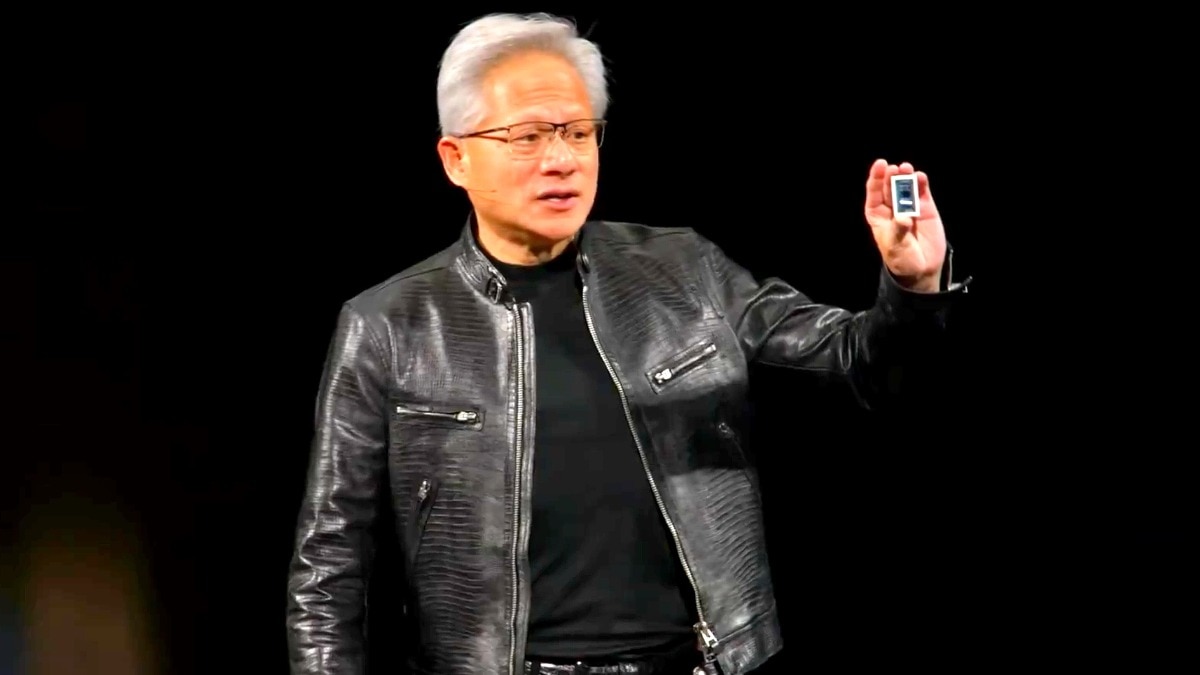
Jensen Huang, the head of Nvidia, thinks China may soon build more advanced machines for making computer chips.
He said this could happen by 2030.
China is already good at making large quantities of technology.
Its main domestic lithography company currently makes machines that can produce 90nm-class chips.
These are not as advanced as the newest chips.
The company is reportedly working on machines for 28nm chips.
However, the report says there is no public proof that those machines exist or are being used widely.
Huang also said China’s artificial-intelligence industry is close behind leading US laboratories.

Nvidia CEO Jensen Huang said China could develop advanced chipmaking machines by 2030.
Huang described 2030 as close and said China is strong at high-volume production.
China’s leading domestic lithography maker, Shanghai Micro Electronics Equipment, mass-produces 193-nm ArF dry scanners.
Those scanners can make chips using a 90nm-class process, which is less advanced than current cutting-edge chips.
SMEE reportedly developed an ArF immersion scanner for 28nm chips, but no public evidence confirms the development or large-scale deployment.
- Who
- Nvidia CEO Jensen Huang and Shanghai Micro Electronics Equipment, China’s leading domestic lithography equipment maker.
- What
- Huang said China could develop advanced chipmaking machines by 2030, despite current limitations in domestic lithography.
- Where
- China.
- When
- Huang expects China to reach this capability by 2030, potentially within three to four years.
- Why
- Huang said China’s strength in high-volume production could help it close the technology gap, although current machines remain less advanced and large-scale deployment has not been demonstrated.
Current Technology Limitations
Huang’s Positive Forecast
China’s present lithography capability
Current Technology Limitations
China’s domestic equipment can currently make 90nm-class chips, which are less advanced than today’s cutting-edge chips.
Huang’s Positive Forecast
Huang said China is only a few years away from overcoming the gap and reaching advanced chipmaking capability.
Evidence of progress
Current Technology Limitations
A reported 28nm-capable ArF immersion scanner has not been publicly verified, and large-scale deployment has not been demonstrated.
Huang’s Positive Forecast
Huang argued that China’s strength in high-volume production makes reaching the capability by 2030 a matter of time.
Key facts
- Forecast
- Jensen Huang said China could develop advanced chipmaking machines by 2030.
- Current domestic maker
- Shanghai Micro Electronics Equipment (SMEE).
- Current machine
- A 193-nm ArF dry scanner.
- Current capability
- Production of chips using a 90nm-class manufacturing process.
- Reported newer machine
- An ArF immersion scanner reportedly capable of producing 28nm chips.
- Evidence status
- There is no public evidence confirming the reported 28nm scanner’s development.
- Scale limitation
- China has not demonstrated production and deployment at the scale needed for high-volume advanced chip manufacturing.
Quotes

Jensen Huang
Nvidia CEO discussing China’s prospects for advanced chipmaking
“2030 is just around the corner. The way to think about China is that it is really good at high-volume production. It is just a matter of time[...] so two or three years is just a click; it is nothing. So as far as they are concerned, they are already there”
 businesstoday.in
“They are going to get there by 2030”
businesstoday.in
Sources
Related news
Nvidia Denies Report of China AI Chip Shipments
Nvidia Develops China-Specific AI Chip Amid Export Restrictions

Nvidia Denies Report of New China-Specific AI Chip

India Plans 7nm to 3nm Chip Technology Within Eight Years
Huawei Sets 2027 AI Chip Launches as Nvidia Challenge Intensifies

Births Plunge Across Major Economies, Data Shows Uneven Demographic Decline

India Women Begin Asian Games Gold-Medal Defence Against Japan

US Russia Oil Tariff Threat Puts India Ties Under Pressure
UN Chief Calls for Power Redistribution in Global Institutions
