51 mins ago
State-run oil firms poised for sharp second-quarter profit rebound
India’s three government-owned oil companies had large losses in the first quarter.
Analysts expect them to make a combined profit of about ₹14,470-15,000 crore in the second quarter.
This improvement is mainly because selling petrol and diesel became more profitable.
The companies are also losing less money on cooking-gas cylinders.
Refining profits are still helping, although they have fallen for some companies.
HPCL is expected to improve the most compared with the previous quarter.
However, oil prices and the conflict in the Middle East could rise again.
If that happens, the companies’ profits may be smaller than expected.

IOC, BPCL and HPCL are projected to swing from combined Q1 losses of ₹18,150 crore to roughly ₹14,470-15,000 crore in Q2 profits.
Integrated margins are estimated at ₹9-14 per litre in Q2, up from ₹1-3 per litre in Q1.
Petrol and diesel marketing margins improved sharply, while LPG under-recoveries are expected to decline from about ₹510 to ₹290 per cylinder.
Indian Oil Corporation, Bharat Petroleum Corporation and Hindustan Petroleum Corporation are each expected to return to profit, with HPCL seeing the strongest sequential improvement.
Renewed crude-price volatility and escalation of the Middle East conflict could weaken the recovery and reduce full-year earnings.
- Who
- Indian Oil Corporation, Bharat Petroleum Corporation and Hindustan Petroleum Corporation.
- What
- The three state-run oil marketing companies are expected to post a sharp sequential profit recovery in the September quarter.
- Where
- When
- The recovery concerns the July-September quarter, or Q2FY27, compared with April-June.
- Why
- Higher fuel-marketing margins, lower LPG under-recoveries and supportive refining margins are expected to improve earnings.
Recovery outlook
Risk outlook
Second-quarter earnings
Recovery outlook
Analysts expect the three companies to remain profitable at both operating and net-profit levels, with Q2 results substantially better than Q1.
Risk outlook
Emkay Research said the Middle East conflict has already pushed current integrated margins down to about ₹5-9 per litre and could keep earnings below earlier expectations.
Sources of improvement
Recovery outlook
Better petrol and diesel marketing margins, lower LPG under-recoveries and still-supportive refining margins are expected to drive the rebound.
Risk outlook
Another crude-price spike, higher freight costs or increased premiums could reverse some gains and raise working-capital requirements.
Refining performance
Recovery outlook
Refining cracks remain elevated, partly because outages in Russia and the Middle East have tightened product availability, particularly for diesel.
Risk outlook
Refining margins are expected to moderate for some companies, including BPCL, whose estimated margin falls from $41.4 to $18 per barrel.
Key facts
- Estimated combined Q2 profit
- About ₹14,470-15,000 crore, compared with a combined Q1 loss of ₹18,150 crore.
- Integrated margins
- Estimated at ₹9-14 per litre in Q2, versus ₹1-3 per litre in Q1.
- Fuel marketing margins
- Q2 margins are estimated at ₹2.9 per litre for petrol and ₹1.3 for diesel, compared with negative ₹6.1 and ₹18.9 in Q1.
- LPG under-recoveries
- Expected to fall to about ₹290 per cylinder in Q2 from ₹510 in Q1.
- Indian Oil Corporation estimate
- ₹7,303 crore Q2 profit versus a ₹2,661 crore Q1 loss.
- Bharat Petroleum Corporation estimate
- ₹4,520 crore Q2 profit versus a ₹3,962 crore Q1 loss.
- Hindustan Petroleum Corporation estimate
- ₹2,647 crore Q2 profit versus an ₹11,526 crore Q1 loss.
- Main risk
- Renewed crude-price volatility and escalation of the Middle East conflict could pressure earnings.
Quotes
ICICI Securities
Brokerage and equity research firm assessing the oil marketing companies’ quarterly earnings.
“While 2Q earnings should be better than 1Q, the continued escalation in the ME leaves the earnings trajectory below our initial expectations and poses downside risk to our full-year earnings estimates,”
 financialexpress.com
“Given the trends seen in the quarter so far, although recent weeks have seen a sharp decline in integrated margins, Q2 averages are still sharply higher than Q1 levels,”
financialexpress.com
Sources
Related news
Rising Crude Prices Deepen Losses for India’s Oil Marketers

India Inc Growth Seen Slowing as Q2 FY27 Margins Tighten
OMC LPG under-recoveries to fall 40% as global prices ease
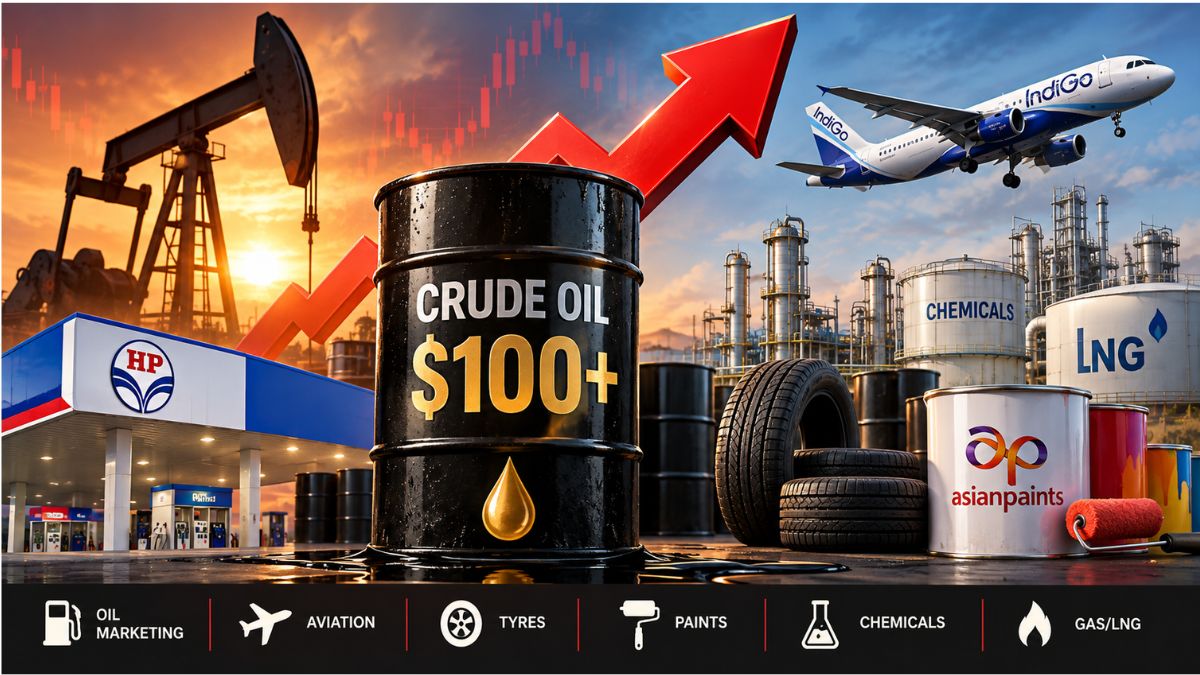
Crude Surges Above $100, Putting Five Sectors Under Pressure
Brent Crude Surges Above $100, Pressuring Indian Fuel Marketers
Crude Spike Unlikely to Trigger Immediate Indian Fuel Hike

Eight PSU Stocks Offer Dividend Yields Above Five Percent