1 week ago
India’s Sugar Prices Rise Amid Disease, Weather and War
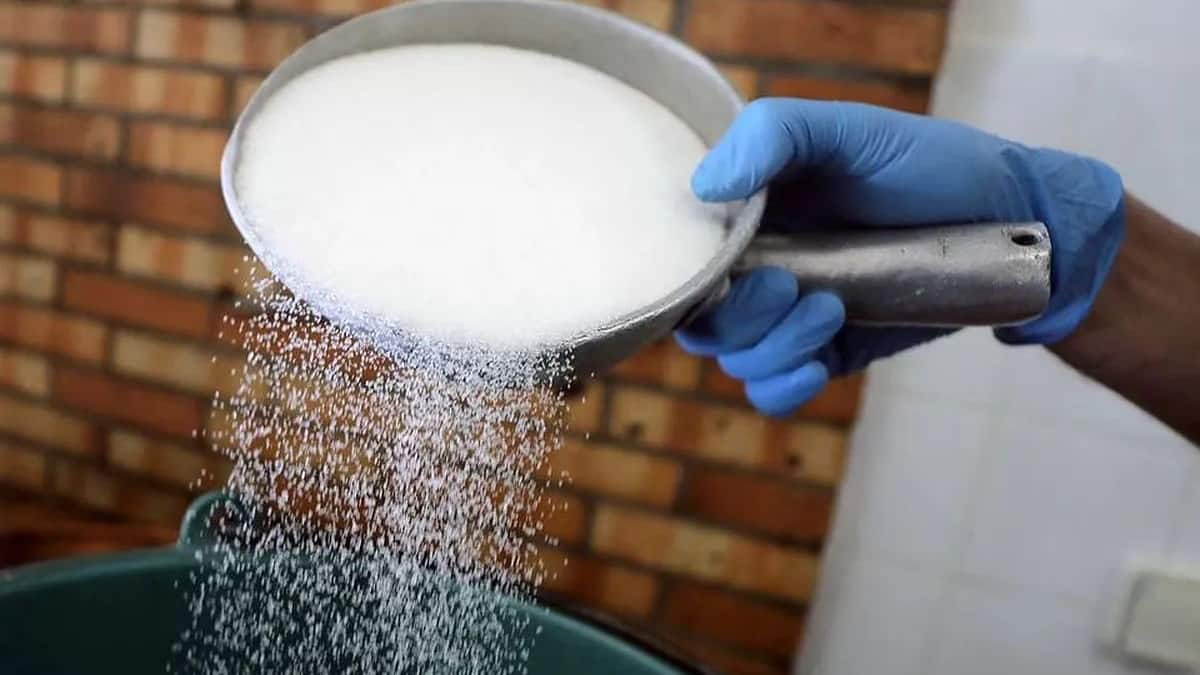
Sugar has become much more expensive in India before the festive season.
The average price reached Rs 62.47 per kilogram on August 23.
Last year, it was Rs 46.30 per kilogram.
Some opposition politicians say the government used too much sugarcane to make ethanol fuel.
The government says ethanol is not the main reason because less sugarcane was diverted to ethanol than before.
Officials instead point to red rot, a disease that damages sugarcane plants.
They also blame dry weather linked to El Niño for reducing production.
Higher fuel and fertiliser costs connected to the Iran conflict have made sugar production more expensive.
To increase supply, the government permitted imports and restricted how much sugar businesses can store.

India’s average retail sugar price reached Rs 62.47 per kilogram on August 23, compared with Rs 46.30 a year earlier.
The government allowed duty-free imports of 10 lakh tonnes of raw sugar and imposed limits on business inventories.
Opposition leaders blamed ethanol blending for reducing sugar output, but the government rejected that explanation.
Officials attributed lower sugar recovery to red rot disease and also cited El Niño-related weather conditions.
Higher oil, diesel and fertiliser costs linked to disruptions in the Strait of Hormuz have added to production expenses.
- Who
- Indian consumers, sugar producers, opposition politicians and the Union government are involved.
- What
- Sugar prices have risen sharply, prompting the government to permit imports and impose inventory limits.
- Where
- Across India, with specific price effects reported in Ahmedabad and Telangana.
- When
- Prices cited in the reports rose through August, with the latest average figures recorded on August 23; government measures extend into 2026.
- Why
- The government and experts cite red rot disease, El Niño-related weather, lower sugar recovery and higher fuel and fertiliser costs; opposition leaders also blame ethanol diversion.
Opposition and ethanol critics
Government and industry explanations
Role of ethanol blending
Opposition and ethanol critics
Arvind Kejriwal, Jairam Ramesh and Sanjay Raut argued that diverting sugarcane and grain to ethanol production reduced sugar output and contributed to the price increase. Ramesh called for an immediate review of the E20 policy.
Government and industry explanations
The Union Consumer Affairs, Food and Public Distribution Ministry said it was incorrect to blame ethanol production, noting that the share of sugar diverted to ethanol had declined and that nearly three-fourths of ethanol now comes from grains, particularly maize.
Main cause of lower supply
Opposition and ethanol critics
Opposition leaders focused on government policy and sugarcane diversion as the cause of shortages and higher prices.
Government and industry explanations
The government and experts attributed the problem primarily to red rot disease, which reduced sugar recovery, and to El Niño-related weather conditions that harmed agricultural productivity.
Effect of the Iran conflict
Opposition and ethanol critics
The articles do not present a specific opposition position on the war’s effect on sugar prices.
Government and industry explanations
Experts said disruptions in the Strait of Hormuz increased oil prices, raising diesel and fertiliser costs for farmers and sugar mills and adding to sugar-production expenses.
Key facts
- Retail price
- India’s average retail sugar price was Rs 62.47 per kilogram on August 23, versus Rs 46.30 a year earlier.
- Sugar recovery
- The reported recovery rate fell to 8.91 per cent from 9.7 per cent previously.
- Import measure
- The government allowed duty-free imports of 10 lakh tonnes of raw sugar until October 31, 2026.
- Export measure
- India banned sugar exports until September 30, 2026.
- Inventory limit
- Sugar dealers were restricted to holding 400 tonnes, with stocks limited to 30 days; larger sugar-consuming businesses were directed to hold no more than 15 days of inventory.
- Ethanol diversion
- The government said sugar diverted to ethanol fell from about 12 per cent in 2022-23 to about 9 per cent in 2025-26.
- Domestic requirement
- Union Minister Pralhad Joshi said India requires around 280 lakh tonnes of sugar and has a surplus of more than 20 to 25 lakh tonnes.
Quotes

Union Consumer Affairs, Food and Public Distribution Ministry
India’s Union ministry responsible for consumer affairs, food and public distribution.
“Because of the red rot disease, which was very unexpected, and El Niño, overall agricultural production, including sugar, has come down not only in India but globally... we are very concerned about it, which is why we have immediately taken several measures. India’s requirement is around 280 lakh tonnes, and as of today, we have a surplus of more than 20 to 25 lakh tonnes.”
 firstpost.com
“It is incorrect to attribute the recent increase in sugar prices to diversion of sugar for ethanol production. In fact, the share of sugar diverted for ethanol has declined from around 12 per cent in 2022-23 to around nine per cent in 2025-26. Moreover, nearly three-fourths of the ethanol produced in the country now comes from grains, particularly maize.”
firstpost.com
Sources
Related news

Sugar Prices Rise Amid Production Concerns and Political Clash
India’s Sugar Prices Surge Amid Supply Crunch, Speculation
Why India Suddenly Needs Sugar Imports as Prices Rise
Government Rejects Ethanol Link, Blames Hoarding for India Sugar Surge

India’s Sugar Prices Surge as Demand, Weather and Speculation Weigh
India Sugar Prices Rise as Government Rejects Ethanol Link

US-Iran Strikes Escalate as Tehran Warns of New Strategy
Trump Warns of Fresh Iran Strike After Heavy Attack

Trump Says US Could Attack Iran Again at Will

U.S. Treasury Yields Ease as Jobs Data Misses Expectations

Iran Seizes Fuel-Smuggling Vessel in Gulf, Arrests 11 Crew