2 weeks ago
BRICS Ministers Reject EU Carbon Border Tax as Discriminatory
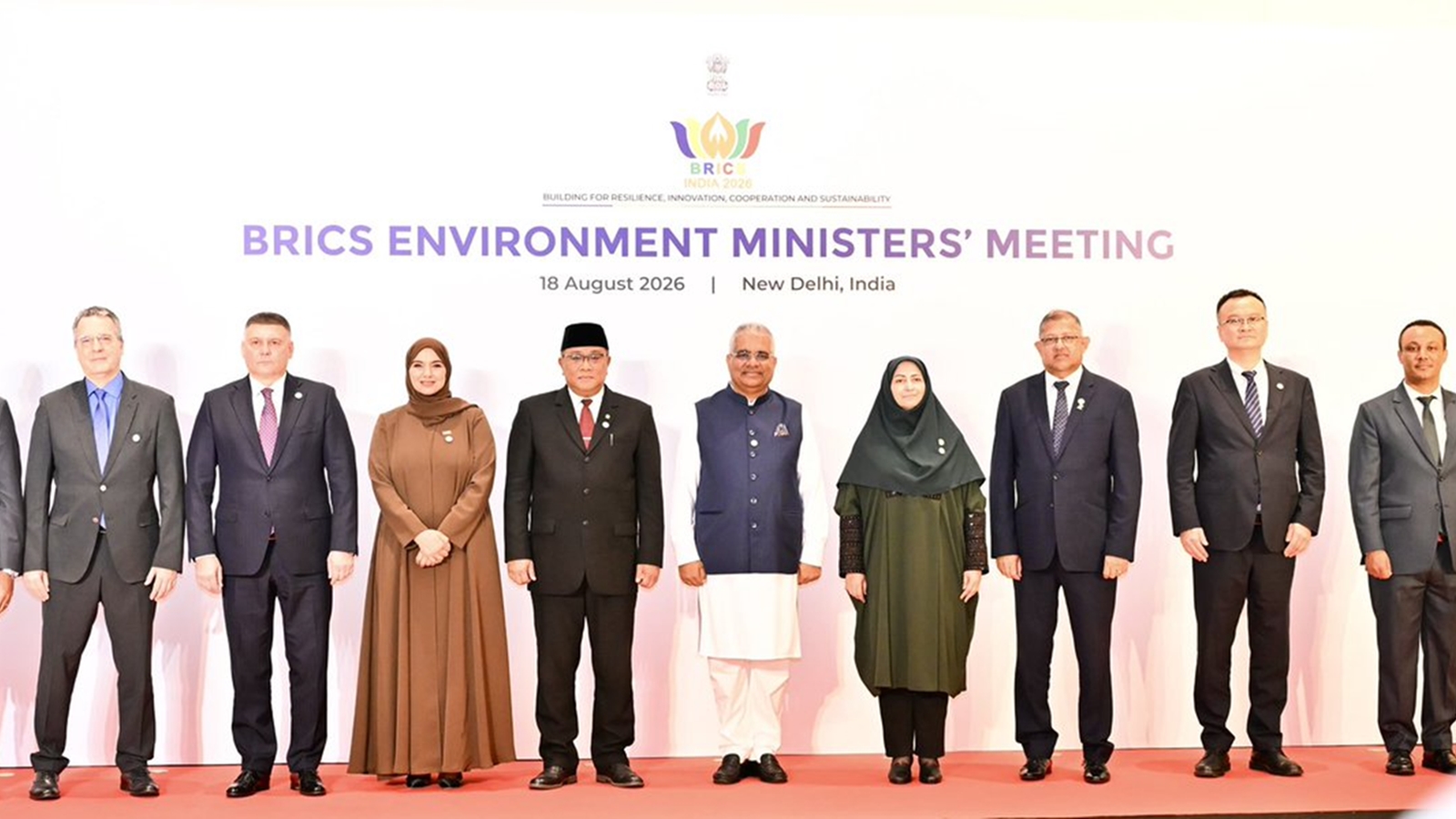
BRICS ministers criticized a European Union rule about carbon emissions on imported goods.
The rule is called the Carbon Border Adjustment Mechanism, or CBAM.
It adds a cost to goods such as steel, aluminium, cement and fertilisers when they enter the European Union.
The European Union intended the measure to reduce pollution linked to imported products.
Developing countries have viewed it as a trade barrier.
The BRICS ministers called it unfair, punitive and discriminatory.
They also said richer countries should provide more money to help countries adapt to climate change.
CBAM started with a reporting phase in October 2023 and began requiring certificates in January 2026.

BRICS environment and climate ministers opposed the European Union’s Carbon Border Adjustment Mechanism.
They called the measure unilateral, punitive, discriminatory and inconsistent with international law.
The ministers said developed countries must urgently increase climate finance, particularly for adaptation.
The mechanism applies to carbon-intensive imports including steel, iron, fertilisers, aluminium and cement.
CBAM began reporting on October 1, 2023, and took full effect on January 1, 2026.
- Who
- BRICS environment and climate ministers, in response to the European Union’s measure.
- What
- They opposed the European Union’s Carbon Border Adjustment Mechanism, also called the Carbon Border Tax.
- Where
- The articles identify the European Union as the jurisdiction applying the measure but do not specify where the ministers met.
- When
- The opposition was expressed Tuesday; CBAM began reporting on October 1, 2023, and took full effect on January 1, 2026.
- Why
- The ministers said CBAM was unilateral, punitive, discriminatory, protectionist and inconsistent with international law, while also urging greater climate finance for adaptation.
BRICS ministers’ position
CBAM’s stated rationale
Trade and fairness
BRICS ministers’ position
BRICS ministers said the measure is unilateral, punitive, discriminatory and protectionist, and does not comply with international law.
CBAM’s stated rationale
The measure has been presented as a way to address the carbon footprint of imported goods, although developing countries have viewed it as a trade barrier.
Climate responsibilities
BRICS ministers’ position
The ministers argued that developed nations should urgently scale up climate finance, especially for adaptation.
CBAM’s stated rationale
CBAM links import requirements to the carbon emissions embedded in covered goods.
Key facts
- Measure
- European Union Carbon Border Adjustment Mechanism (CBAM), also called the Carbon Border Tax
- Covered goods
- Steel, iron, fertilisers, aluminium and cement
- Reporting phase
- Started October 1, 2023
- Full implementation
- Began January 1, 2026
- Implementation requirement
- Importers must purchase and surrender CBAM certificates linked to embedded carbon emissions
- BRICS criticism
- Ministers described CBAM as unilateral, punitive, discriminatory and protectionist
- Climate finance
- Ministers called for developed nations to urgently increase financing, especially for adaptation
Sources
Related news

BRICS Ministers Adopt Climate Resilience and Wildfire Roadmap

BRICS trade ministers adopt Jaipur Consensus on MSME financing

EU rejects US demands to soften sustainability rules

Shipki La trade faces fresh roadblock over IGST levy

India to Host 12th BRICS Environment Ministers' Meeting in Delhi

Avaada Plans Rs 10,000-Crore Zero-CBAM Green Campus in Hisar

UPSC Key: Gene Therapy, Tribunals, Nuclear Rules and Trade