8 months ago
Study maps dwindling dhole habitats in Asia
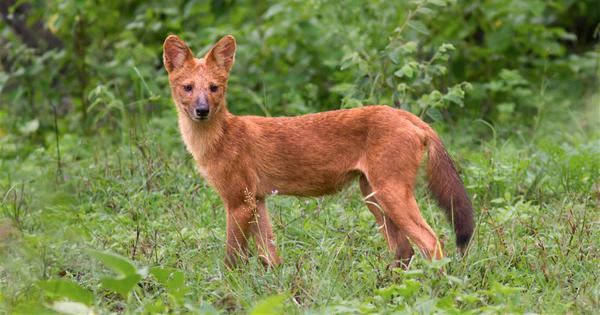
Dholes, also known as Asiatic wild dogs, are in trouble.
They used to live in many places across Asia, but now they are only found in small, scattered groups.
A recent study looked at where these wild dogs might still live and thrive.
The researchers used special computer models to find out which areas have the right conditions for dholes.
They found that the best places for dholes are in western and central India, and across the Himalayan foothills into Southeast Asia.
The study also showed that Southeast Asia has the most potential habitat for dholes, and India has the largest area where they might live.
However, the forests where dholes live are not well connected, which makes it hard for them to move around and find mates.
The researchers say it's important to protect not just the forests where dholes live, but also the areas around them so that the wild dogs can move freely.
They also say that countries need to work together to save the dholes because they live in many different places.
The main threats to dholes are habitat loss from farming, roads, and cities, as well as conflicts with humans and diseases from domestic dogs.

Dholes, or Asiatic wild dogs, have lost much of their former range in Asia due to habitat loss and human pressures.
A recent study mapped suitable habitats for dholes across 12 countries using environmental variables and MaxEnt modeling.
The study identified three primary regions of suitable dhole habitat: western India, central India, and the Himalayan foothills through Southeast Asia.
Southeast Asia has the largest share of potential dhole habitat (56%), with India holding the largest proportion of potential range.
Conservation efforts must focus on protecting functional corridors and connectivity among dhole populations to ensure long-term survival.
- Who
- Researchers from the IUCN Dhole Working Group and other institutions
- What
- A study mapping suitable habitats for dholes in Asia
- Where
- 12 countries across Mainland China, the Indian subcontinent, and Southeast Asia
- When
- Data collected between 1996 and 2018, study published recently
- Why
- To identify and conserve remaining dhole habitats and improve connectivity
Key facts
- Dhole Population
- 4,500-10,500 individuals
- Study Regions
- Mainland China, Indian subcontinent, Southeast Asia
- Key Countries
- India, Bhutan, Thailand, Cambodia, Malaysia
- Habitat Suitability
- 56% in Southeast Asia, largest in India
- Conservation Focus
- Functional corridors and connectivity
Quotes
Monsoon Pokharel Khatiwada
Corresponding author of the study and member of the IUCN Dhole Working Group
“Our observation data were more biased in these regions, and the provided environmental variables match the probability of distribution of dholes across these regions. The bias of observations could have been caused by field efforts being prioritised in areas where the species is most likely to be observed.”
 scroll.in
“Initiate coordinated transboundary meetings, strengthen cross-border conservation initiatives, improve monitoring in the northern part of their historic range, focus conservation beyond protected areas, and work to improve functional corridors, connectivity, and bottlenecks among suitable habitats.”
scroll.in
Sources
Related news

Bihar Warns Against Unknown Fish Carried By Nepal Floodwaters
Rare Sharp-Tailed Sandpiper Spotted at Najafgarh in Fifth Indian Record

UNCCD CoP 17 Highlights Grassland Restoration and Drought Resilience
Ecologists Seek Marine National Parks Along Andhra Pradesh Coast
Perungulam Wetland Moves Toward Ramsar Recognition in Tamil Nadu