1 day ago
Trump Administration Tightens US Visa Rules for Indians
The United States is making several visa rules stricter for people from India and other countries.
These rules affect workers, students, family members and visitors who enter legally.
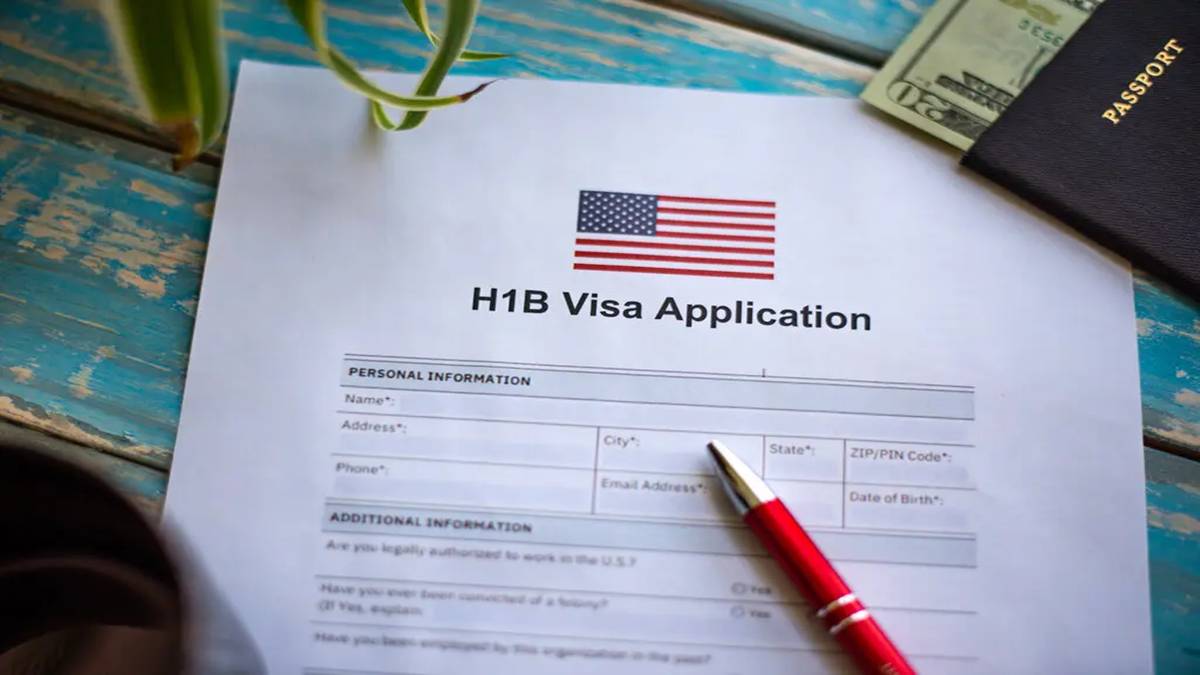
Some new H-1B applications may face very large fees and a selection system that favors higher-paid jobs.
H-1B applicants and their families may also have to disclose their social-media accounts.
The government has proposed stopping many H-4 spouses from working.
Students may soon be allowed to stay only for four years or the length of their course, whichever is shorter.
Visitors may have to pay a bond and attend an in-person interview.
Officials say these changes improve security and stop people from staying too long.
Advocacy groups and some organizations say the rules could harm families, privacy, students and colleges.

New fees, wage-based selection and social-media checks are increasing H-1B scrutiny for Indian workers.
The administration has proposed ending H-4 spouses’ employment authorization, creating uncertainty for working dependents.
F-1 students face a proposed four-year or course-length cap and expanded online screening.
B-1 and B-2 applicants may face visa bonds of $5,000, $10,000 or $15,000.
The administration says the measures improve security and prevent visa overstays, while advocates cite privacy and economic concerns.
- Who
- Indian workers, H-4 dependents, international students, visitors and business travelers, along with U.S. immigration authorities and advocacy organizations.
- What
- The Trump administration has introduced or proposed stricter visa fees, screening, interviews, employment rules and length-of-stay requirements.
- Where
- The measures apply to people seeking entry to or staying in the United States.
- When
- Measures have been introduced or proposed over the past year, including changes reported for 2025, September 15, FY2027 and August 2026.
- Why
- The Department of Homeland Security says the changes strengthen security, assess compliance and help prevent overstays; critics cite privacy, employment and education concerns.
Administration rationale
Critics and affected applicants
Security and compliance
Administration rationale
The Department of Homeland Security says direct, periodic assessments will help verify that nonimmigrants follow visa conditions and U.S. immigration laws.
Critics and affected applicants
Advocacy groups and affected applicants say expanded scrutiny creates uncertainty and may intrude on privacy.
H-4 employment authorization
Administration rationale
The administration has proposed reversing the 2015 rule that lets certain H-4 spouses obtain employment authorization.
Critics and affected applicants
Supporters of the existing program say it enables spouses to work, contribute to household finances and build careers, particularly during the green-card process.
Student visa restrictions
Administration rationale
The administration is replacing duration-of-status treatment with a defined eligibility period and expanded screening.
Critics and affected applicants
NAFSA and educational and labor organizations argue that the student rule could create administrative burdens and negatively affect higher-education enrollment.
Key facts
- Affected visa categories
- H-1B, H-4, F-1 and B-1/B-2 visas
- H-1B petition payment
- A $100,000 payment applies to certain new petitions filed after September 21 last year; the measure was put on hold by courts.
- Proposed H-1B fee
- The Department of Homeland Security proposed an additional $103,265 fee in August 2026; it is not a universally applicable fee.
- H-4 employment
- The administration has proposed ending employment authorization for certain H-4 spouses, but existing work rights have not yet ended.
- Student stay limit
- New rules set for September 15 would cap eligibility at four years or the course duration, whichever is shorter.
- Visitor visa bond
- Some B-1/B-2 applicants may have to deposit $5,000, $10,000 or $15,000.
- Interview requirements
- From October 2025, most nonimmigrant visa applicants generally require an in-person interview, with limited exceptions.
Quotes
Mounika
An H-4 visa holder living in Missouri
“My husband has filed for permanent residency, and I got an EAD to sustain our family.”
 deccanchronicle.com

Department of Homeland Security
The US federal department responsible for immigration and homeland security
“These changes will ensure that DHS has an effective mechanism to periodically and directly assess whether these nonimmigrants are complying with the conditions of their classifications and US immigration laws”
deccanchronicle.com
Sources
Related news
Trump Administration Proposes $103,265 H-1B Fee, Indians Face Impact

Trump Administration Proposes Permanent $103,265 H-1B Visa Fee
US Considers New Fees for H-1B and OPT Programs
US Proposes $103,265 H-1B Fee, Threatening Indian Hiring
Trump Administration Revives Plan Targeting H-4 Spouse Work Permits
US Considers Ending H-4 Spouse Work Permits, Indians Hit Hardest
USCIS Reaches H-2B Visa Cap for First Half of FY2027

DHS Proposes Ending 60-Day Grace Period for H-1B Workers
US Warns EB-1 Green Cards May Run Out for Indians
Proposed H-1B Changes Could Tighten Worker and Spouse Protections