16 hrs ago
Bandhan Bank Shares In Focus As Ratings Highlight Recovery Risks
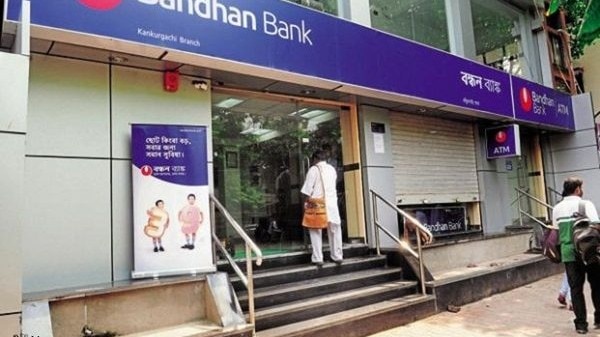
Bandhan Bank is receiving attention because its deposits and loan quality have improved.
More of its deposits now come from current accounts, savings accounts and retail customers.
The bank also has fewer bad loans than it did a year earlier.
New problem loans have declined as well.
However, some borrowers, especially in the emerging enterprise business, may still be risky.
The bank’s overall stress level remains high.
Its profits are also being pressured by loan-loss provisions, lower interest margins and high operating costs.
ICRA said the bank’s ability to prevent more loans from becoming bad will remain important to watch.

ICRA noted that CASA and retail deposits rose to 74% of total deposits by June 30, 2026, from 68% a year earlier.
Gross and net NPAs declined to 3.15% and 0.93%, respectively, as of June 30, 2026.
The bank’s net stress pool decreased to 3.1% from 3.8%, but ICRA said it remains elevated.
Fresh NPA generation fell to 2.91% in Q1 FY2027, although portfolio vulnerability remains high in the emerging enterprise business segment.
Healthy advances growth and a larger non-EEB book supported the ratings, while high provisions, lower NIMs and operating expenses constrained profitability.
- Who
- Bandhan Bank and ICRA.
- What
- ICRA’s assessment highlighted improving deposits, asset quality and advances, alongside continuing risks to profitability and loan performance.
- Where
- At Bandhan Bank; the article does not specify a particular location.
- When
- The assessment cited data through June 30, 2026, including Q1 FY2027 and FY2026 comparisons.
- Why
- The bank’s shares are in focus because its financial indicators are improving, while elevated stress, borrower vulnerability and profitability constraints remain concerns.
Improving indicators
Continuing risks
Deposits and loan quality
Improving indicators
CASA and retail deposits increased to 74% of total deposits, while gross and net NPAs declined.
Continuing risks
ICRA noted that CASA remains below the private-sector-bank average, and the net stress pool is still elevated.
Portfolio performance
Improving indicators
Fresh NPA generation fell to 2.91% in Q1 FY2027, and the non-EEB book grew to 66% of advances.
Continuing risks
Portfolio vulnerability remains high, particularly in the emerging enterprise business segment, and future fresh slippages must be monitored.
Profitability
Improving indicators
The earnings profile is improving and advances are growing healthily.
Continuing risks
Higher credit provisions, lower NIMs and high operating expenses reduced RoA to 0.61% in FY2026 from 1.48% in FY2025.
Key facts
- CASA and retail deposits
- 74% of total deposits as of June 30, 2026, up from 68% a year earlier.
- Gross NPA
- 3.15% as of June 30, 2026, compared with 4.96% as of June 30, 2025.
- Net NPA
- 0.93% as of June 30, 2026, compared with 1.35% a year earlier.
- Net stress pool
- 3.1% as of June 30, 2026, down from 3.8% a year earlier.
- Fresh NPA generation
- 2.91% in Q1 FY2027, compared with 4.21% in FY2026 and 4.49% in FY2025.
- Non-EEB advances
- 66% of total advances as of June 2026, up from 59% in March 2025.
- Return on assets
- 0.61% in FY2026, compared with 1.48% in FY2025.
Quotes

ICRA
Credit ratings agency assessing Bandhan Bank’s financial performance and risks
“Although the fresh NPA generation rate continues to decline, to 2.91 per cent in Q1 FY2027 from 4.21 per cent in FY2026 and 4.49 per cent in FY2025, portfolio vulnerability remains high, especially in its emerging enterprise business (EEB) segment, given the relatively weaker borrower profile. Thus, the bank’s ability to contain fresh slippages in its portfolio will remain monitorable.”
 businesstoday.in
“However, the earnings profile, though improving, remains constrained by higher credit provisions and lower net interest margins (NIMs). This is due to the declining share of the high-yielding unsecured book and the faster repricing of assets than deposits in FY2026 amid the declining interest rate environment.”
businesstoday.in
Sources
Related news

Small Finance Banks’ Bad Loans Expected To Decline By 2027
Central Bank of India Revives Dividends Amid Stronger Fundamentals

Mid-Cap Private Banks Outpace HDFC Bank Despite Steep Valuation Discounts

Motilal Oswal Names Four Banking Stocks Amid Credit Growth
HDFC Bank Shares Seek Recovery Despite Bearish Technical Trend
IDFC First Bank Gains as Motilal Oswal Sees Upside

RD Interest Rates: What Banks and Post Offices Offer

Bandhan Life Multi Cap Fund Launch Closes September 21

Small Finance Banks Offer Up To 8.25% Before RBI MPC

Bandhan Life Multi Cap Fund NFO Closes September 21, 2026