1 week ago
Hyderabad Traffic Crisis Spreads Across Roads Beyond Peak Hours

Hyderabad’s roads are becoming more crowded every day.
The city now has more than 90 lakh vehicles, and about 1,600 more are added daily.
Many people spend an hour or more travelling to work during busy times.
Roads near HI-TEC City, Gachibowli, Kukatpally and other areas are especially crowded.
Traffic is also heavy in central Hyderabad and the Old City.
The Old City has narrow roads, limited parking and busy markets, which make driving harder.
Rain can make some roads worse because waterlogging slows vehicles.
Traffic Police data says average speeds have improved overall, but commuters still face severe jams during rush hours.
A 2025 traffic report estimated that Hyderabad commuters lost about five days and three hours in rush-hour traffic.

Hyderabad now has more than 90 lakh vehicles, up from about 42.2 lakh in 2014.
Around 1,600 new vehicles are added to the city’s roads every day, with nearly 70% being two-wheelers.
Major congestion affects corridors including Kukatpally–HI-TEC City, Gachibowli, Kondapur, Uppal, LB Nagar and central Hyderabad.
TomTom data says commuters lost about 123 hours to rush-hour traffic in 2025.
Narrow streets, parking shortages, waterlogging and alleged encroachments intensify congestion in the Old City.
- Who
- Hyderabad commuters, motorists, officials and the Hyderabad Traffic Police.
- What
- The city is experiencing widespread and increasingly regular traffic congestion.
- Where
- Across Hyderabad and Cyberabad, including the IT corridor, central Hyderabad and the Old City.
- When
- The problem is described as ongoing; the cited traffic data covers 2025, while vehicle growth is compared with 2014.
- Why
- Rapid vehicle growth, expanding residential and commercial areas, bottlenecks, narrow roads, parking shortages, waterlogging and alleged encroachments are increasing pressure on the road network.
Official Traffic Data
Commuter Experience
Overall vehicle speed
Official Traffic Data
Hyderabad Traffic Police say average vehicle speed has risen to around 24–25 kmph from 17–18 kmph in 2024.
Commuter Experience
Commuters say major corridors still have bumper-to-bumper traffic and that peak-hour journeys regularly take an hour or more.
Main causes of congestion
Official Traffic Data
Officials and the reported traffic data point to rapid vehicle growth and expanding residential, commercial and technology hubs as major pressures.
Commuter Experience
Commuters particularly highlight bottlenecks, waterlogging, narrow roads, parking problems and alleged commercial encroachments that reduce usable road space.
Key facts
- Current vehicle count
- More than 90 lakh vehicles across the three Police Commissionerates.
- Vehicle count in 2014
- About 42.2 lakh vehicles.
- Daily additions
- Approximately 1,600 new vehicles are added to city roads each day.
- Two-wheelers
- Nearly 70% of the vehicles are two-wheelers.
- Average overall speed
- Hyderabad Traffic Police put it at around 24–25 kmph, compared with 17–18 kmph in 2024.
- Rush-hour time lost
- The TomTom Traffic Index Report for 2025 estimated approximately 123 hours, or five days and three hours.
- Morning rush-hour journey
- A 10-kilometre trip averaged 34 minutes and 53 seconds, with 66.4% congestion and a 17.2 kmph average speed.
- Evening rush-hour journey
- A 10-kilometre trip averaged 39 minutes and 28 seconds, with 85.7% congestion and a 15.2 kmph average speed.
Quotes
Mohammed Nayeem
Regular traveller through Hyderabad’s western corridor
“The biggest problem is that congestion is no longer limited to one or two junctions. From Kukatpally to Kondapur and Gachibowli, vehicles are moving bumper-to-bumper. Even a short rain can make the situation much worse because of water logging.”
 thehansindia.com
“A journey from Uppal to Knowledge city can easily take one and half hours or more during the peak hours. By the time we reach the office, a considerable part of our energy is already spent on the road.”
thehansindia.com
Sources
Related news

Hyderabad Traffic Jams Turn Daily Commutes Into Major Nightmare

India’s Nine Most Congested Cities Ranked By Traffic

Hyderabad motorists avoid KBR Park one-way routes amid congestion
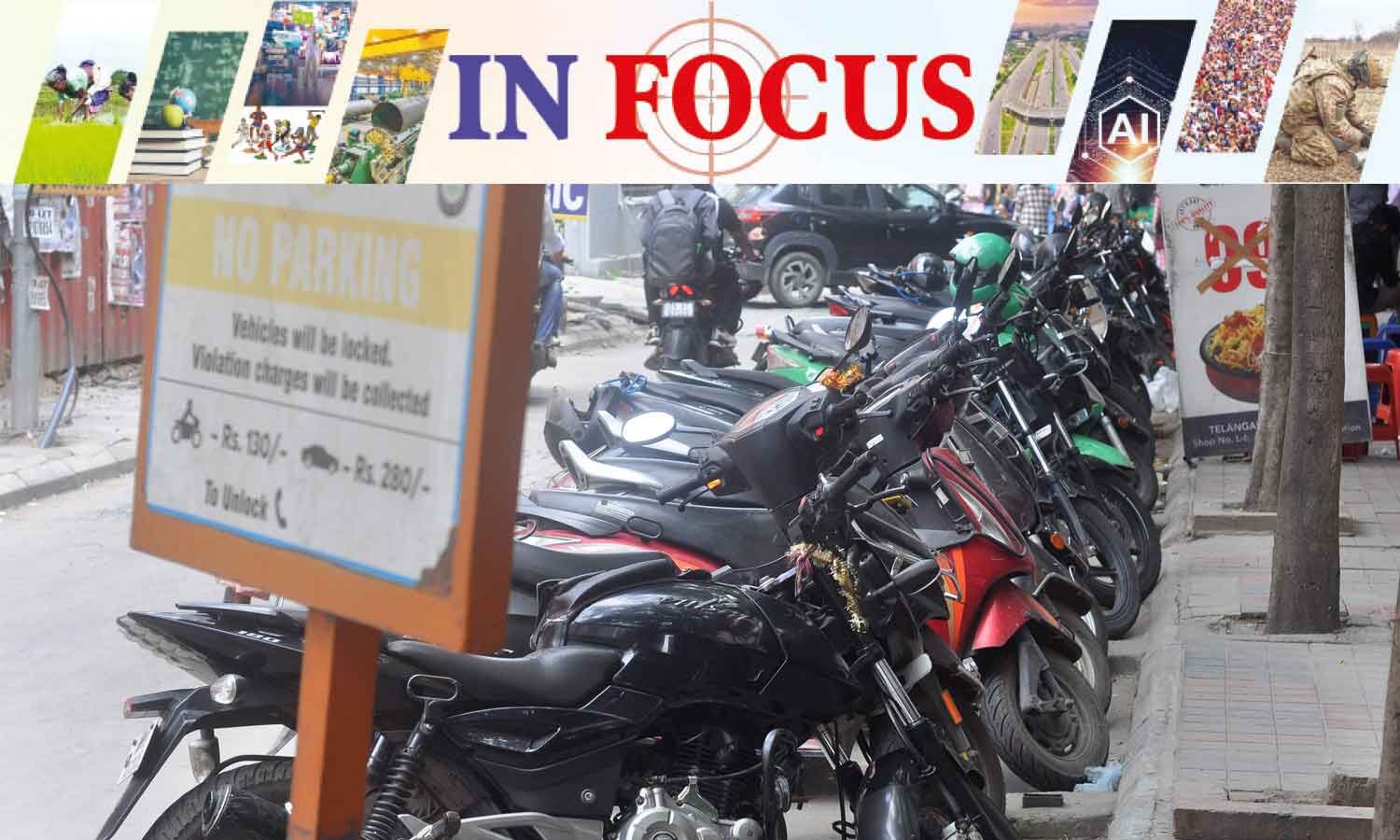
Hyderabad parking chaos worsens despite enforcement and court directions

Hyderabad Plans Grand, Safer Ganesh Festivities Across Telangana

KLH Aziznagar, DSCI Partner to Strengthen Cybersecurity Education

Hilife Brides Exhibition to Bring Wedding Shopping to Hyderabad
Cyberabad Municipal Corporation Demolishes 14 Unauthorised Buildings

Telangana Crime Rate Rises as Narcotics Cases Surge