2 hrs ago
China's AI Eye Clinic Shows Accuracy Needs Usability
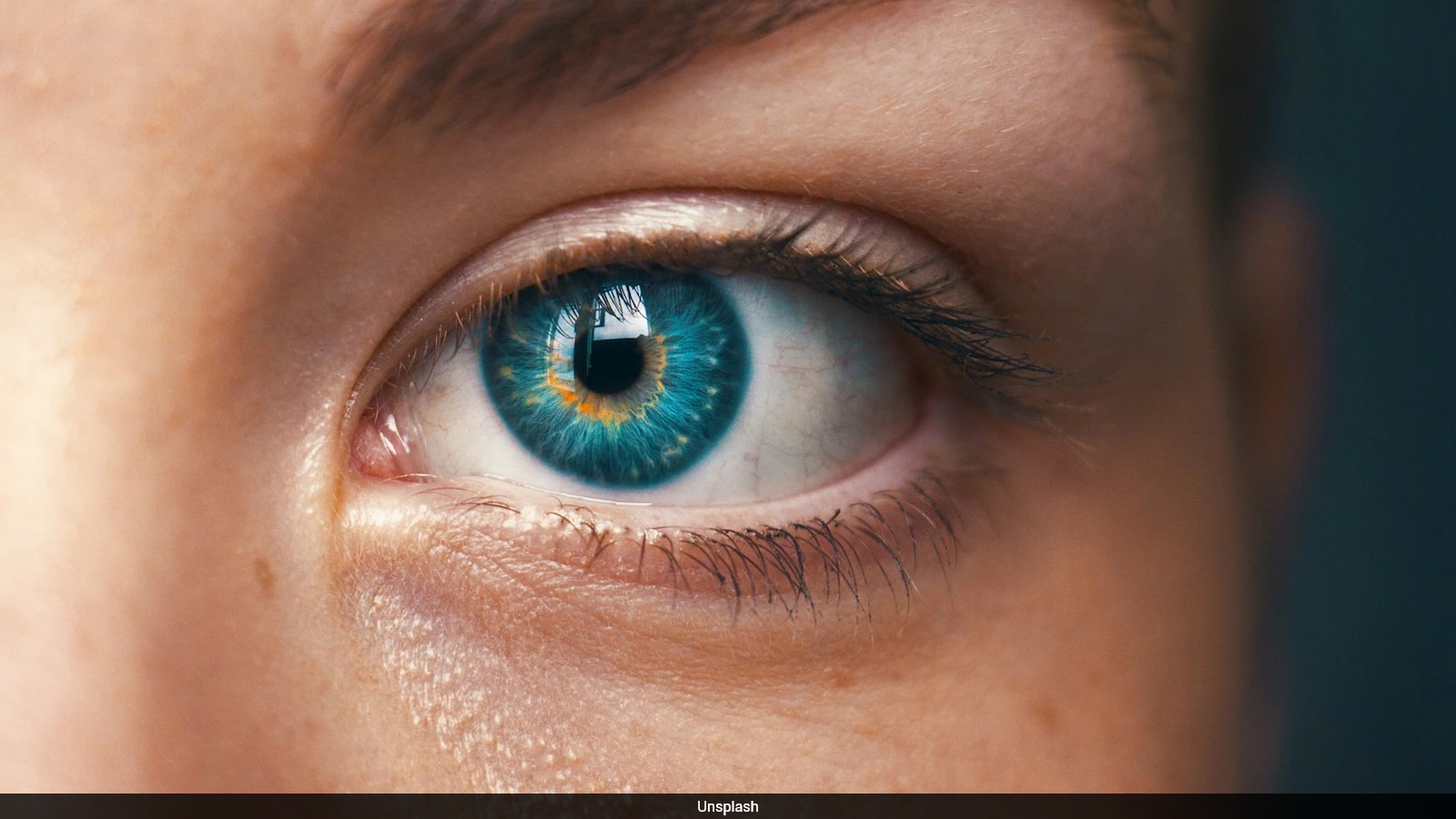
Researchers in China tested an eye clinic that used artificial intelligence alongside doctors.
The AI helped with scans and other parts of a patient's visit.
It became better after doctors gave it 1,426 carefully labelled eye images.
Its disease-detection score became similar to those of other advanced eye-scanning systems.
But staff did not use it very often at first.
After the system became faster and required fewer clicks, usage increased.
This showed that accurate AI must also be easy to use in a busy clinic.
Doctors are still important because they consider symptoms and the patient's overall situation.
The researchers said future AI clinics will need good data, quick feedback and close teamwork between people and machines.

Researchers in China tested an AI-focused eye clinic that kept human doctors involved in care.
The system supported much of the patient journey, including pre-consultation, eye scans and follow-up.
After training with 1,426 carefully labelled scans, the AI achieved an AUROC above 0.93 for diseases including glaucoma and age-related macular degeneration.
Use of the system rose from 3.8% to 23% of examinations after researchers made it faster and reduced manual work.
Researchers said AI healthcare depends on high-quality data, practical workflows, rapid feedback and cooperation with doctors.
- Who
- Researchers from the Beijing Visual Science and Translational Eye Research Institute, working with ophthalmologists and human doctors.
- What
- They tested the AI-Agent Augmented Tsinghua Eye Clinic, an AI-supported eye-care model.
- Where
- China, at the AI-Agent Augmented Tsinghua Eye Clinic.
- When
- During a clinical trial; the articles do not provide specific dates.
- Why
- To examine whether AI could support eye-care workflows and improve patient care while doctors remained involved.
AI Potential
Clinical Caution
Accuracy versus clinical judgment
AI Potential
After additional training, the AI reached an AUROC above 0.93 and performed broadly comparably with other advanced eye-scanning systems.
Clinical Caution
The AI focused on whether scans showed particular diseases, while doctors also considered symptoms and the patient's broader clinical situation.
Technical performance versus practical adoption
AI Potential
The system became more useful after researchers made it faster and reduced manual work and the number of clicks.
Clinical Caution
Despite its capabilities, use initially fell to 3.8% of examinations, showing that accuracy alone does not guarantee adoption in a clinic.
Large datasets versus data quality
AI Potential
The system initially used nearly 27,000 images, providing a substantial training set.
Clinical Caution
Researchers found that 1,426 better-quality, carefully labelled images produced better results than the larger initial dataset.
Key facts
- Initial training data
- Nearly 27,000 eye images
- Additional expert-labelled data
- 1,426 high-quality eye scan images
- Post-training performance
- AUROC above 0.93 for identifying diseases including glaucoma and age-related macular degeneration
- Early system use
- 41 of 1,113 examinations, or 3.8%, after five months
- Later system use
- 259 of 1,126 examinations, or 23%, after workflow improvements
- Study publication
- Nature Medicine
- Human role
- Doctors remained involved and assessed symptoms and the wider clinical situation
Sources
Related news

Clinical AI Must Go Beyond Accuracy to Earn Trust

Philips: AI Boosts Indian Healthcare Professionals' Capacity to Treat Patients

Indian Healthcare Providers Move AI Pilots Into Practice
London Surgeons Use AI in World-First Brain Tumour Operation

How Institutional Partnerships Are Scaling AI Across India

Experts Urge Clean, Diverse Data for More Reliable AI

Shingrix Linked to Lower Heart Attack and Stroke Risk

Dairy Gains Attention in India’s Growing Fitness Movement

AI Enters IVF Labs as Decision-Support, Not Embryologist Replacement
Study says Congo-Uganda Ebola outbreak began with new animal transmission