4 days ago
SBI Research projects ₹5 lakh crore notional FCNR(B) benefit
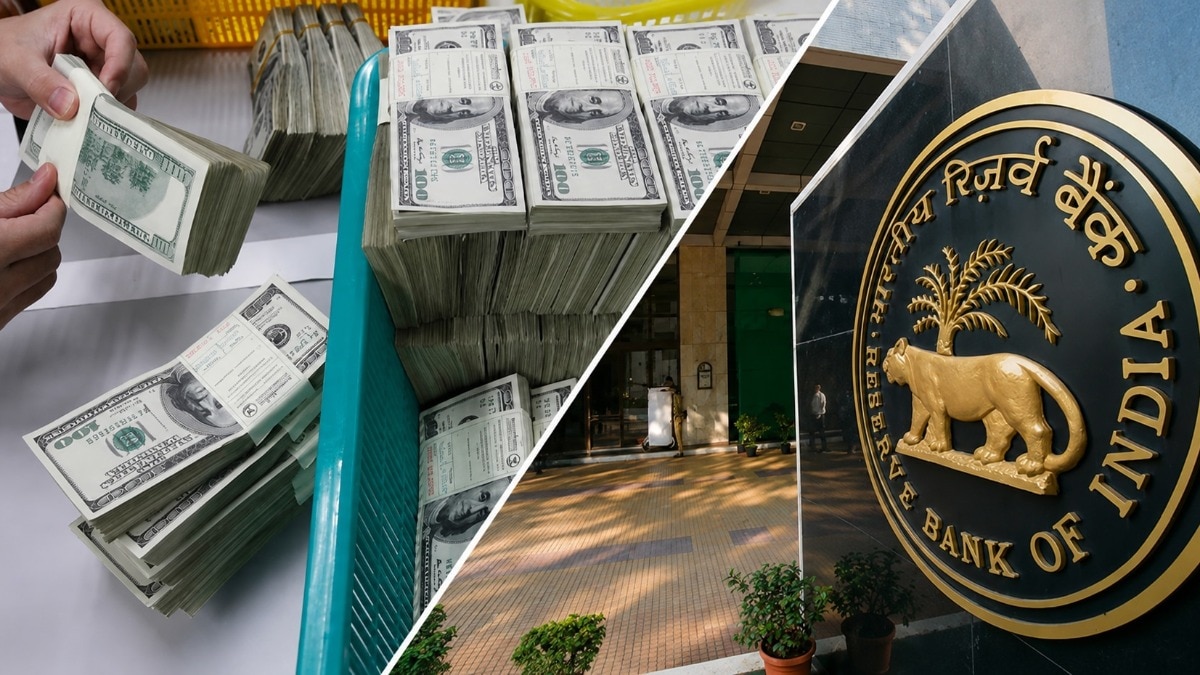
SBI Research studied a plan involving foreign-currency deposits called FCNR(B) deposits.
It says banks could use the deposits to create more loans.
The report estimates that these loans could produce a large amount of interest income.
After subtracting the interest paid to depositors, it estimates a notional benefit of ₹5 lakh crore over five years.
The report also estimates that protecting the deposits from currency changes would cost about $15 billion.
It says this protection means the same currency risk should not be counted again as a separate loss.
The report estimates the RBI could potentially gain about ₹50,000 crore after investment earnings and hedging costs.
These figures are estimates based on SBI Research’s assumptions, not guaranteed profits.

SBI Research says FCNR(B) deposits could support about ₹25 lakh crore in additional credit.
Using its assumptions, the report estimates banks could gain a notional ₹5 lakh crore over five years.
The report estimates hedging costs at about $15 billion for the $127 billion mobilisation.
It argues counting both hedging costs and rupee depreciation would double-count the same exchange-rate exposure.
SBI Research separately estimates a potential ₹50,000 crore benefit for the RBI balance sheet.
- Who
- SBI Research, banks participating in the FCNR(B) scheme, and the Reserve Bank of India (RBI).
- What
- A report estimates that FCNR(B) deposits could produce substantial notional benefits for banks and potentially the RBI.
- Where
- The calculations concern Indian banks, the Indian rupee, and the RBI balance sheet.
- When
- The banking benefit is estimated over five years; the currency projection extends to 2030.
- Why
- SBI Research argues that hedged deposits can support additional lending and that separately counting rupee depreciation would double-count the same exposure.
SBI Research’s interpretation
Alternative loss interpretation
Treatment of currency risk
SBI Research’s interpretation
SBI Research says the special USD-INR swap facility hedged the principal, so a later rupee depreciation should not be counted as another contractual loss.
Alternative loss interpretation
The alternative calculation cited by the report assumes that sustained rupee depreciation should be added to the hedging cost, producing a larger loss estimate.
Rupee depreciation assumption
SBI Research’s interpretation
SBI Research calls a 5% annual depreciation scenario relatively severe and uses 3% as an alternative, implying a rate of about ₹110 per US dollar by 2030.
Alternative loss interpretation
The 5% annual depreciation assumption would imply a rupee level of roughly ₹120-125 per US dollar by 2030.
Overall financial outcome
SBI Research’s interpretation
SBI Research estimates a notional ₹5 lakh crore benefit for banks and a potential ₹50,000 crore benefit for the RBI.
Alternative loss interpretation
The report’s opposing loss framing treats currency depreciation alongside hedging costs as a significant additional cost, rather than accepting SBI Research’s double-counting argument.
Key facts
- FCNR(B) mobilisation
- Estimated at $127 billion.
- Potential additional credit
- About ₹25 lakh crore, using a time-lagged credit multiplier of approximately 2.5.
- Effective credit yield
- Assumed at around 7.5%.
- Interest outgo
- Estimated at ₹75,000 crore per year on ₹12 lakh crore at 6.5%.
- Estimated bank benefit
- Approximately ₹1 lakh crore annually, or ₹5 lakh crore over five years, on a notional basis.
- Estimated hedging cost
- Around $15 billion, using an average annual USD-INR hedging cost of 3%.
- Potential RBI benefit
- About $5 billion, or ₹50,000 crore, after estimated investment earnings and hedging costs.
Sources
Related news

FCNR-B Inflows May Cost RBI ₹2 Lakh Crore

FCNR(B) Deposits Could Create $5.7 Billion Annual Carry Cost

RBI Draws $133 Billion Through Special FCNR(B) Deposit Window
Record FCNR(B) Inflows Leave Banks and India Facing Costs
FCNR(B) Inflows Leave RBI Facing Liquidity and Redemption Risks

RBI Forex Swap Draws $136.37 Billion, Led by FCNR(B)

India Tech Funding Reaches $10.3 Billion Despite Fewer Deals

NSE Debuts Strongly as Brokerages Set Higher Price Targets

Smart Meters Could Reshape Odisha’s Power Sector Through Transparency

Why India Should Flip the Corporate Retirement Savings Default

HDFC Bank Showcases Five New Digital Rupee Uses