1 week ago
Record FCNR(B) Inflows Leave Banks and India Facing Costs
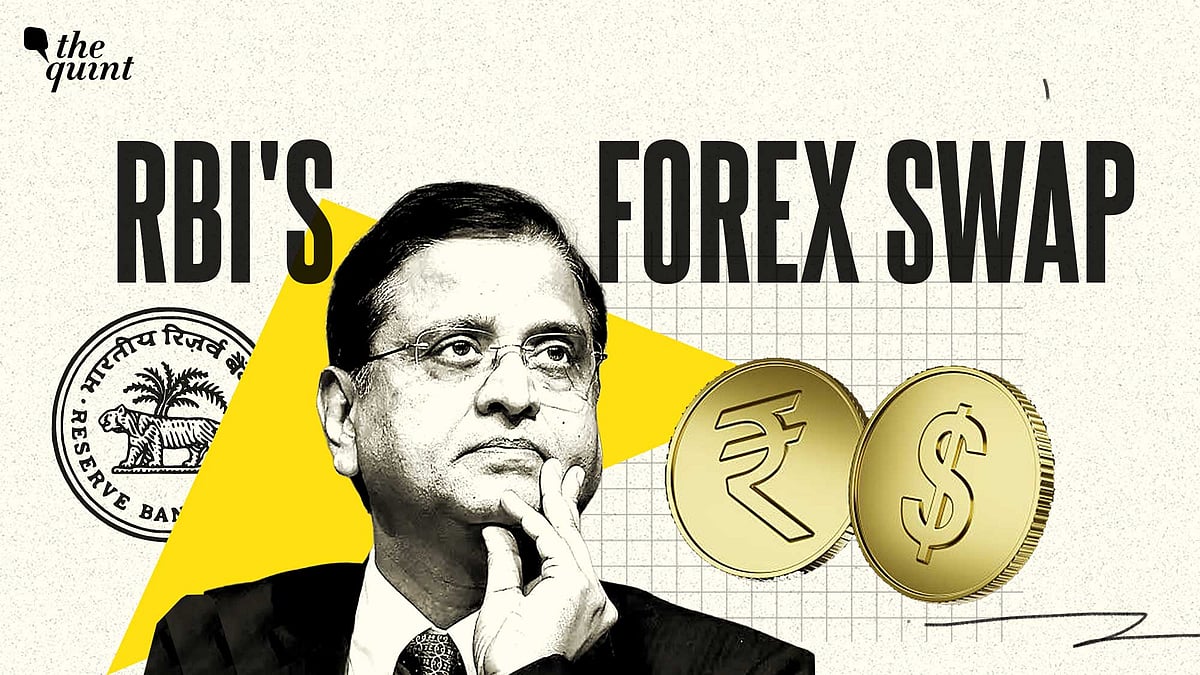
Non-resident Indians have placed a large amount of money in Indian banks through FCNR(B) deposits.
The banks now have more cash than they can easily use.
Some RBI investment options and government securities pay less than the banks must pay depositors.
This means banks can lose money while waiting to lend the funds.
The Reserve Bank of India also invests the foreign currency abroad, but its returns may be lower than the banks’ costs.
The difference becomes a loss for the country as a whole.
Banks still describe the deposits as extra resources that could eventually raise profits.
However, the article says their profits may be smaller and their interest margins may suffer.

India’s banking-system liquidity has exceeded Rs 10 trillion as banks struggle to deploy FCNR(B) funds profitably.
Banks cannot readily place the funds in RBI facilities or government securities because returns may be below their FCNR(B) funding costs.
The article estimates that banks may not bear the full Rs 5 trillion extra cost but could still face negative carry and weaker profits.
The Reserve Bank of India may earn less on its foreign investments and deposits than banks pay on FCNR(B) deposits, creating a national interest loss.
An additional Rs 1.75 trillion interest cost or loss is formally recorded on banks’ books and affects their net interest margins.
- Who
- Non-resident Indians, Indian banks, and the Reserve Bank of India are involved.
- What
- Record FCNR(B) inflows have created excess banking liquidity and potential interest costs.
- Where
- In India’s banking system, with the Reserve Bank of India placing foreign funds abroad.
- When
- The articles do not specify a date or time period.
- Why
- Banks have limited profitable uses for the funds, while the RBI’s foreign investments may earn less than banks pay on the deposits.
Cost and risk concerns
Banking-sector optimism
Effect on banks
Cost and risk concerns
Banks face negative carry because available investment returns may be lower than the cost of FCNR(B) deposits, potentially reducing net interest margins and profits.
Banking-sector optimism
Banks present the FCNR(B) inflows as incremental resources that could eventually support higher profits when the funds are lent.
Effect on India
Cost and risk concerns
The article argues that the RBI’s lower returns on foreign investments create an interest loss for the nation, even if it is not separately accounted for.
Banking-sector optimism
The article suggests banks expect the deposits to generate value over time, although it does not establish that this will offset the broader interest loss.
Key facts
- Liquidity
- Banking-system liquidity has crossed Rs 10 trillion.
- Potential extra cost
- The article refers to an estimated Rs 5 trillion extra cost bill.
- Recorded bank cost
- An additional Rs 1.75 trillion interest cost or loss is formally on banks’ books.
- Deposit pricing
- Banks are counting FCNR(B) inflows priced at about 6 to 6.5 percent as incremental resources.
- RBI facilities
- Banks may avoid VRR and other RBI facilities because their returns are below FCNR(B) funding costs.
- Investment destination
- The RBI deploys the dollars with foreign central banks, the International Bank of Settlement, or foreign governments’ securities.
- Profitability concern
- Banks may experience negative carry and weaker net interest margins while the funds remain undeployed.
Sources
Related news

FCNR(B) Deposits Could Create $5.7 Billion Annual Carry Cost

FCNR-B Inflows May Cost RBI ₹2 Lakh Crore
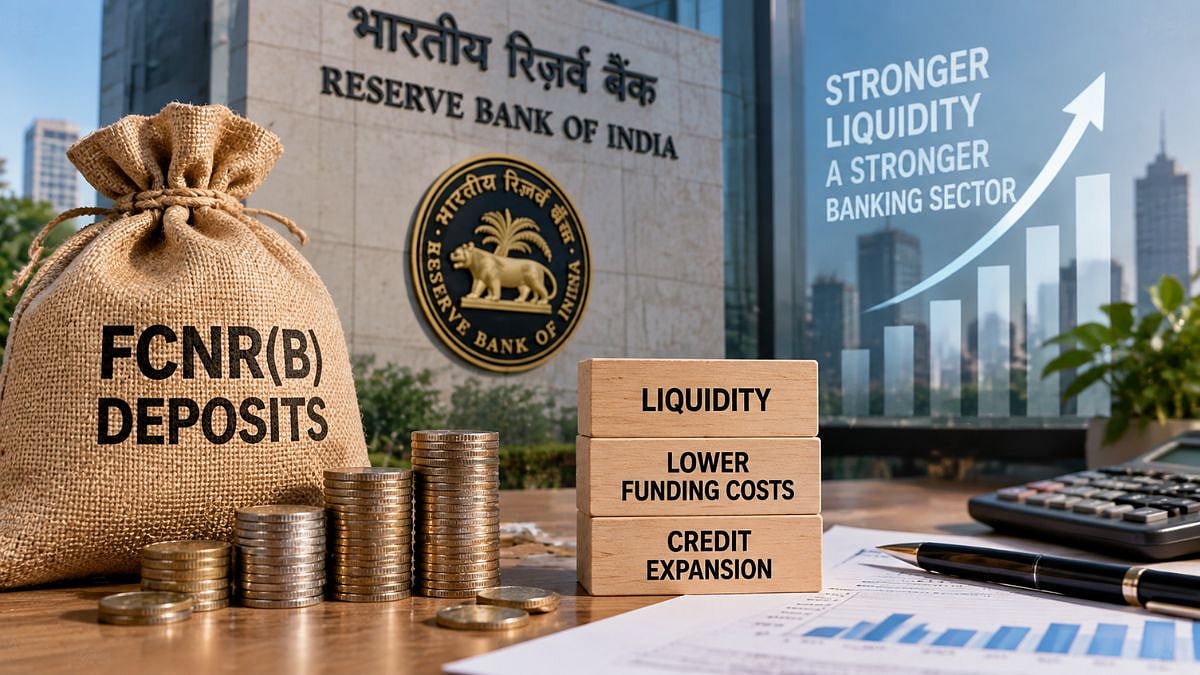
FCNR(B) Inflows May Lower Indian Banks’ Funding Costs
RBI’s $136 Billion Dollar Strategy Faces Liquidity Risks

Private Banks Capture Nearly Half of India’s FCNR(B) Inflows
FCNR(B) Inflows May Lower Bank Funding Costs Amid Surplus Liquidity

India Tech Funding Reaches $10.3 Billion Despite Fewer Deals

NSE Debuts Strongly as Brokerages Set Higher Price Targets

Smart Meters Could Reshape Odisha’s Power Sector Through Transparency

Why India Should Flip the Corporate Retirement Savings Default

HDFC Bank Showcases Five New Digital Rupee Uses