2 hrs ago
How Plants Share Signals Through Roots, Chemicals and Electrical Messages
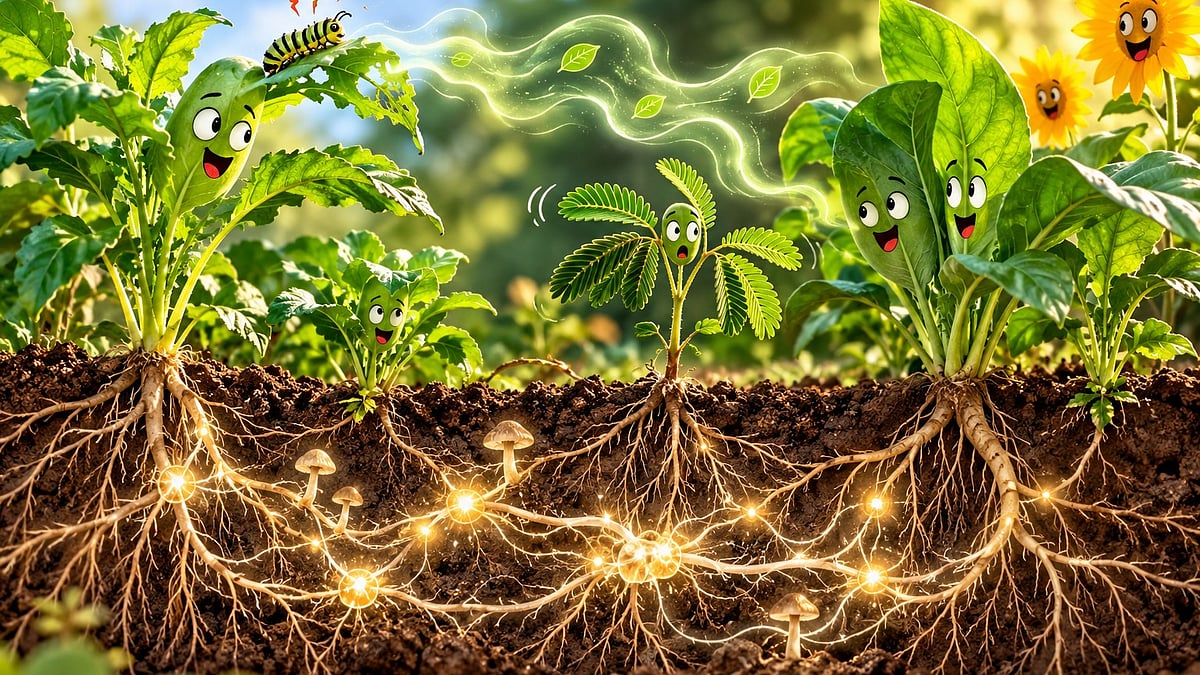
Plants do not talk with words, but they can sense what is happening around them.
Some plants connect with fungi that grow near their roots.
These connections help plants take in nutrients and may also carry chemical signals.
When insects attack a plant, it can release chemicals into the air.
Nearby plants may sense those chemicals and prepare their own defences.
Some acacia trees make defensive chemicals when animals eat them.
Plants can also send electrical and chemical signals inside their tissues.
They do not have brains or nervous systems like people do.
These signals help plants respond to their surroundings.

Mycorrhizal fungi connect with plant roots, helping plants absorb nutrients and potentially moving chemical signals between them.
Scientists are still investigating how important fungal networks are for communication in nature.
Some plants under insect attack release airborne chemicals that nearby plants may detect and respond to with their own defences.
Acacia trees can produce defensive chemicals in their leaves in response to grazing animals.
Plants can send electrical and chemical signals through their tissues, but they have no brains or nervous systems.
- Who
- Plants, mycorrhizal fungi, and animals that graze on plants.
- What
- Plants sense and respond to signals through fungal networks, airborne chemicals, and signals within their tissues.
- Where
- In plant roots, through the air, and within plant tissues.
- When
- Why
- These signals can help plants obtain nutrients and respond to insects, grazing animals, touch, injury, and environmental changes.
Key facts
- Root partnerships
- Mycorrhizal fungi connect with roots and help plants absorb nutrients.
- Fungal signals
- Fungal networks may facilitate chemical signals between plants; their significance in nature is still being investigated.
- Insect response
- Some plants release airborne chemicals when attacked by insects.
- Neighbouring plants
- Nearby plants may detect airborne signals and activate defences.
- Acacia defence
- Some acacia trees produce defensive chemicals in their leaves in response to grazing animals.
- Plant signalling
- Plants transmit electrical and chemical signals through their tissues in response to touch, injury, and environmental changes.
- Nervous system
- Plants do not have brains or nervous systems.
Sources
Related news

How Crown-of-Thorns Starfish See Without A Central Head

New Town Plant Lover Turns Limited Space Into Lush Garden

A Lost Monsoon Film of Termites Taking Flight

CBD Belapur Residents Treat Trees Allegedly Damaged by Chemicals

World Post Day Traces Communication’s Journey From Letters to Digital Messages