1 hr ago
RBI Keeps Future Rate Hikes Tied to Evolving Economic Conditions
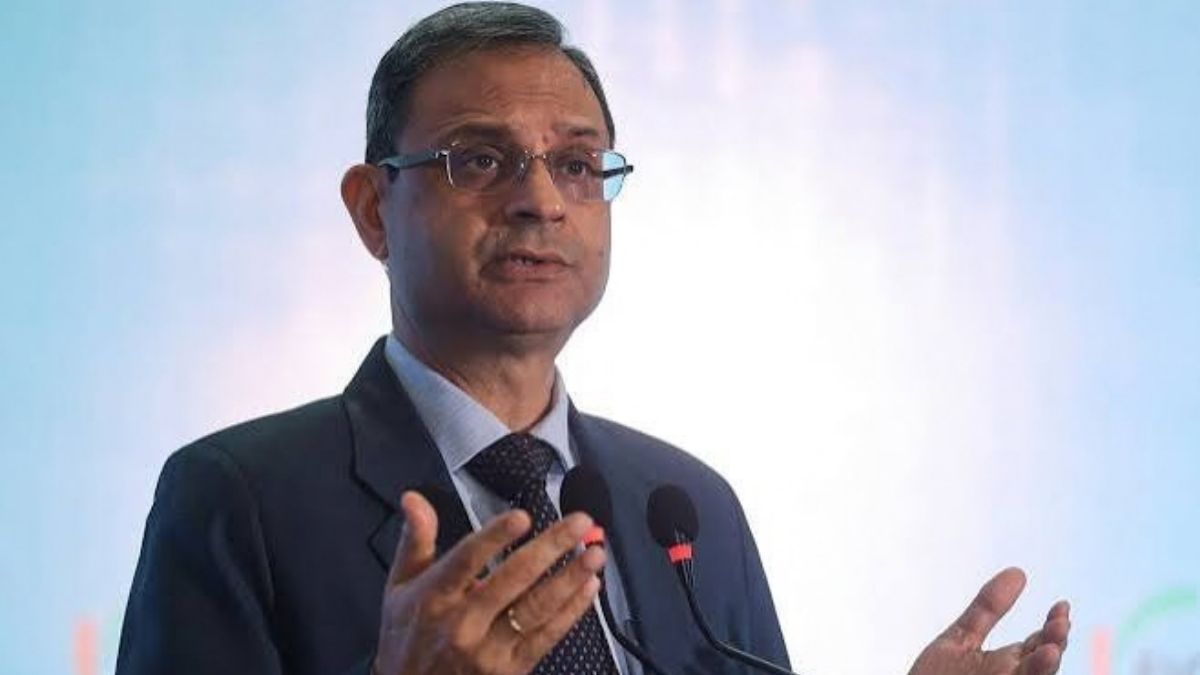
The Reserve Bank of India decides how much it costs to borrow money.
Its governor said the bank may keep rates where they are or raise them again, depending on what happens in the economy.
He said the bank is not planning a rate cut under its current stance.
The RBI is watching prices, including whether higher costs spread to more goods and services.
Officials also said India’s economy has shown strength, though fast-growing loans may slow somewhat.
They believe rural communities have become better able to handle a weak monsoon.
The bank is also preparing for financial risks linked to technology, including cyber risks.
It said banks are getting ready for a new accounting framework and that its oil-price estimate has risen by $5 a barrel.

Governor Sanjay Malhotra said future rate hikes could vary in size depending on evolving macroeconomic conditions; the RBI is considering either a pause or a hike, not a rate cut.
The RBI said inflation remains focused on its 4% target while noting that underlying inflation and supply-side pressures also matter.
Deputy Governor Poonam Gupta cited resilient growth and low, stable inflation as signs of increased economic potential, while saying no specific estimate was available.
Officials said credit growth is above its long-term average and may moderate, and that the weak monsoon’s effect on rural incomes has eased as rural resilience has improved.
The RBI said it is monitoring risks including AI-related cyber threats, preparing for the ECL transition, and raising its oil-price assumption by $5 per barrel.
- Who
- RBI Governor Sanjay Malhotra and Deputy Governors Poonam Gupta, Swaminathan, Rohit Jain, and Shirish Chandra Murmu.
- What
- RBI officials discussed future interest-rate decisions, inflation, liquidity, credit growth, financial risks, and regulatory preparations.
- Where
- India.
- When
- At a post-policy press conference on Wednesday; the article does not specify the date.
- Why
- The officials addressed questions about monetary policy and the RBI’s response to changing economic conditions and financial-market risks.
Factors supporting caution
Factors supporting vigilance
Rate decisions and inflation
Factors supporting caution
The RBI said headline inflation can be affected by base effects and supply-side factors, and that underlying inflation also needs attention.
Factors supporting vigilance
Malhotra said the current stance rules out a rate cut and leaves a pause or further hikes as the options, with the size of any hike dependent on economic conditions.
Credit growth and lending demand
Factors supporting caution
Swaminathan said some moderation is expected and that credit growth easing from 18–20% would still be adequate to support growth.
Factors supporting vigilance
The article’s question raises concern that a rate hike could dampen loan demand; Swaminathan acknowledged that both demand and rates may contribute to moderation.
Technology and financial risk
Factors supporting caution
The RBI identified multiple AI-related risks, including asset bubbles, labour-market disruption, and financial-stability risks.
Factors supporting vigilance
Officials said cyber risk is the most significant concern for central bankers because financial systems are interconnected and technology is used across them.
Key facts
- Inflation target
- The RBI said its government-set headline inflation target is 4%.
- Rate outlook
- Malhotra said the options are a pause or a rate hike; future hikes will depend on evolving conditions.
- First-quarter growth
- Poonam Gupta cited growth of 7.8% in Q1 alongside very low inflation.
- Credit growth
- Swaminathan put recent credit growth at about 18–19%, compared with a 10-year average range of 12–14%.
- Rate transmission
- Swaminathan said transmission may take a couple of quarters and some moderation in credit growth is expected.
- Oil-price assumption
- Poonam Gupta said the Monetary Policy Report assumption rose by $5 a barrel.
- ECL framework
- Murmu said the framework was announced well in advance and the RBI expects a smooth transition.
Sources
Related news
RBI Raises Rates, Signals Further Hikes or a Pause Ahead
RBI Raises Repo Rate to 5.50% as Inflation Pressures Broaden
RBI Rate Hike Looms as Inflation Fuels Policy Debate
RBI Rate Hike Signals Caution, Not an Aggressive Tightening Cycle

RBI Raises Repo Rate to 5.50% as Inflation Risks Grow

RBI Says Rate Hike May Moderate Credit Growth, Not Expansion

RBI October MPC May Bring First Rate Hike Since 2023
RBI Deputy Governor Flags Disconnect Between Strong Economy, Weak Markets
RBI Deputy Governor Says Rupee Could Stabilize, Appreciate
August Inflation Surge Puts India’s October Rate Decision In Focus