3 days ago
AI Race May Favor Countries That Can Recover

Countries are competing to build the best artificial intelligence systems.
But powerful AI can cause serious problems if it is attacked or stops working.
AI is already helping doctors, hospitals, utilities and other important services.
Attackers may change the data used to train AI or manipulate what it receives.
Many organizations also depend on a small number of technology companies.
The author says yearly security checks are not enough because AI systems change frequently.
Organizations should keep backup systems and manual ways to continue essential work.
People should also learn how to spot fake voices, identities and videos.
The countries that can quickly limit damage and restore services may succeed for longer than countries that only build AI first.

AI is increasingly used in medical devices, utilities and public health services, creating new dependencies on automated systems.
Researchers found that 250 malicious documents could introduce a backdoor into language models in an experimental setting.
Securin assessed nearly one in four of 2,518 AI-agent servers as being at critical risk.
Concentration among major cloud and model providers could expose organizations to outages, policy changes and restricted access.
The article argues that continuous testing, human training, fallback systems and rapid recovery should be central to national AI strategies.
- Who
- Dr. Srinivas Mukkamala, governments, enterprises and operators of AI-dependent services.
- What
- An argument that national AI leadership should be measured by resilience and recovery capabilities as well as innovation.
- Where
- The examples span the United States, India, the United Kingdom, the European Union and global cloud infrastructure.
- When
- The article discusses current deployments and incidents, including data and events reported through 2026.
- Why
- AI is becoming embedded in critical services, while attacks, system failures, supplier concentration and rapidly changing technology create operational risks.
Key facts
- AI medical devices
- The U.S. Food and Drug Administration has authorised more than 1,600 AI-enabled medical devices.
- Utility adoption
- Around 81% of North American utilities use AI-related technologies.
- AI-agent servers assessed
- Securin scanned 2,518 servers and assessed nearly one in four as being at critical risk.
- Cloud concentration
- The three largest cloud providers accounted for roughly 67% of global cloud infrastructure services spending in the second quarter of 2026.
- Model API concentration
- Menlo Ventures estimates that Anthropic, OpenAI and Google together account for about 88% of enterprise large-language-model API usage.
- Healthcare ransomware
- Securin found that a healthcare organization was hit by ransomware roughly every ten hours during the first quarter of the year.
- Recovery example
- After ransomware hit AIIMS Delhi in 2022, the hospital relied on paper-based processes for approximately two weeks.
Sources
Related news

Cisco India Says AI Foundations Will Shape Enterprise Growth

AI Doomsday Fears May Distract From Human Vulnerabilities

India’s Sovereign AI Strategy Requires Control Beyond Bigger Models
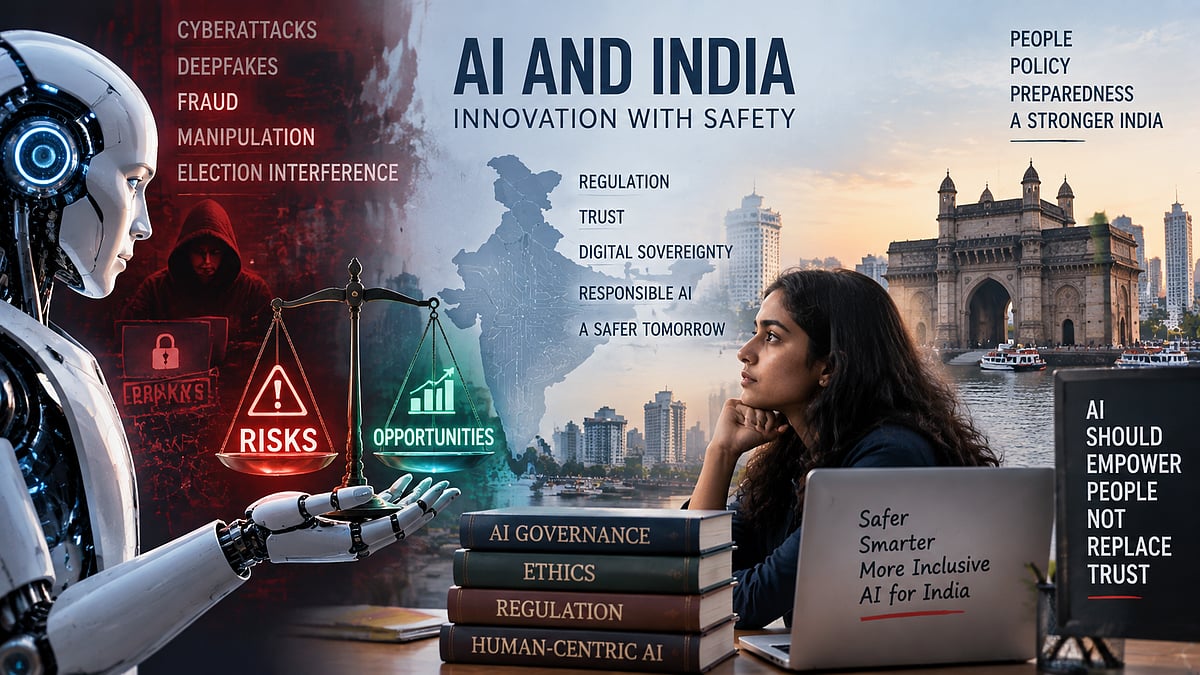
India Faces AI Agent Risks as Safety Debate Accelerates
AI Threats Demand Global Oversight and a Stronger Indian Role