2 hrs ago
Mule and Donkey Differences Explained Through Genetics and Appearance
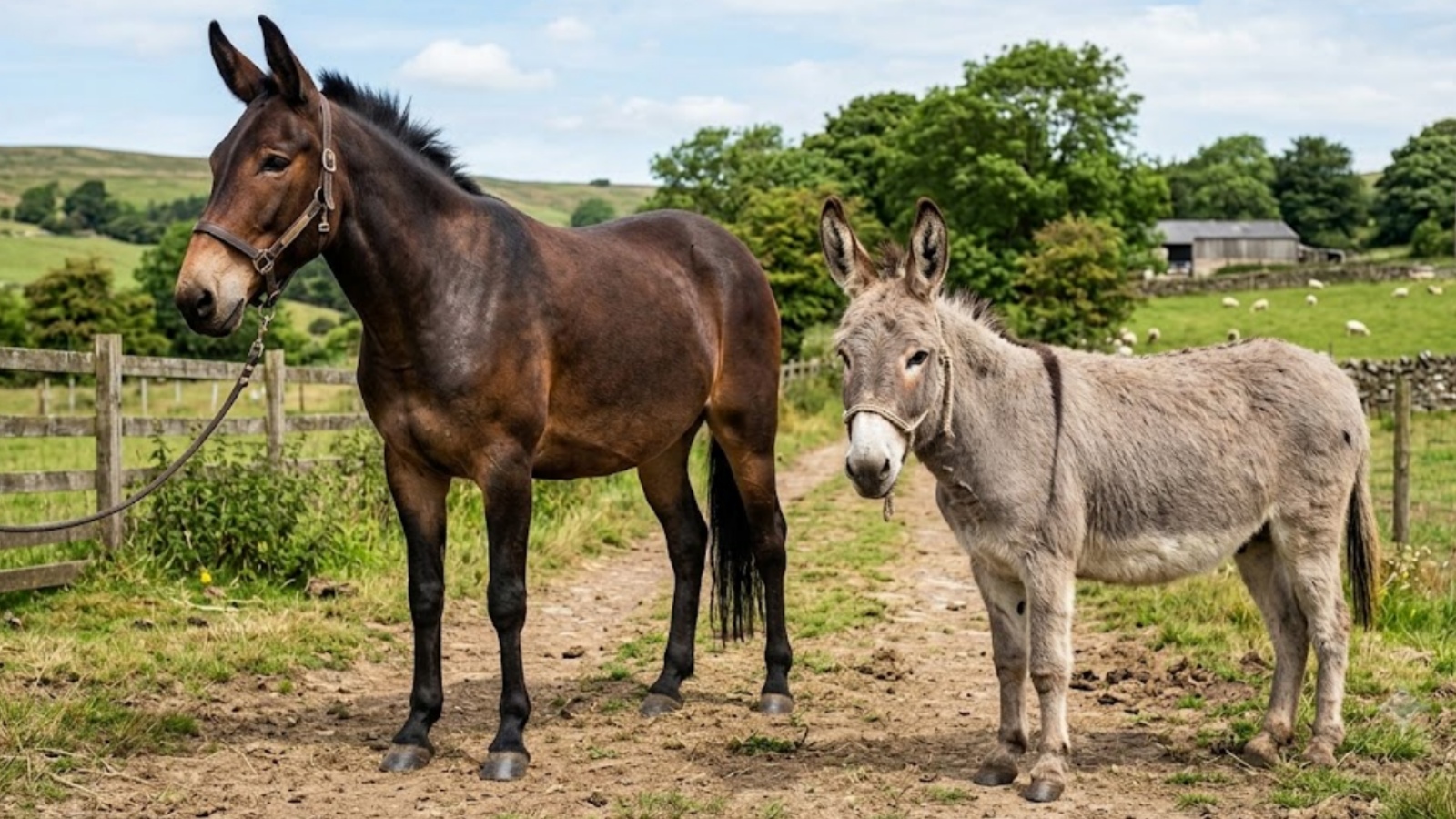
Donkeys and mules can look very similar.
Both have a long history of helping people with transport and farm work.
A donkey is a true animal species.
Its scientific name is Equus africanus asinus.
Donkeys have 62 chromosomes and can reproduce normally.
A mule is a hybrid, which means it has parents from two different kinds of animals.
A mule is born from a male donkey and a female horse.
Mules have 63 chromosomes, and this difference affects their ability to reproduce.

Donkeys are a true species called Equus africanus asinus.
A donkey has 62 chromosomes and can reproduce normally.
A mule is a hybrid offspring of a male donkey and a female horse.
Mules have 63 chromosomes: 31 from the donkey and 32 from the horse.
Mules and donkeys are often confused because of their similar appearance and use in transport and farm work.
- Who
- Dr Vinod Sharma, Head of Veterinary Services and Director at DCC Animal Hospital, explained the differences.
- What
- The article explains how donkeys and mules differ in species status, parentage, chromosome count, and reproduction.
- Where
- DCC Animal Hospital in Gurugram is identified as Dr Sharma’s workplace.
- When
- Why
- Mules and donkeys are often confused because they look similar and have both been used for transport and farm work.
Key facts
- Donkey classification
- A true species: Equus africanus asinus
- Donkey chromosomes
- 62
- Donkey reproduction
- Can reproduce normally
- Mule classification
- A hybrid
- Mule parentage
- Male donkey and female horse
- Mule chromosomes
- 63: 31 from the donkey and 32 from the horse
- Key distinction
- Chromosome differences affect reproduction
Quotes
Dr Vinod Sharma
Head of Veterinary Services and Director at DCC Animal Hospital, Gurugram
“While a mule is a hybrid—the offspring of a male donkey and a female horse—with 63 chromosomes, 31 from the donkey and 32 from the horse”
 indianexpress.com
“A donkey is a true species, Equus africanus asinus, with 62 chromosomes and can reproduce normally”
indianexpress.com
Sources
Related news
Dog-Faced Bats Combine Canine Looks With Nighttime Flight

Delhi Infertility Evaluation Reveals PMDS, Uterus And Undescended Testes
Pakistan’s Donkey Trade With China Expands Through Meat, Hides
Georgia Officer Shoots Pet Donkey During Missing Child Search

Unusual Krait in Dudhwa Prompts Calls for Further Study

UPSC Environment Quiz Covers Wildlife, Floods, El Niño
Veterinarian Advises Against Office Goldfish