57 mins ago
Pakistan’s Donkey Trade With China Expands Through Meat, Hides
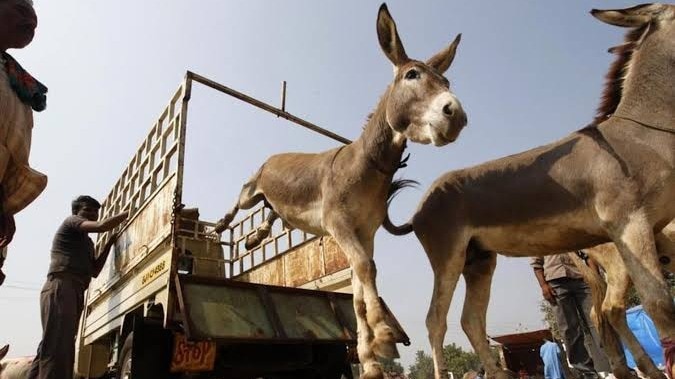
Pakistan is sending donkey meat and hides to China.
Many people in Pakistan do not eat donkey meat because of religious beliefs.
In some parts of China, donkey meat is considered a special food.
Donkey skin is also used to make ejiao, a traditional product made by extracting collagen.
Ejiao is used as a blood tonic and is also found in some cosmetics.
China has fewer donkeys than before, so it is looking for supplies from other countries.
One company, Hangeng, has built a facility in Pakistan and employs about 500 local workers.
The company has already sent five containers of meat and hides to China.
Animal welfare groups have warned that large-scale donkey slaughter could reduce donkey populations.

Donkey meat is not eaten locally in Pakistan because of religious beliefs but is considered a delicacy in parts of China.
Donkey hides are used to make ejiao, a collagen-rich ingredient in traditional Chinese medicine and cosmetics.
China’s donkey population and hide supply have declined, prompting buyers to seek imports from Pakistan and other countries.
Pakistan’s donkey population exceeded 6 million in 2025, according to the Pakistan Economic Survey.
Hangeng has invested about $50 million in Pakistan, employs around 500 local workers, and has exported five containers of meat and hides.
- Who
- Hangeng, Chinese buyers, Pakistani suppliers, and local workers are involved in the trade.
- What
- Pakistan is exporting donkey meat and hides to China, where the hides are used to produce ejiao.
- Where
- The facility is in Pakistan, and the first shipment reached Tianjin, China.
- When
- Hangeng began building its Pakistan facility six years ago; its first shipment arrived in China in June, and Pakistan’s donkey population exceeded 6 million in 2025.
- Why
- Chinese demand for ejiao is growing while China’s supply of donkey hides is declining.
Trade Expansion and Supply
Animal Welfare and Population Protection
Economic opportunity
Trade Expansion and Supply
The trade has attracted about $50 million in investment, created around 500 local jobs, and produced exports to China.
Animal Welfare and Population Protection
Animal welfare concerns focus on the large-scale slaughter of donkeys for their hides and the potential effect on donkey populations.
Meeting Chinese demand
Trade Expansion and Supply
Chinese buyers are seeking donkey hides from Pakistan and other countries because domestic supply has declined and demand for ejiao is growing.
Animal Welfare and Population Protection
The decline in donkey populations has been linked to millions of animals being slaughtered for their hides, creating concerns about the sustainability of the trade.
International sourcing
Trade Expansion and Supply
Pakistan could become a major supplier, with Hangeng sourcing from 11 suppliers and planning to work with 50 farms.
Animal Welfare and Population Protection
Africa, traditionally a major source of donkey hides, faced a continent-wide moratorium on donkey slaughter for skins and related exports endorsed by the African Union in 2024.
Key facts
- Pakistan’s donkey population
- More than 6 million in 2025, according to the Pakistan Economic Survey.
- Hangeng investment
- About $50 million invested in its Pakistan facility.
- Local employment
- Around 500 Pakistani workers and nine Chinese managers are employed at the facility.
- Exports so far
- Five containers of donkey meat and hides have been exported.
- First shipment
- The first shipment reached China’s Tianjin port in June after government approval.
- Ejiao market
- The Chinese ejiao market was valued at about $7.8 billion in 2021.
- Global slaughter estimate
- An estimated 2.3 million to 4.8 million donkeys are slaughtered annually for their hides.
Sources
Related news

Artisan Seeks to Revive Kashmir’s Fur Trade Sustainably

Retired Army Serviceman Killed by Banned Chinese Manjha in Jammu
India’s Small Import Categories Reveal a Changing Economy
DRI Seizes 362 Tonnes of Pakistani Dates Routed via UAE

Ladakh Plans Major Push to Expand Pashmina Production