18 hrs ago
MIT Report Warns AI Could Weaken Student Learning
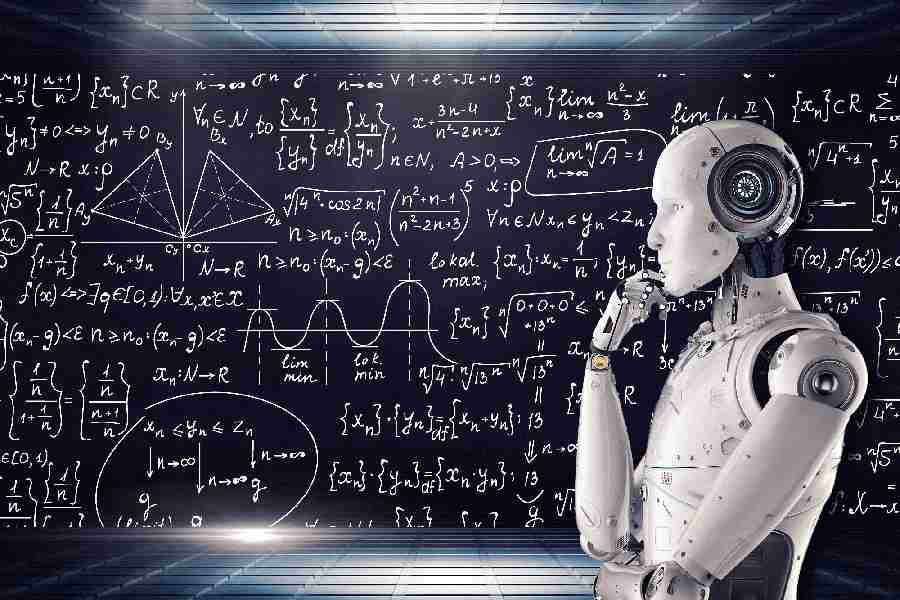
MIT studied how artificial intelligence is changing the way students learn.
The committee said AI can quickly produce answers for essays, mathematics, science and coding.
This can make it difficult for teachers to know what students truly understand.
Students may also stop struggling with difficult problems, even though that struggle helps them learn.
The report called this habit “cognitive surrender.”
It said too much chatbot use could weaken critical thinking, memory and confidence.
However, AI can also give personalized feedback and help students attempt more ambitious work.
MIT suggested using more discussions, group projects, oral exams and practical assignments.
The committee said AI should support curiosity and learning rather than replace them.

An MIT committee warned that overreliance on generative AI can deprive students of meaningful learning.
The report said AI-generated answers may create an illusion of understanding and cause “cognitive surrender.”
MIT found lower participation in office hours and online discussions, alongside anecdotal declines in in-person study groups.
The committee advised against relying on AI detectors and criticized lockdown browsers as error-prone and surveillance-like.
It recommended more face-to-face learning, oral exams, portfolios, projects and competency-based assessment.
- Who
- MIT’s Ad Hoc Committee on AI Use in Teaching, Learning and Research Training, drawing on input from students and instructors.
- What
- The committee issued a report warning that excessive AI reliance can weaken learning and make traditional assessments less reliable.
- Where
- At the Massachusetts Institute of Technology campus.
- When
- The committee conducted its review over five months and cited a 2025 undergraduate survey.
- Why
- Generative AI can complete many written assignments, potentially reducing students’ engagement, critical thinking and mastery.
AI’s Educational Risks
AI’s Potential Benefits
Effect on learning
AI’s Educational Risks
Frequent AI use may reduce productive struggle, critical thinking, memory, confidence and subject mastery.
AI’s Potential Benefits
AI can provide personalized feedback and help students undertake more ambitious work.
Assessment and oversight
AI’s Educational Risks
AI detectors and lockdown browsers can be inaccurate, create mistrust and feel like surveillance.
AI’s Potential Benefits
The report supports redesigning assessments, including oral exams, portfolios and discussions, to better measure understanding.
Role in research
AI’s Educational Risks
Replacing undergraduate research assistants with AI could remove important relationships, practical experience and professional development.
AI’s Potential Benefits
AI may be useful when it augments students’ curiosity, creativity and learning rather than automating them.
Key facts
- Review duration
- Five months
- Daily AI use
- 46% of undergraduate respondents in a 2025 survey said they used large language models daily.
- Concern about dependence
- Up to 90% of surveyed undergraduates were somewhat or very concerned about becoming too dependent on AI.
- Perceived replaceability
- 40% of committee survey respondents said AI made them feel more replaceable, while 34% said it made them feel more capable.
- Assessment concerns
- The report said AI detectors may miss some uses of AI or wrongly flag non-native English speakers and neurodivergent students.
- Recommended assessments
- The committee recommended oral examinations, semester portfolios, classroom discussions and in-person proctored exams.
- Research assistants
- The report warned that replacing undergraduate research assistants with AI agents could deprive students of mentorship and practical experience.
Quotes
MIT’s Ad Hoc Committee on AI Use in Teaching, Learning and Research Training
MIT committee examining AI use in teaching, learning and research training
“...what should worry us most is that many uses of AI deprive students of the opportunity to learn.”
 telegraphindia.com
“augment and enhance curiosity, creativity, and learning, not automate them”
telegraphindia.com
Sources
Related news
OpenAI Urges Responsible AI Use While Preserving Student Learning

Nithin Kamath Raises Concerns About AI and Student Skills

Reading And Maths Scores Fall Across Rich Nations

Former Google Executive Warns AI Could End Traditional College Education

Professor Says Teachers Can Detect Students’ ChatGPT Cheating

Trump Says U.S. Leads China in Artificial Intelligence Race
AI Business Adoption Surpasses 70% as Targeted Uses Succeed

Tech Selloff Reflects More Than Fears of AI Slowdown
AI Vocabulary Evolves as Frontier Models Become More Capable