8 months ago
Cow Urine in Art and Photography
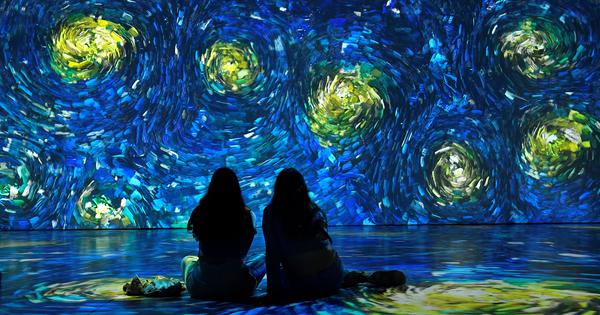
A long time ago, people in South Asia used cow urine to make special colors and lights for art and photography.
One of these colors was called Indian yellow, which was very bright and beautiful.
It was used by famous artists like Vincent van Gogh.
Another thing made from cow urine was called Bengal light, which was used to take pictures in the dark.
Both of these things were important in the history of art and photography.
However, the British government eventually banned Indian yellow, and the use of Bengal light declined as new technologies were developed.
Today, there are only a few people left who know how to make these special colors and lights.

Indian yellow, a pigment derived from cow urine, was used in art from the 16th to 19th century and may have been used by Vincent van Gogh in 'Starry Night'.
Bengal light, a saltpetre-based compound also derived from cow urine, was used for photographic lighting in the 19th century.
Both Indian yellow and Bengal light were produced in India and exported to Europe, reflecting colonial political, economic, and visual governance.
Indian yellow was informally banned by the British government in 1908, leading to the eventual ceasing of its production and use by the 1920s.
Shammi Bannu Sharma, a seventh-generation painter, possesses one of the last known samples of authentic gogoli Indian yellow pigment.
- Who
- Artists, historians, and civil servants involved in the production and study of Indian yellow and Bengal light
- What
- The use of cow urine in the production of Indian yellow and Bengal light for art and photography
- Where
- South Asia, particularly India, and Europe
- When
- 16th to 20th century, with significant events in the 19th century
- Why
- To create luminous substances for art and photography, reflecting colonial political, economic, and visual governance
Key facts
- Indian Yellow
- A medieval pigment derived from cow urine, used in art
- Bengal Light
- A saltpetre-based compound used for photographic lighting
- TN Mukharji
- Indian civil servant who documented the production of Indian yellow
- Shammi Bannu Sharma
- Artist possessing one of the last known samples of authentic gogoli Indian yellow pigment
- Vincent van Gogh
- Artist who may have used Indian yellow in 'Starry Night'
- John Moule
- Patented Bengal light for use in portrait photography in 1857
- Niharika Dinkar
- Photography historian who extensively wrote about Bengal light
Quotes
George Field
Chemist
“resists the sun's rays with singular power”
 scroll.in
“exceedingly fugitive”
scroll.in
Jordana Bailkin
Art historian
“Indian yellow...was praised for its fineness in conveying the subtleties of skin colors”
scroll.in
“When mixed with vermilion or hematite, Indian yellow was said to be especially useful in creating a dark brown flesh tone”
scroll.in
Shammi Bannu Sharma
Seventh-generation painter and son of the late ustad Bannu
“Whose is it, if not yours? How much do you think I'm going to use now?”
scroll.in
“I have a few grams left. For my lifetime, that will be enough.”
scroll.in
BN Goswamy
Art historian
“the 'mystique' surrounding its preparation”
scroll.in
Alexander Eibner
Chemist and painting technologist
“incomparably beautiful, deep and luminescent gold yellow in a shade...achieved with no other pigment”
scroll.in
RD Harley
Art historian
“the roughly shaped round lumps...accompanied by a smell of urine”
scroll.in
Victoria Finlay
Journalist
“What if [Mukharji] was a nationalist, wanting to make a point, or at least a joke, at the expense of the British?”
scroll.in
Sources
Related news

Ericsson Expands India Antenna Production and Exports to Europe

Chevron CEO Says Diesel Export Ban Could Worsen Fuel Crunch

French Envoy Says Multiple Routes Key to IMEC Amid Hormuz Crisis

Louis Vuitton Spring/Summer 2027 Collection Responds to Warmer Conditions

Russian Missiles Hit Kyiv After Zelensky Warns Of Strike