

3 weeks ago
Experts Say Journalism Rooted in Empathy, Not Replaced by AI
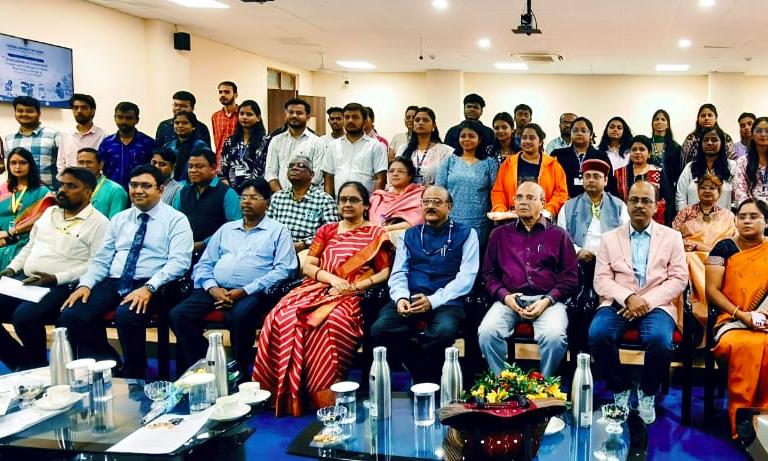
Many smart people who teach journalism and report the news met at a university in Odisha, India, for three days.
They talked about how computers and social media are changing the news.
The experts all agreed on one big thing: computers cannot do the job of a real journalist.
Good journalists care about people, understand their communities, and tell true stories.
One journalist said that even though the way we get news has changed, the most important rules are still the same: be truthful, be fair, and check your facts.
Another journalist said reporters help regular people talk to their leaders, and stories from villages often make the government listen.
The experts also talked about AI, which can help news workers do tasks faster and study large amounts of information.
But they warned that depending on AI too much could weaken original thinking and creativity.
In the end, they said journalism will stay a human job because it needs empathy and a deep understanding of people.

A three-day National Seminar-cum-Workshop on grassroots journalism concluded at the Central University of Odisha in Koraput.
Experts unanimously said journalism remains a deeply human profession that neither AI nor social media can replace.
Senior journalist Rajaram Satapathy said core values like truth, objectivity, verification and public interest still define credible reporting.
Akshaya Kumar Sahoo described journalists as a bridge between citizens and policymakers whose fact-based rural reporting compels government response.
Ajaya Kumar Sahu said AI can boost newsroom efficiency and data analysis but excessive dependence could weaken originality, creativity and critical thinking.
- Who
- Experts including academicians, senior journalists Rajaram Satapathy, Akshaya Kumar Sahoo and Ajaya Kumar Sahu, and Vice-Chancellor Prof. N. C. Panda of the Central University of Odisha.
- What
- A three-day National Seminar-cum-Workshop concluded, affirming that journalism remains a human profession that AI and social media cannot replace.
- Where
- Central University of Odisha, Koraput, Odisha.
- When
- Held from August 3 to 5, concluding on Wednesday.
- Why
- To deliberate on grassroots journalism trends and challenges in the age of AI and social media and to strengthen the academia-media interface.
Key facts
- Event
- National Seminar-cum-Workshop 'Journalism at the Grassroots: Trends and Challenges in the Age of AI and Social Media'
- Dates
- August 3-5
- Venue
- Central University of Odisha, Koraput
- Presided by
- Prof. N. C. Panda, Vice-Chancellor, Central University of Odisha
- Chief Guest
- Prof. Asima Sahu, Vice-Chancellor, Khallikote Unitary University
- Key Message
- Journalism remains a deeply human profession that AI cannot replace
- Workshop Focus
- Rural journalism challenges in Koraput: infrastructure, misinformation, ethical reporting and AI influence
Quotes
Akshaya Kumar Sahoo
Senior journalist
“"AI offers enormous possibilities for improving newsroom efficiency, data analysis and content production, but excessive dependence can weaken originality, creativity and critical thinking."”
 deccanchronicle.com
“"Fact‑based reporting from rural and grassroots communities often compels governments to respond through welfare programmes, developmental initiatives and policy interventions."”
deccanchronicle.com
Sources
Related news

University of Hyderabad Lecture Examines Journalism in the AI Era

MP Kesineni Sivanath promises to solve journalists' problems

Bandi Sanjay Highlights Visual Journalists’ Vital Role in Democracy
Odisha to Host First All India PR Conference

Journalism Fundamentals Seen as Key to Restoring Public Trust

PIB Dehradun To Organise Regional Media Workshop 'Vartalaap' In Chamoli

Odisha Man Climbs Tower, Threatens Suicide Over Partner

Odisha Deputy CM Links Women’s Safety With Empowerment
Odisha Chief Minister Plans Four-Day UAE Investment Tour

Odisha Mother Carries Dying Son to Ambulance

Odisha Names Shakti Apa Mentors For Female College Students
