1 hr ago
Supreme Court Seeks BCI Stand on Law Course Age Cap
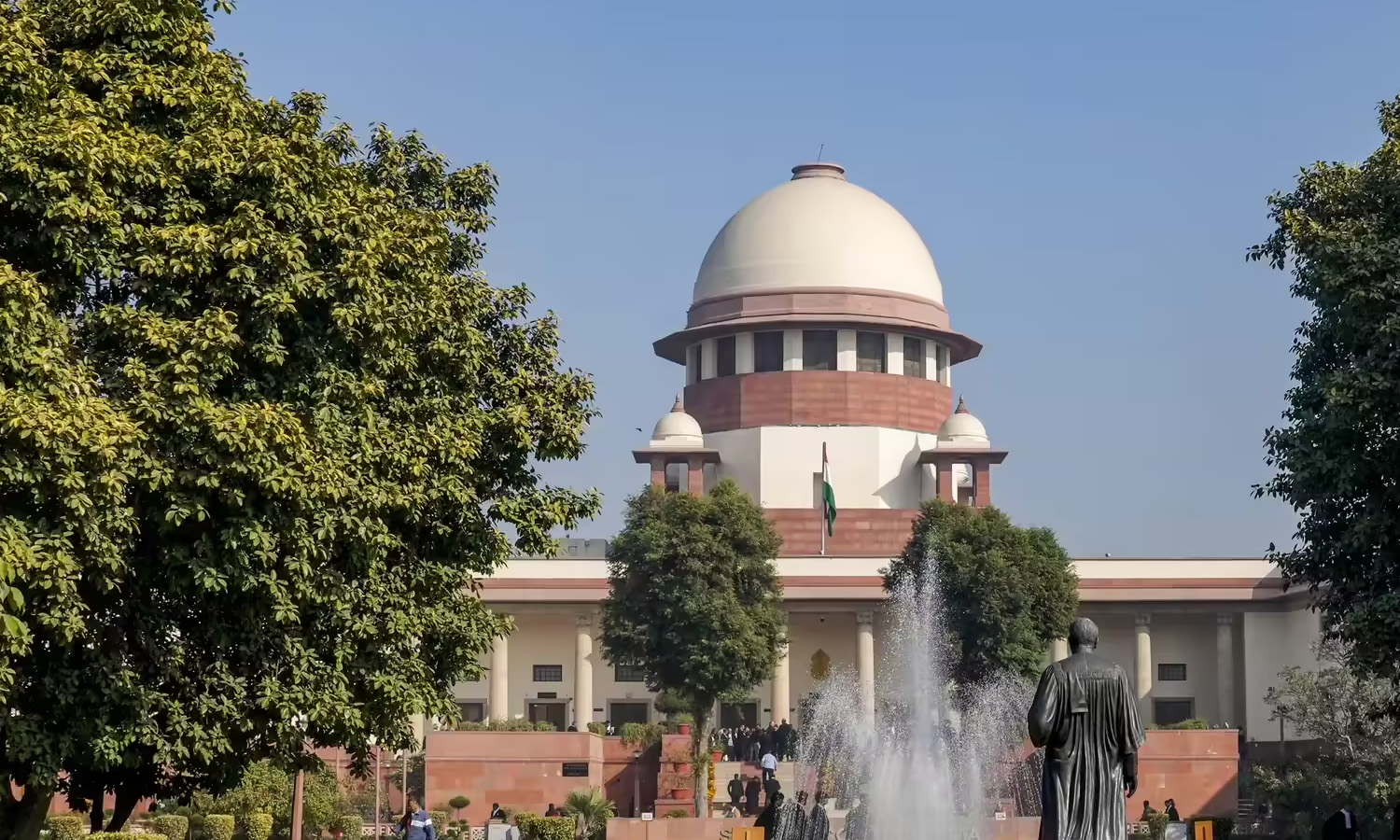
The Supreme Court is examining whether students should have an upper age limit for entering certain law courses.
The Bar Council of India created age limits for five-year and three-year law programs.
The court stopped those limits from being enforced in 2017.
A petitioner is questioning whether the council has the power to set a maximum age.
The BCI says many five-year law courses are residential, meaning students usually live and study at the institution.
It says older students can choose three-year law courses instead.
A judge questioned whether living arrangements are a fair reason to limit someone’s age.
The BCI will give the court its position after seeking instructions.
The court will consider the matter again in two weeks.

The Supreme Court asked the Bar Council of India whether it would withdraw the upper age limit for five-year integrated law courses.
The court had stayed the BCI’s age restrictions in March 2017.
The earlier rules set limits of 20 years for general candidates and 22 years for SC, ST and backward-community candidates in five-year courses.
The BCI defended the restriction by saying most five-year courses are residential and suggested older students could pursue three-year law courses.
The case will be heard again after two weeks, after the BCI obtains instructions on its position.
- Who
- The Supreme Court, the Bar Council of India, and petitioner Rishabh Duggal.
- What
- The court is considering whether the BCI should withdraw upper age limits for admission to law courses.
- Where
- In the Supreme Court in New Delhi.
- When
- The Supreme Court took up the issue on Friday and scheduled it for consideration again after two weeks.
- Why
- The case concerns whether the BCI can use its authority to prescribe minimum admission qualifications to also impose maximum age limits.
Challenge to Age Restrictions
BCI Defense of Restrictions
Authority to Set a Maximum Age
Challenge to Age Restrictions
Petitioner Rishabh Duggal questioned whether the BCI’s power to prescribe minimum admission qualifications also permits it to impose an upper age limit.
BCI Defense of Restrictions
The BCI defended the restriction and said the court could determine the appropriate age limit.
Residential Nature of Courses
Challenge to Age Restrictions
Justice Joymalya Bagchi questioned whether a course’s residential nature could justify an upper age limit, noting that not all five-year programs are residential.
BCI Defense of Restrictions
The BCI said most five-year law courses are residential and used that as a reason for maintaining the age restriction.
Options for Older Students
Challenge to Age Restrictions
The challenge seeks to prevent age restrictions from limiting admission to five-year integrated law courses.
BCI Defense of Restrictions
The BCI said students seeking legal education at a higher age could choose three-year law courses, most of which it said are non-residential.
Key facts
- Five-year course limit
- The original rules set an upper limit of 20 years for general-category candidates and 22 years for SC, ST and backward-community candidates.
- Three-year course limit
- The BCI prescribed an upper age limit of 45 years for the three-year law course.
- Earlier court action
- The Supreme Court stayed the BCI’s age-limit decision in March 2017.
- BCI justification
- The BCI said most five-year law courses are residential.
- Petitioner
- Rishabh Duggal challenged the age restriction.
- Next hearing
- The matter will be taken up after two weeks.
Quotes
Justice Joymalya Bagchi
Supreme Court judge on the bench hearing the challenge to law-course age restrictions
“Not all five-year law courses are residential. See Calcutta University. This is not really a criterion to determine the upper age limit”
 deccanchronicle.com
“We have imposed the upper limit because most of the five-year law courses are residential”
deccanchronicle.com
Sources
Related news

Supreme Court Examines Calls to Revise Legal Education
Supreme Court Examines BCI Power Over Legal Education

Supreme Court Upholds Mumbai Law Seat Cuts, Waives Court Cost
Supreme Court Bars Bar Councils From Disciplining Law Students

MH CET Law 2026 Announces Final Institutional Round IV Dates
Supreme Court Upholds Mumbai Law College Seat Cuts
Supreme Court Orders IAF to Reinduct War Widow Officer
Supreme Court Allows Pooja Singhal Money Laundering Trial To Continue
Supreme Court Plea Challenges CEC’s Alleged Unilateral Election Decisions

Readers Debate Defection, Elections, Tourism and Corporate Governance